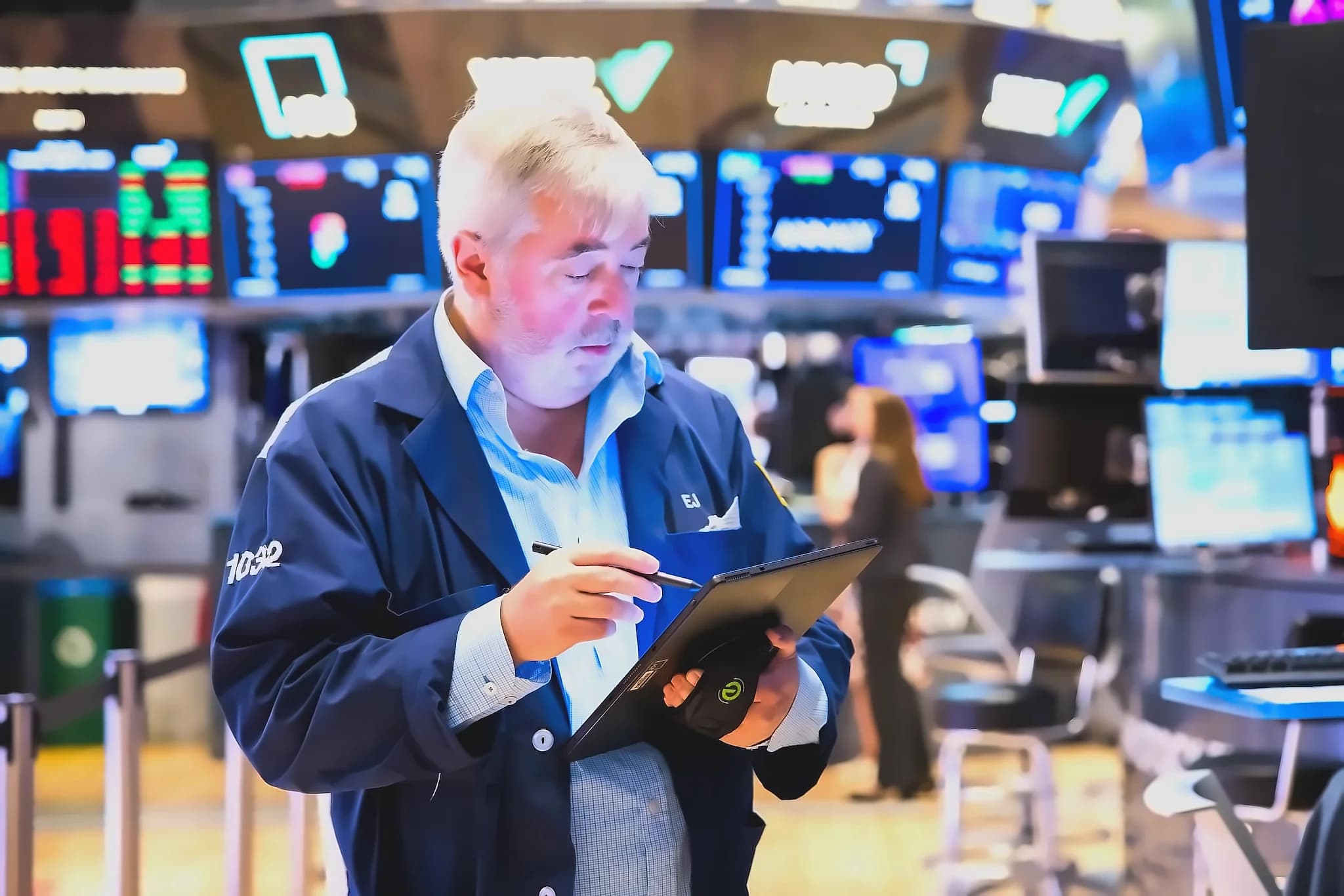
US stocks are heading toward fresh record highs on Wednesday, with the S&P 500 and Nasdaq hitting record highs yesterday and expected to open at fresh record highs today. According to reports from The Business Times, the market is increasingly convinced that the war in the Middle East will not re-escalate and disrupt the impressive earnings drive. The optimism stems from reports that the US and Iran are reportedly close to agreeing on a one-page memorandum to end the war, according to a Pakistani mediator source, and also start 30 days of negotiations to open the Strait of Hormuz and limit Iran's nuclear program. President Trump wrote on Truth Social that "assuming Iran agrees to give what has been agreed to, which is, perhaps, a big assumption, the already legendary Epic Fury will be at an end, and the highly effective Blockade will allow the Hormuz Strait to be OPEN TO ALL, including Iran."
Oil prices are experiencing significant declines, with WTI crude tumbling over 12% on Wednesday amid expectations that a resolution to the Middle East conflict could be near. As reported by Axios, the White House believes it is nearing an agreement with Tehran on a one-page memorandum to end the war and establish a framework for more detailed nuclear negotiations. President Trump also said he had agreed to temporarily pause "Project Freedom," the administration's initiative to guide commercial ships through the Strait of Hormuz. This development could mean that the Strait of Hormuz would reopen sooner rather than later, reducing geopolitical supply concerns that have supported oil prices. However, gasoline prices have risen daily for two weeks, reaching $4.54 a gallon today—the highest national average since July 2022—as the Iran conflict continues to disrupt oil markets.
The latest round of AI frenzy came after Advanced Micro Devices jumped over 18% in pre-market trading after the semiconductor company posted upbeat Q1 results and delivered a blockbuster Q2 sales forecast. According to The Business Times, the rally has shown that the market "cannot escape the euphoria surrounding AI investment," said Kevin Gordon, head of macro research and strategy at the Schwab Centre for Financial Research. Intel climbed more than 6% in pre-market trading after AMD CEO Lisa Su highlighted the growing role of CPUs in AI data centers and said the products' total addressable market would expand at over 35% annually to reach $120 billion by 2030. Super Micro Computer surged more than 14% in pre-market trading after the AI server maker reported better-than-expected FQ3 adjusted EPS and provided solid FQ4 guidance. Super Micro soared 16.6% following a stronger-than-expected forecast for fourth-quarter revenue and adjusted profit.
The market gains were further supported by robust employment data, with the ADP National Employment Report showing US private-sector employment jumped by 109,000 jobs in April, the biggest increase since January 2025. As reported by The Business Times, the gains in equities reflect rising risk appetite among investors - if corporate earnings remain strong and hopes for a peace deal stay alive. At 9.56 am ET, the Dow Jones Industrial Average rose 450.72 points, or 0.91% to 49,744.78, the S&P 500 gained 57.64 points, or 0.79% to 7,316.86 and the Nasdaq Composite gained 256.35 points, or 1.01% to 25,582.48. Eight of the 11 major S&P 500 sectors were in positive territory, with advancing issues outnumbering decliners by a 2.27-to-1 ratio on the NYSE and 1.54-to-1 ratio on the Nasdaq. Waters Corp. popped more than 13% and was the top percentage gainer on the S&P 500 after the company posted upbeat Q1 results and raised its full-year guidance.

While the market rally reflects optimism around AI investments and potential Middle East peace, analysts warn against unfettered optimism. Kyle Rodda, senior financial market analyst at Capital.com, noted that "Wall Street continues to double down on its bet that the war in the Middle East will not re-escalate and disrupt the market's earnings-driven surge to all-time highs." He cautioned that "there's a high risk that if that wager is wrong, risk assets would move sharply in reverse." However, the signals from the United States appear to offer reassurance that it's not interested in renewing hostilities. The market's performance reflects a delicate balance between AI-driven growth expectations and geopolitical risk management. U.S. rate futures have priced in a 92.1% chance of no rate change and a 7.9% chance of a 25 basis point rate cut at the June FOMC meeting, while the optimism has also boosted European markets with the Euro Stoxx 50 Index up 2.22%.