Micron Technology delivered one of the most explosive earnings reports in semiconductor history for its fiscal third quarter, posting a massive 346% year-over-year revenue surge to $41.5 billion. According to reports from CNBC TV18, the company reported adjusted profit of $25.11 per share, compared with estimates of $20.78 per share. Looking ahead, Micron expects fourth-quarter adjusted earnings per share of $31, plus or minus $1, compared with analyst estimates of $25.84 per share. The company also expects fourth-quarter capital expenditure of around $10 billion, while analysts expected $8.89 billion. Notably, Micron's gross margin more than doubled to 84.9% in the quarter, reflecting the company's ability to capitalize on the AI memory supercycle, with the company expecting margins to improve further to around 86% in the current quarter. The stock opened at $1,233, up 17.6% from its previous close of $1,048.51, and touched a fresh 52-week high of $1,255 in early trade, but shares jumped nearly 20% in after-hours trading following the report.
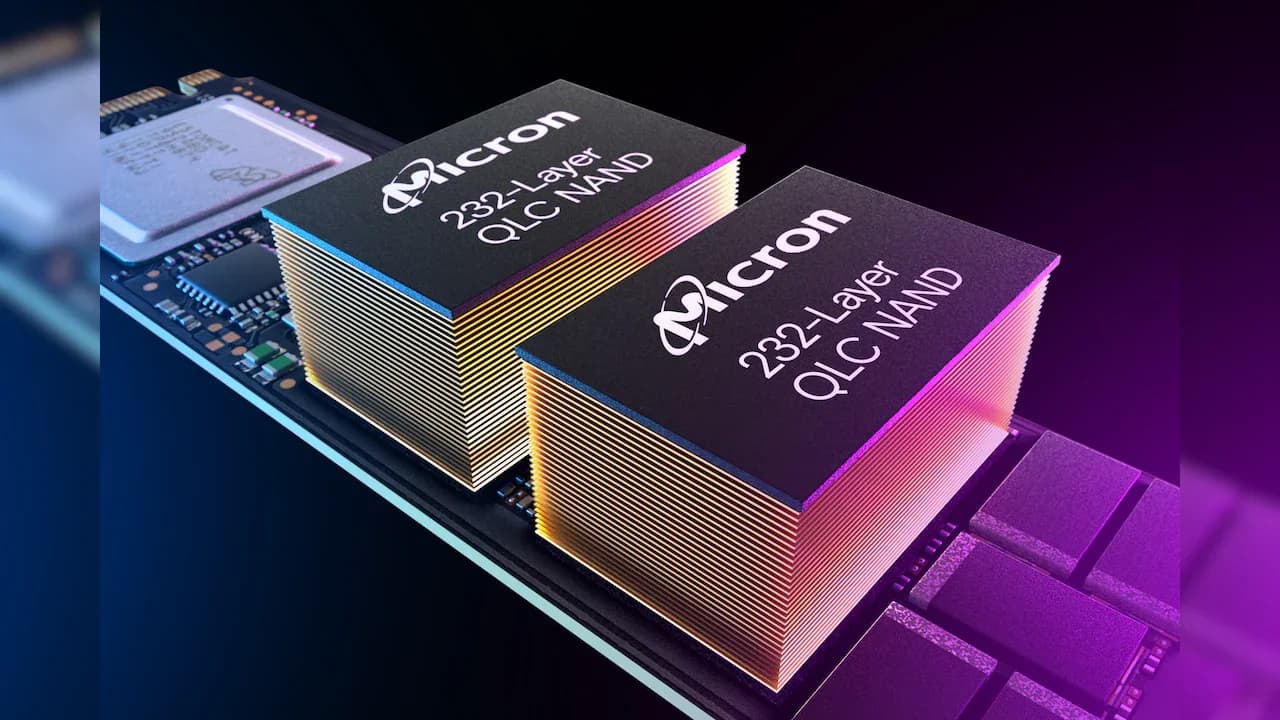
The record-breaking performance is powered by a structural memory supercycle, with skyrocketing AI and data center demand for DRAM and High-Bandwidth Memory (HBM). As reported by CNBC TV18, this surge in demand has created unprecedented growth opportunities for Micron. The company, a key supplier for Nvidia's AI processors, has benefited from the shortage as the only US-based manufacturer of high bandwidth memory chips used alongside Nvidia's AI processors. Micron has seen demand for these chips far outstrip its production capacity, allowing the company and rivals SK Hynix and Samsung Electronics to charge a premium for their products. CEO Sanjay Mehrotra expects tight conditions to persist beyond calendar 2027 as a result of AI-driven demand across all segments coupled with structural supply constraints. Data center revenue reached $25 billion in the quarter, driven by insatiable demand for high-bandwidth memory (HBM) chips, which power Nvidia's AI GPU stacks, with HBM products remaining fully booked.
The company has outlined a significant business model shift aimed at making demand less cyclical through strategic customer agreements. According to CNBC TV18, Micron secured $22 billion in commitments from 16 strategic customer agreements spanning data center, consumer and automotive markets, with take-or-pay commitments, cash deposits and pricing floors designed to lock in supply and protect margins. The remaining performance obligations for these customer agreements total around $100 billion, providing a strong indicator of future contracted revenue. These are generally five-year arrangements with annual take-or-pay commitments, customer deposits and both floor and ceiling prices, as reported by Investing.com. The strategic agreements currently cover about 20% of anticipated DRAM volume and 30% of NAND volume, with Micron aiming eventually to cover around half of expected revenue. The contracts suggest that AI customers are increasingly treating advanced memory chips as a critical bottleneck and are willing to lock in supply years in advance, representing a fundamental change in the company's earnings profile.
Micron's forward guidance was equally stunning, with the company guiding Q4 revenue of $50 billion, well above the $43 billion Wall Street consensus. According to Investing.com, they expect gross margins of approximately 86% and EPS of $31, while free cash flow is expected to exceed $30 billion in Q4 alone. CEO Sanjay Mehrotra stated that "Micron's record fiscal Q3 financial results and even stronger outlook for Q4 reflect the strategic value of memory in the AI era." The strong results indicate that the AI memory supercycle is not slowing down, with the company's record fiscal Q3 performance and robust Q4 outlook demonstrating the transformative impact of AI and data center infrastructure on semiconductor demand. The performance highlights how memory chip manufacturers are benefiting from the structural shift toward AI-driven computing, creating new opportunities and unprecedented revenue visibility in the semiconductor industry.