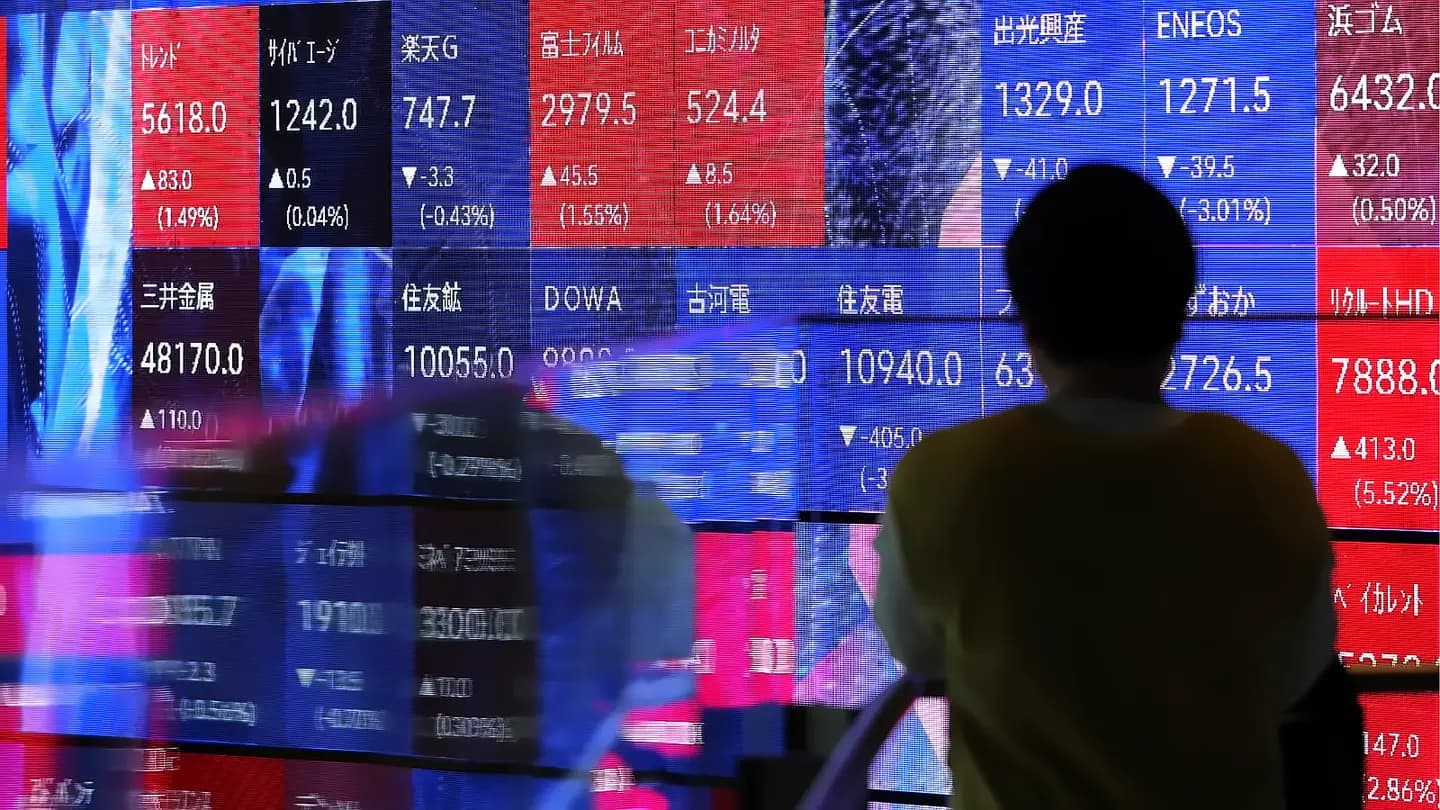
Asian technology stocks emerged as the primary drivers of market gains, with South Korea's Kospi surging 7% on Wednesday, extending its rally for a second session as softer-than-expected US inflation data and Wall Street gains boosted risk appetite. The technology sector's outperformance was led by heavyweights SK Hynix and Samsung Electronics, which advanced more than 13% and 8% respectively. Japan's Nikkei 225 rose 1% and MSCI's broadest index of Asia-Pacific shares outside Japan gained 2.4%, while Australia's S&P/ASX 200 gained 0.6%. The broader market momentum was supported by softer US inflation data that reduced Fed interest rate hike expectations and renewed optimism around artificial intelligence-linked stocks. Despite the positive daily performance, the MSCI Asia Pacific Index remains on track for a weekly loss, reflecting mixed investor sentiment as futures for the tech-heavy Nasdaq 100 Index slipped 0.3%. The Korea Exchange also triggered a buy-side sidecar on the Kospi after Kospi 200 futures jumped 5%, resulting in a five-minute halt in programme buying.
South Korea's semiconductor sector experienced exceptional gains, with SK Hynix rallying more than 13% and chip equipment maker Hanmi Semiconductor surging about 25%. SK Hynix's newly listed ADRs closed more than 27% higher overnight, highlighting strong international investor interest. The positive sentiment was driven by upbeat analyst commentary on the outlook for AI memory demand, which provided additional tailwinds beyond the broader technology rally. The momentum also follows a sharp selloff in global IT stocks after IBM CEO Arvind Krishna said the company's guidance miss was largely driven by weakness in its software and infrastructure businesses, as customers redirected spending toward hardware, including memory chips. SK Hynix CEO Kwak Noh-jung expects the global memory industry to face its worst-ever supply shortage in 2027, with demand likely to outpace production capacity well beyond 2030 despite aggressive expansion plans. Meritz Securities estimates that DRAM suppliers are currently meeting only about 75% to 80% of demand as shortages intensified in the second half of 2026, with fulfilment rates expected to deteriorate further in 2027.
The broader market rally was significantly boosted by hopes of a strategic shift in Japan's pension fund investments. Finance Minister Satsuki Katayama announced that the Government would look at ways to encourage pension funds (including the Government Pension Investment Fund) to increase their investments in domestic financial assets. As reported by The Business Standard, this development has created positive market sentiment as half of the assets held by Japanese Pension Funds are currently in foreign assets. The market is betting that a possible shift in asset allocation to Japanese assets would be positive for both bonds and the yen, which have been under pressure for years. Japan's Topix rose 0.9%, benefiting from the prospect of increased domestic investment by pension funds.
The impact of leveraged ETFs became particularly evident this week, with Goldman Sachs noting that SK Hynix's double-digit decline on Monday may have forced such funds to sell about $5 billion worth of the company's shares to rebalance their portfolios. According to The Economic Times, market participants have also been assessing whether signs of slowing capital expenditure by major US cloud service providers, rising funding requirements and recent multi-billion-dollar capacity expansion plans by memory manufacturers could eventually narrow the supply-demand imbalance. Bloomberg quoted Hebe Chen, senior market analyst at Vantage Global Prime in Sydney, as saying that excessive leverage has made the market more vulnerable to sharp swings, noting that "the double-edged sword is now cutting the other way, with leverage making the fall every bit as powerful as the climb." HSBC said in a recent note that improving profitability from AI services should continue to support healthy cloud spending, providing longer-term optimism despite current volatility concerns. Barclays initiated coverage of SK Hynix's newly listed American Depositary Receipts (ADRs) with an overweight rating and a price target of $330, with the ADRs surging nearly 28% to $193.92 on Nasdaq on Tuesday.

Fed Chairman Kevin Warsh reiterated the central bank's commitment to controlling inflation during testimony before US lawmakers, stating that officials have no tolerance for high inflation and vowing to tame price growth. As reported by The Economic Times, Warsh said the June inflation reading was better than expected, but has a long way to go, emphasizing that "I'm not going to show up here and say mission accomplished." The weak US inflation numbers and strong start to the earnings season have revived the AI trade, boosting technology stocks after a recent bout of volatility. Market pricing for the chance of a US interest rate hike in July halved to 16%, with J.P. Morgan analysts noting that "For market bulls this is even better than Goldilocks could have imagined." The U.S. dollar was broadly lower except against the stubbornly weak yen, while short-end bonds rallied, taking two-year Treasury yields down 11 basis points to 4.19% from Tuesday's 17-month high of nearly 4.3%. International Business Machines Corp. sank 25% on a sales miss, highlighting how stretched and skittish the market's rally in AI-related stocks has become.