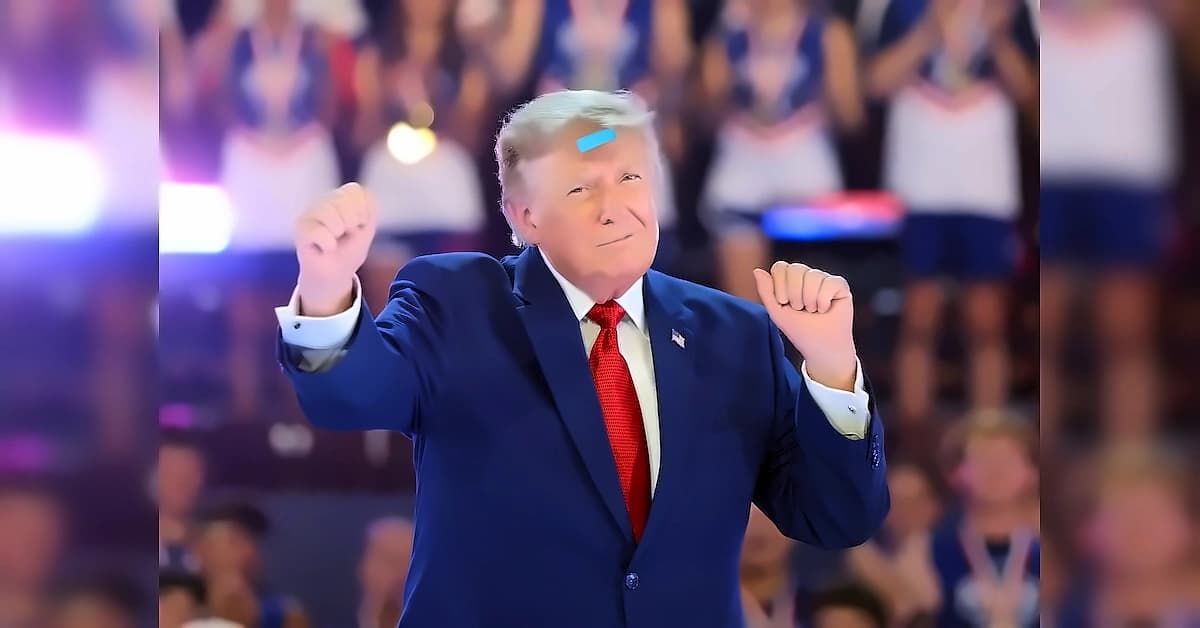
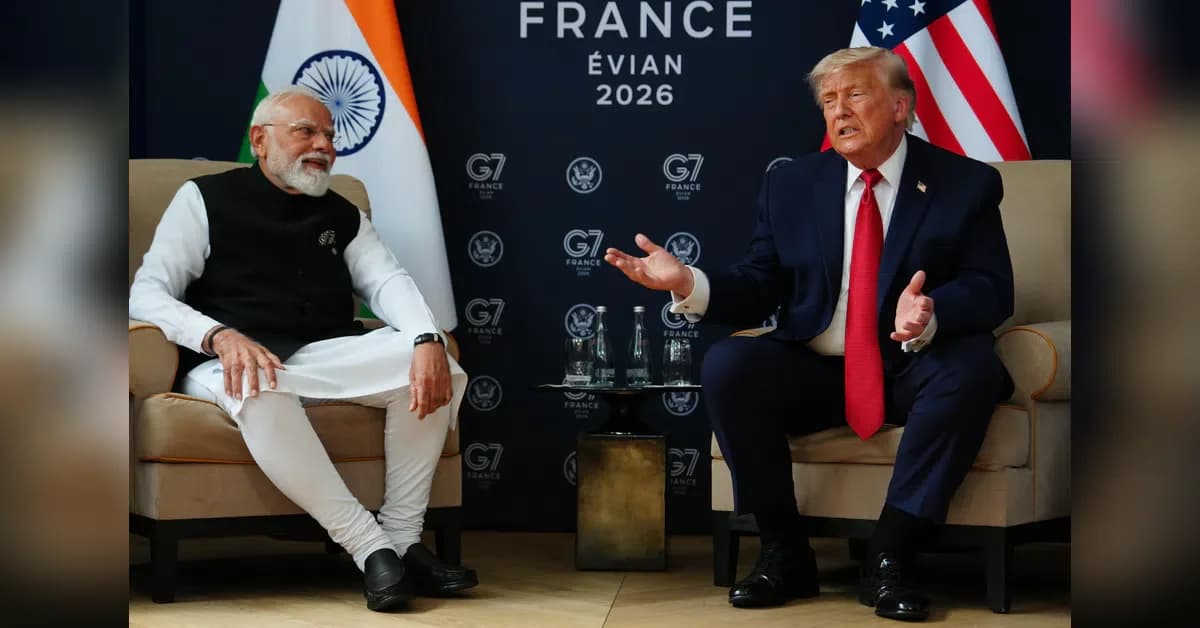
US Secretary of State Marco Rubio sought to dismiss allegations of rising anti-India rhetoric in the US, emphasizing President Donald Trump's strong support for India and Prime Minister Narendra Modi. According to Business Standard, Rubio stated 'The President is a big fan of India, a big fan of Prime Minister Modi. I wouldn't be here if the President didn't want me to be here. He wouldn't have sent someone like Sergio (Gor) to be our ambassador, someone who's very close to the President.' The comments came as Rubio is currently on a four-day trip to India aimed at recalibrating bilateral relations that have faced headwinds since mid-last year. Rubio's remarks came against the backdrop of a controversy after his response to a reporter's question on Sunday about alleged racism towards Indians went viral.
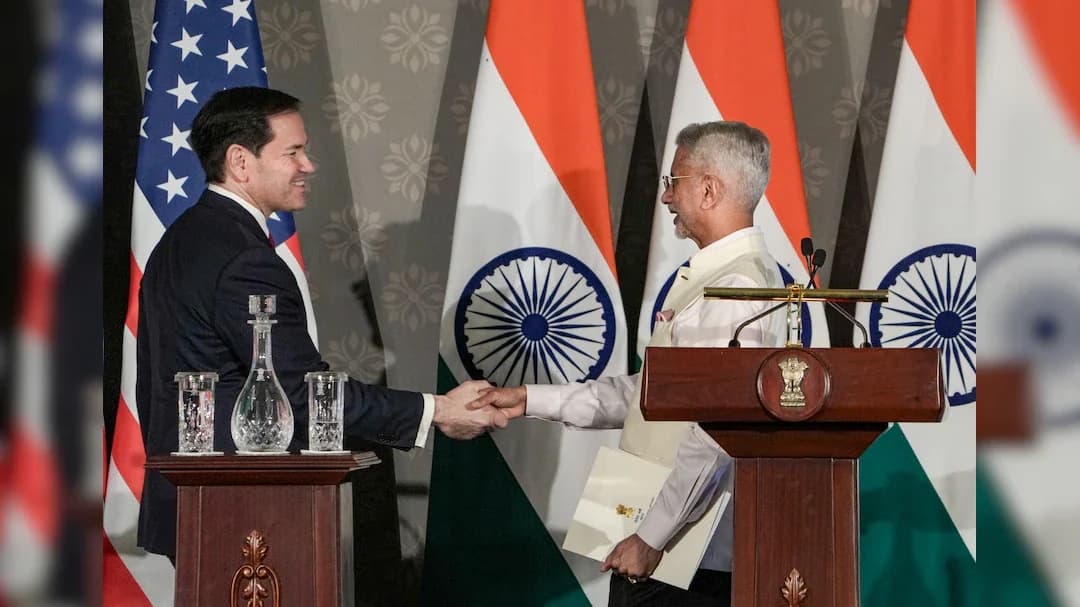
External Affairs Minister S Jaishankar raised concerns over the Trump administration's changes to visa and immigration policies during talks with US Secretary of State Marco Rubio on Sunday. According to reports from PTI, speaking at a joint media briefing after wide-ranging discussions, Jaishankar said people-to-people ties remain central to the India-US relationship and flagged challenges faced by legitimate Indian travellers in obtaining visas. 'People-to-people ties are at the heart of the relationship. I apprised Secretary Rubio of challenges that legitimate travellers face in respect to visa issuance,' Jaishankar stated. The concerns come amid significant policy changes, including a directive from US Citizenship and Immigration Services requiring foreigners seeking green cards or permanent residency to return to their native countries to apply, though the agency later moderated its stance. Rubio acknowledged that there could be 'some bumps' and 'friction points' during the transition period as the US works to improve its immigration system.
During the discussions, Jaishankar emphasized the importance of maintaining legal mobility channels for bilateral cooperation. As reported by PTI, he said 'While we cooperate to deal with illegal and irregular mobility, our expectation is that legal mobility would not be adversely impacted as a consequence. After all, this is very relevant to our business, technology and research cooperation.' The remarks come amid concerns in India over changes to US immigration rules, including higher H1B visa fees and revised green-card procedures that reportedly require applicants to file from their home countries. Rubio explained that the reforms were part of a broader overhaul of the immigration system and were not specifically directed at India. 'The changes that are happening now, or the modernisation of our migration system into the United States, are not India-specific; it is global, it's being applied across the world. We are in a period of modernisation. We've had a migratory crisis in the United States. This is not because of India, but broadly, we have had over 20 million people illegally enter the United States over the last few years, and we've had to address that challenge,' Rubio stated. He noted that 'The US is the most welcoming country in the world on immigration,' adding that 'Anytime you undertake a reform, any time you undertake a change in the system by which you admit people, there's going to be a period of transition that's going to create some friction points and some difficulties.'
Responding to questions about alleged incidents of racism against Indians in the United States, Rubio dismissed suggestions of systemic targeting while acknowledging isolated remarks. According to PTI reports, 'I will take that very seriously about the comments. I'm sure that there are people who have made comments online and in other places because every country in the world has stupid people,' Rubio said. He added that 'I am sure there are stupid people here; there are stupid people in the United States who make dumb comments all the time,' Rubio said. The controversy arose when a reporter asked about 'a lot of racist comments coming from the United States against Indians, Indian-Americans' and suggested that perhaps the reporter was referring to President Trump's controversial comments against Indians. When Rubio asked whom he was referring to, the reporter responded by saying 'We all have seen those comments. We've seen endorsement of those comments.' Rubio indicated that he thought the reporter was referring to comments by people online, stating 'The bottom line is that in the modern era, you go online, and there are people saying all kinds of crazy stuff. I don't even know if they're real people or who they are.'
Addressing questions about divergent foreign policy approaches, both leaders clarified their respective national interest-driven policies. As reported by PTI, 'While the United States has been very forthright in putting forward its foreign policy outlook as ''America First'', India has an ‘India First' approach. So both of us are obviously driven by our respective national interests,' Jaishankar said. Rubio's India visit comes more than a month after Foreign Secretary Vikram Misri travelled to Washington for talks aimed at stabilising ties that had come under strain over the past year. Relations between the two countries deteriorated after Washington imposed punitive tariffs on Indian goods and US President Donald Trump repeatedly claimed he had played a role in defusing the India-Pakistan military tensions in May. New Delhi firmly rejected those assertions, maintaining that the cessation of hostilities resulted solely from direct talks between India and Pakistan. Differences over immigration policies, including higher H1B visa costs, also contributed to tensions in bilateral ties. However, both sides have stepped up diplomatic engagement in recent months and are now working towards finalising a mutually beneficial trade agreement.
The discussions covered the entire spectrum of the Comprehensive Global Strategic Partnership, with Jaishankar focusing heavily on expanding defence and economic ties between the two countries. According to PTI reports, 'Where defence and security cooperation is concerned, you're all aware that the 10-year major defence partnership framework agreement was recently renewed. A comprehensive underwater domain awareness roadmap was also signed. We discussed the importance of taking into account the Make in India approach and lessons drawn from recent conflicts while going forward in the defence domain,' Jaishankar stated. Rubio described the relationship between the world's two largest democracies as having evolved beyond traditional diplomacy. 'A strategic partnership is something very different. A strategic partnership is when your interests as two nations are aligned, and you work together strategically to solve those problems,' he said. 'The list of issues that we work together with India on, the breadth of scope of them, is what highlights the fact that India is an important strategic partner in the United States, one of our most important strategic partners in the world,' Rubio emphasized. Rubio's India visit comes more than a month after Foreign Secretary Vikram Misri travelled to Washington for talks aimed at stabilising ties that had come under strain over the past year.