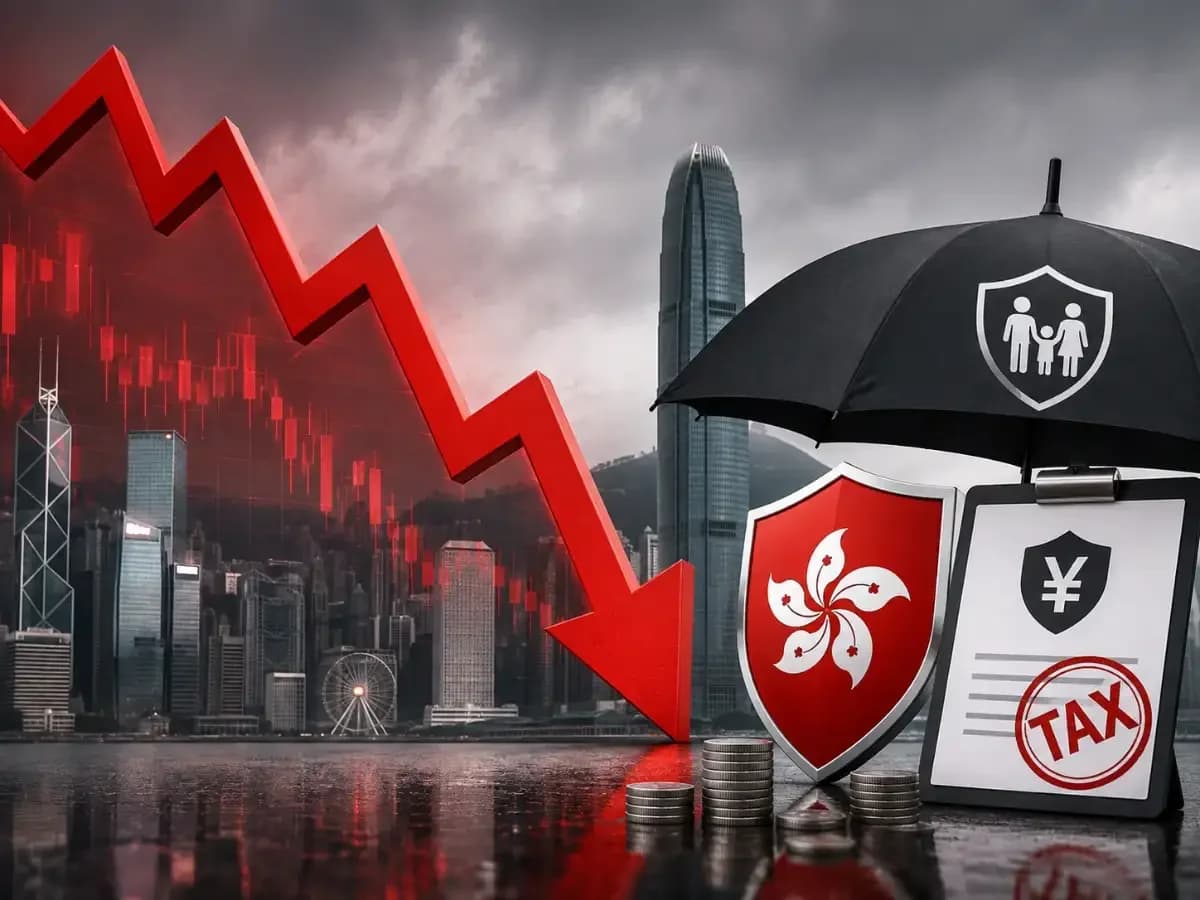
Shares of Prudential plunged as much as 5.8% on Thursday following continued reports that Chinese tax authorities have begun collecting personal income tax on returns from offshore insurance policies. According to Caixin, mainland tax authorities have started applying a 20% personal income tax on returns from Hong Kong insurance policies, closing a loophole that policyholders had previously used to shelter offshore gains. The tax reportedly covers dividend payouts and interest earned on prepaid premiums, signaling tighter scrutiny of offshore investments by Chinese authorities as part of Beijing's broader efforts to strengthen oversight of outbound capital flows. Prudential hit an intraday low as the crackdown threatens one of the insurer's most lucrative growth markets, with the latest decline marking continued pressure on the stock following initial reports of the tax measures.
The tax development weighed heavily on major insurance companies in Hong Kong, with Prudential shares falling as much as 5.8% on Thursday. AIA Group slumped 8.8%, while Hong Kong-based FWD Group declined 4.5%, contributing to broader market pressure. Chinese insurers with significant offshore operations also faced continued pressure, with Ping An Insurance and China Life Insurance both falling more than 1% amid concerns about weakening demand for Hong Kong-based products. HSBC, which has substantial insurance business in Hong Kong, also faced selling pressure, with its life-insurance arm having become one of its fastest-growing wealth engines. According to Bloomberg Intelligence, the reported crackdown threatens a major pillar of HSBC's valuation and its outperformance versus European bank peers this year. HSBC's fee income gained 21% in the second quarter, while first-half annual new premiums in Hong Kong rose 26%.
The latest tax collection drive has been facilitated by improved global financial data-sharing, which has narrowed the information gaps that previously made enforcement difficult. As reported by Caixin, early enforcement cases have emerged in Beijing and Hangzhou, with tax lawyers and insurance insiders confirming the implementation of these new measures. The crackdown comes as Beijing's broader efforts to strengthen oversight of outbound capital flows continue, with authorities using information sharing under the Common Reporting Standard to access details of overseas insurance policies. Enforcement is expected to tighten further as authorities leverage improved data-sharing capabilities to monitor cross-border financial transactions. According to Bloomberg, Chinese tax collectors are finally enforcing a tax that was already on the books, with the new part being apparent enforcement on investment gains from offshore life, investment-linked, and universal life insurance policies.
Hong Kong was Prudential's largest profit contributor in 2025, with the insurer previously attributing double-digit growth in new business profit in the city to strong sales among both local customers and visitors from mainland China. In its annual results released in March, Prudential said new business profit in Hong Kong grew 12%, driven by stronger sales to both local customers and visitors from mainland China. The company had expressed confidence that demand from mainland visitors would remain resilient. Prudential's London-listed shares had already come under pressure, falling as much as 13% on Wednesday following the initial report. According to Jefferies analysts Philip Kett and Derald Goh, the 20% tax makes the incremental upside from buying a policy in Hong Kong lower, which might be reasonably expected to weigh on volumes. They added that it is "less likely that offshore insurance policies are banned entirely." AIA declined to comment on the developments. Jefferies noted that the tax measures could make Hong Kong insurance products less attractive than comparable domestic offerings, though they emphasized that the move might reduce concerns that Beijing could eventually prohibit offshore insurance sales altogether.
Analysts suggest the current market reaction may be overdone, with Jefferies describing the sell-off as "more panic-driven and overdone." Goldman Sachs analysts noted that until there is greater clarity on whether regulators plan to impose a broad-ranging tax on insurance income, there is likely to be a "share price overhang" for the listed insurers. Citi analysts emphasized that while insurance company shareholders were nervous about the impact of a new tax, it would be less of a threat than a total ban on buying offshore insurance. The key factors underpinning demand for Hong Kong insurance, including the drive for asset diversification offshore and multi-currency flexibility, remained intact. However, as Bloomberg reports, companies that built growth on tax-free returns for mainland clients now have a thinner pitch, though the business does not disappear entirely. The question remains what buyers do next, as Hong Kong policies still offer international market access and dollar-based products, but if the tax advantage erodes, demand could cool.