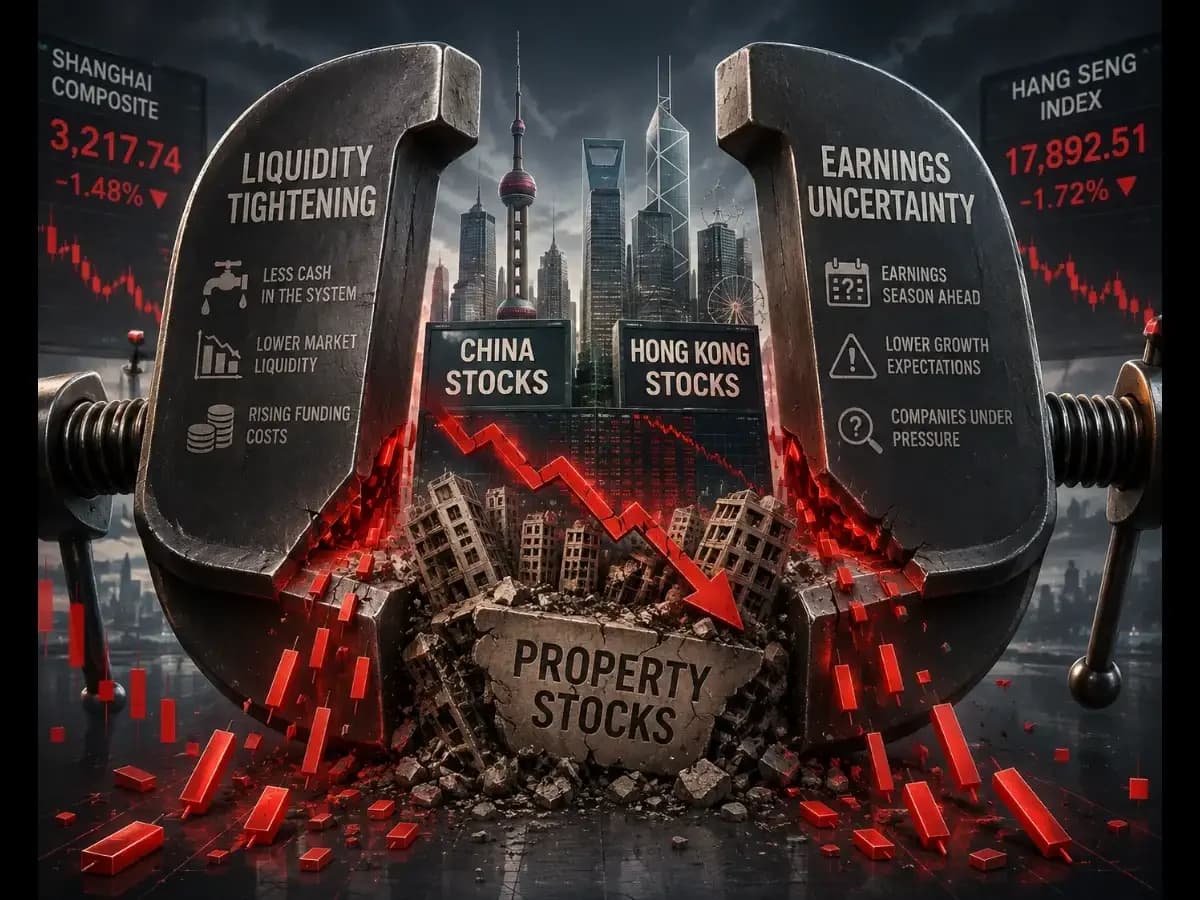
Hong Kong's Hang Seng index gained 0.4% while China's mainland stocks traded mixed on Monday, with technology and AI stocks leading declines. According to The Economic Times, the Hang Seng Tech Index added 0.2% despite broader market weakness, while the Hang Seng AI Index fell 2.4%, led by a 10.5% plunge in Z.AI following a discounted share placement. The mixed performance reflects investor caution ahead of key interest-rate decisions by major global central banks, with markets preparing for potentially important decisions from the US Federal Reserve and the Bank of Japan later this week. At the midday break, China's Shanghai Composite was up 0.2% at 3,894.28 points, while the blue-chip CSI300 index declined 0.3%.
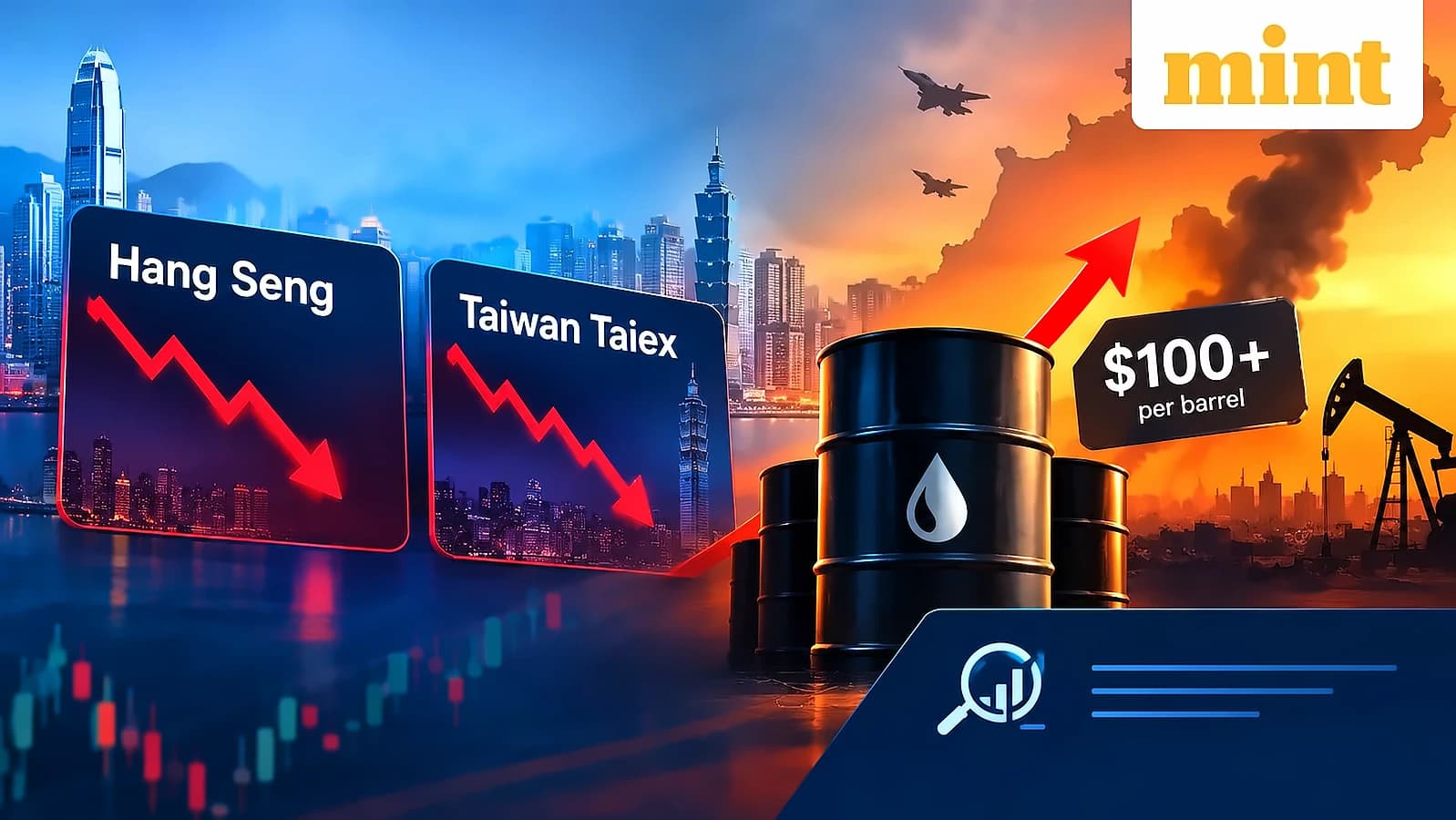
International benchmark Brent crude surged past $100 per barrel for the first time in almost six weeks, with futures trading 2.57% higher at $100.44 a barrel. US benchmark West Texas Intermediate crude jumped 2.03% to $94.92 a barrel. The sharp rise in energy costs, driven by supply risks stemming from the Middle East conflict, is making analysts increasingly cautious about China's outlook. As per Business Standard, oil prices remained elevated as tensions between the US and Iran escalated, with Iran indicating that the conflict could intensify while US President Donald Trump said the war was unlikely to end before the November midterm elections. The US military reportedly struck five Iranian tankers in response to attempted missile attacks on a Navy warship, while attacks by an Iranian-backed Houthi rebel group ignited fires at oil facilities in Saudi Arabia.
Technology and AI stocks were among the major losers in the latest session, with the CSI AI Index declining 1.2% and the CSI Semiconductor Index weakening 0.7%. According to The Economic Times, the ChiNext Composite fell 0.5%, while Shanghai's technology-focused STAR50 index dropped 0.9%. In Hong Kong, Foxconn Industrial Internet fell 2.04%, Ping An Insurance declined 1.32%, Zhongji Innolight dropped 2.07%, and BYD slid 2.75%. The weakness in AI-related stocks highlighted growing investor caution toward high-growth technology shares after their strong gains, with Minimax declining 5.6% by the midday trading break. However, some defensive sectors provided support, with China's banking sector rising 0.5% as investors sought relatively stable areas amid heightened uncertainty.
BofA Securities lowered its growth forecasts for China to 4.2% for 2027 and 4.0% for 2028, while retaining its 2026 growth forecast at 4.5%, as reported by Reuters. China's annual inflation rate rose to 0.8% in August from 0.5% in July, with producer prices increasing 3.8% year-on-year, accelerating from a 3.5% rise in July. The impact of higher costs is also beginning to show up in economic data, with China's factory-gate inflation gathering pace in August while consumer price growth accelerated, even as underlying domestic demand remained subdued. According to Business Standard, investors were particularly concerned about rising inflation in China, with consumer prices accelerating in August as food and energy costs increased. Higher oil prices could add further pressure on inflation if tensions continue.