US stocks opened higher as June inflation came in cooler than expected, easing immediate concerns over further Federal Reserve tightening as earnings season gets underway. US CPI slowed to 3.5% year-on-year in June from 4.2% in May, below expectations of 3.9%, while on a monthly basis, CPI fell 0.4%, marking the first monthly decline since 2020. The drop in headline inflation was driven largely by the biggest fall in gasoline prices since 2022, with fuel prices declining almost 10%. Core CPI, which strips out food and energy prices, also surprised to the downside, easing to 2.6% from 2.9%, with markets having expected core inflation to remain unchanged. Treasury yields moved lower as investors scaled back expectations of a near-term Fed rate hike, with the softer inflation data likely to be welcomed by Federal Reserve officials, reducing the immediate pressure for further rate hikes. Following the release, IBM is tumbling 19% in pre-market trading after second-quarter results highlighted a significant shift in enterprise spending away from higher-margin software towards hardware infrastructure, with the company reporting revenue of $17.2 billion, missing forecasts of $17.86 billion.

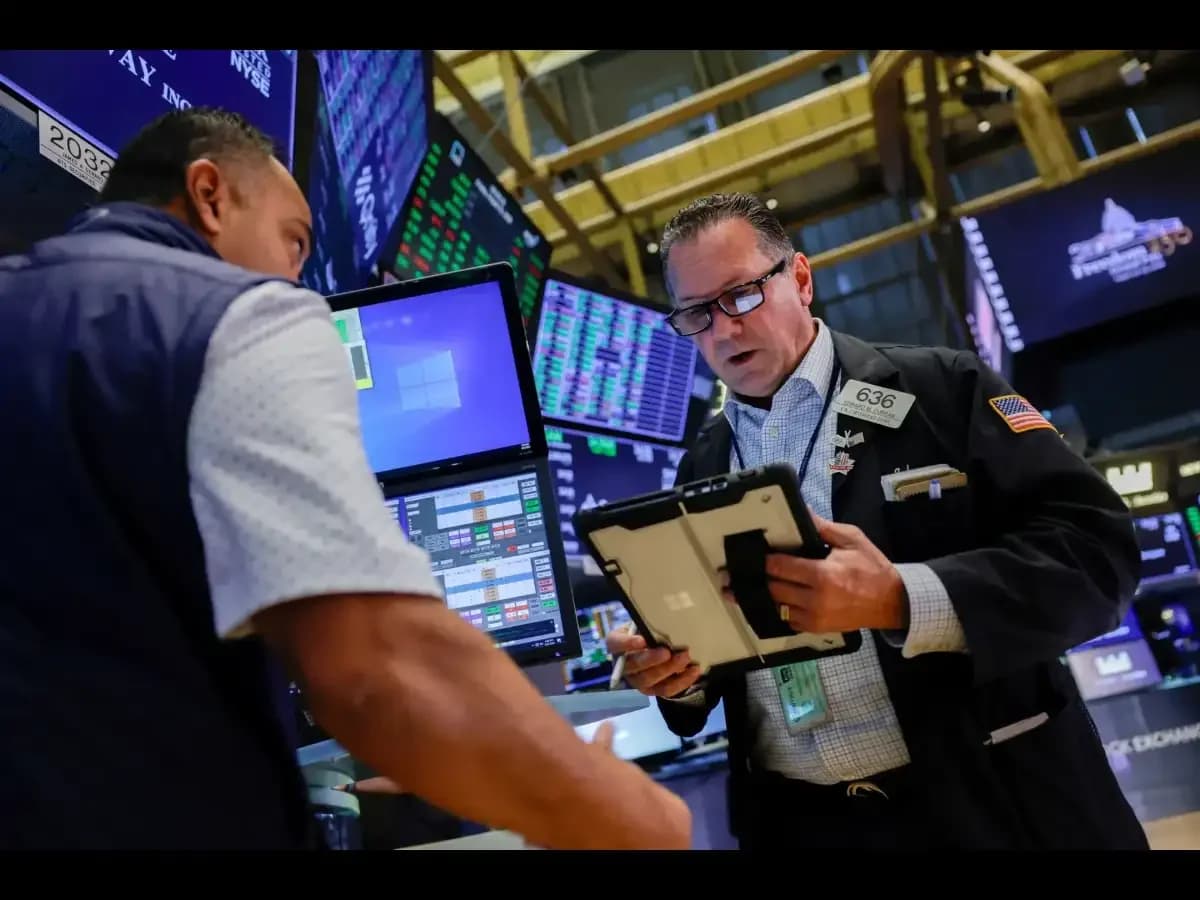
US markets opened with mixed performance as investors weighed softer inflation data against major bank earnings. As of 9:35 a.m. EDT, the S&P 500 edged up 0.1% and the Nasdaq Composite gained 0.4%, while the Dow Jones Industrial Average was down 96 points, or 0.2%. According to The Times of India, the market drew support from declining bond yields after data showed US consumer prices rose 3.5% in June compared with a year earlier, with the reading below economists' forecast of 3.9% for June helping calm investor sentiment. The decline in bond yields also raised hopes of lower borrowing costs for mortgages and other loans, providing support to housing-related stocks. Builders FirstSource, a supplier of countertops, windows and other construction materials, rose 1.9%, while homebuilder Lennar advanced 1.5%. Technology shares, particularly chipmakers, also recovered after recent weakness, with Micron Technology gaining 4.4% and Nvidia rising 0.6% after both stocks had been among the biggest drags on the S&P 500 in the previous session. The mixed opening reflects balancing optimism on inflation with caution around corporate performance, as markets assess both the positive impact of cooling inflation on monetary policy expectations and the ongoing earnings season from major financial institutions.
Despite recent volatility in chip stocks, investors remain confident in the artificial intelligence investment boom. Goldman Sachs Group Inc.'s trading desk wrote that client conversations do not indicate any meaningful fundamental worries about the AI trade or capex story, adding that clients broadly viewed the recent unwind as largely technical rather than fundamental. BlackRock Inc.'s Helen Jewell echoed that view, saying commitments to AI spending should continue supporting the investment theme for another two to three years, even as the largest technology companies begin to generate negative free cash flow and increasingly tap debt markets to finance their buildouts. Micron Technology announced that it was looking to spend more than $250 billion through 2035, accelerating its planned US fab and technology investments. In the IPO space, SK Hynix Inc.'s US initial public offering was said to be more than seven times oversubscribed ahead of pricing later Thursday, with the South Korean memory-chip maker guiding its US offering price to $149. The company's American depositary receipts are set to begin trading Friday, with investors facing the added challenge of valuing the shares without an established history for the premium typically commanded by US listings. The VanEck Semiconductor ETF (SMH) rose 2.5% due to significant gains in semiconductor stocks, with Micron Technology gaining 4.5% and SanDisk surging 7.6%.
The oil market presented a complex picture as traders assessed the latest Iran developments. Brent crude, the international benchmark, climbed another 3.5% to $86.18 per barrel, with the benchmark returning to the level seen before the United States and Iran reached their interim agreement to suspend hostilities in the middle of last month. Oil prices initially jumped on the headline of Iran declaring the Strait of Hormuz closed, but then rolled over as traders concluded the latest exchange of strikes looked more like a violent reset than the opening act of a wider war. The market's working assumption is that Iran may continue to rattle the gates and Washington may keep tightening the screws, but neither side appears ready to cross the line into a closure of the Strait of Hormuz or a conflict capable of knocking meaningful volumes of Middle East production offline. Despite the improved inflation data, significant risks remain as the conflict in the Middle East continues to threaten shipping through the Strait of Hormuz, the narrow waterway that carries crude oil from the Persian Gulf to global markets. The crude screen may be giving investors a cleaner picture than the inflation pipeline deserves, with refined products not following oil lower with the same enthusiasm and crack spreads remaining elevated.
Following the inflation release, traders sharply lowered expectations of another rate increase by the Federal Reserve at its policy meeting later this month. According to CME Group data, the probability of a rate hike dropped to below 17% from nearly 42% a day earlier. Higher interest rates help contain inflation but also tend to slow economic activity and weigh on the value of a wide range of financial assets. The softer-than-expected data eased concerns that the Federal Reserve may need to tighten monetary policy further, with the decline in bond yields also raising hopes of lower borrowing costs for mortgages and other loans. The swings for oil prices halted what had been a steady decline in gasoline prices, with the cost for a gallon climbing a nickel overnight, according to motor club AAA. The average price for a gallon of regular gasoline was $3.85 Thursday, up 68 cents from a year earlier. Investors are also turning their attention to the corporate earnings season, with companies beginning to report their April-June quarter results and provide updates on profitability.
Global equity markets showed mixed performance as geopolitical tensions weighed on sentiment. Britain's FTSE 100 fell 0.7%, while France's CAC 40 rose 0.3% and Germany's DAX traded 0.1% higher at midday in Europe. South Korea's Kospi index rose 0.6% after tumbling 5.3% the day before, with SK Hynix jumping 5.3% in Seoul as the company prepares to sell shares of its stock that will trade in the United States. Stock indexes rose 1.7% in Shanghai and 0.9% in Paris, while Hong Kong's Hang Seng slipped 0.7% as shares of Apple supplier Luxshare fell 1.5% in its trading debut. Stocks broadly got some help from falling yields in the bond market, with the yield on the 10-year Treasury falling to 4.54% from 4.56% late Wednesday. Technology shares helped cushion broader losses, with Nvidia extending gains after reports suggested China may allow limited domestic access to the company's H200 AI chips.