The eurozone's dominant services sector experienced a notable deceleration in August, with the S&P Global Eurozone Services PMI Business Activity Index falling to 51.6 from 51.7 in July, according to the latest PMI data released by S&P Global. This represents a two-month low for the services sector, though it remained above the crucial 50-point threshold that indicates expansion. The composite PMI, which combines services and manufacturing data, remained unchanged at 52.0 in August, matching July's eight-month high and staying close to its long-term average of 52.3. As per S&P Global, the latest figures show sustained growth in services and manufacturing despite inflation pressures, with the bloc's private sector continuing to grow at a steady, though modest, pace. Joe Hayes, Senior Principal Economist at S&P Global Market Intelligence, noted that "August's PMI data puts the euro area on track for a solid quarter of growth in Q3. Momentum in the industrial economy has picked up nicely and the service sector has shaken off the initial weakness seen after energy prices surged at the start of the Middle East war."

Despite the services sector slowdown, overall private-sector activity remained stable with new order inflows growing at the same pace as July, representing the joint-strongest improvement in demand since November 2025, according to S&P Global. However, this growth was primarily driven by domestic demand as new export orders declined. At the broader private-sector level, the eurozone private sector recorded its first increase in new export orders in four and a half years, supported by stronger demand for manufactured goods. Services employment strengthened significantly, growing at its fastest pace in eight months and extending a positive trend that began in June. According to S&P Global, employment rose for the first time in 2026, with workforce numbers increasing at a pace aligned with the survey average, marking August as the first month of net job creation this year across the wider private sector. The rate of job creation quickened to an eight-month high in August, despite a moderation in firms' expectations for growth in the year ahead. The August PMI data were collected between August 10 and August 25, 2026.
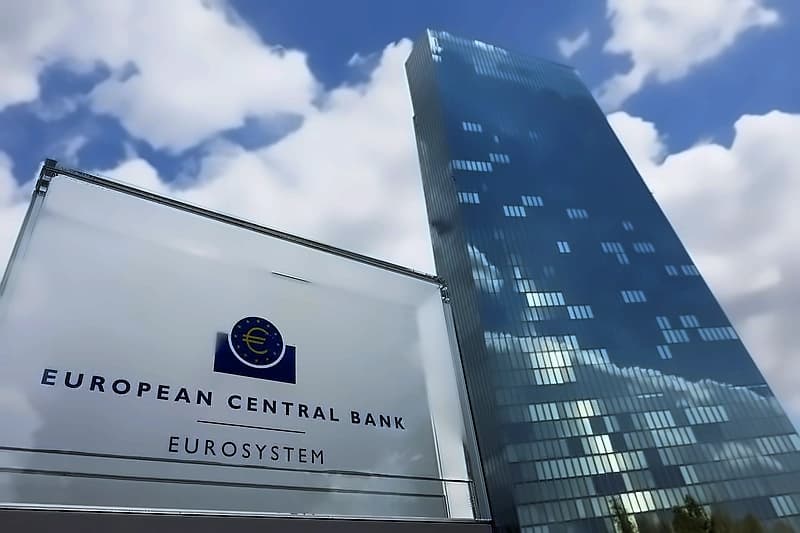
Price pressures remained elevated throughout the eurozone economy, with services input costs and output charges both rising to three-month highs during August, according to S&P Global. However, input cost inflation decreased slightly while output price increases matched July's level, with both measures remaining elevated compared to levels seen before the Middle East war outbreak. The latest price data indicated a pause in the eurozone's recent disinflationary trend, with inflationary pressures remaining above historical norms and higher than levels recorded before the outbreak of the U.S.-Israeli conflict with Iran. Official data released earlier this week showed eurozone inflation had risen back above 3% in August, increasing pressure on the European Central Bank as policymakers prepare for their September 10 meeting. Joe Hayes from S&P Global Market Intelligence emphasized that "it's noteworthy that the August data indicated a stalling of the disinflationary trend witnessed since the PMI prices indices peaked in May. Taken alongside the resilience in economic activity as illustrated by the latest figures, the European Central Bank may feel a tightening of policy at next week's meeting is now justified."
Growth remained uneven across the eurozone region, with southern eurozone countries driving the expansion as Spain and Italy posted marked expansions in overall economic activity levels, while Germany recorded its fastest growth since March, as reported by S&P Global. France was the main exception, with private-sector activity contracting for an eighth consecutive month. The latest figures point to continued economic resilience in the third quarter, with manufacturing activity gaining momentum while the services sector recovered from weakness earlier in the year. Companies continued to reduce outstanding workloads, although backlogs declined at a slower rate than in previous months, indicating that businesses are managing their workload more efficiently. Despite capacity enhancements, the extent to which outstanding business was cleared was only marginal and the weakest since March. Joe Hayes from S&P Global Market Intelligence noted that "the European Central Bank may feel a tightening of policy at next week's meeting is now justified," given the combination of sustained economic growth and persistent inflationary pressures.