Global stock markets experienced a dramatic surge on Friday as U.S. President Donald Trump announced that Washington and Iran have reached an agreement to extend their ceasefire and lift restrictions on shipping through the Strait of Hormuz. According to Reuters, Australian shares booked their best session in seven weeks, with the S&P/ASX 200 index rising 1.6% to 8,731.70 in its largest single-day gain since April 8. Qatar's main share index (.QSI) had previously jumped 3.2% - its biggest intraday gain since April 8 - with all constituents in positive territory. Egypt's blue-chip index (.EGX30) had ended 1.5% higher, with Commercial International Bank (COMI.CA) rising 3.4%. The Saudi market remained closed ahead of the upcoming Eid break, but the broader regional surge reflects the market's response to the potential peace agreement.
The positive sentiment was driven by significant diplomatic developments in Middle East negotiations, though recent comments from President Trump have added uncertainty. As reported by Bloomberg, Pakistan's army chief arrived in Tehran on Friday as the favored interlocutor between Washington and Tehran, with signals of progress in talks to end the war. The United Arab Emirates joined Saudi Arabia and Qatar in urging US President Donald Trump to give negotiations a chance, with Win Thin, chief economist at Bank of Nassau, noting that "all the major players are making a big push for some sort of peace deal." However, Trump said on Sunday he had told his representatives not to rush into any deal with Iran, as his administration played down hopes of an imminent breakthrough. In his latest social media post on Truth Social, Trump wrote that negotiations with Tehran were proceeding in an "orderly and constructive manner," but emphasized "both sides must take their time and get it right. There can be no mistakes!"
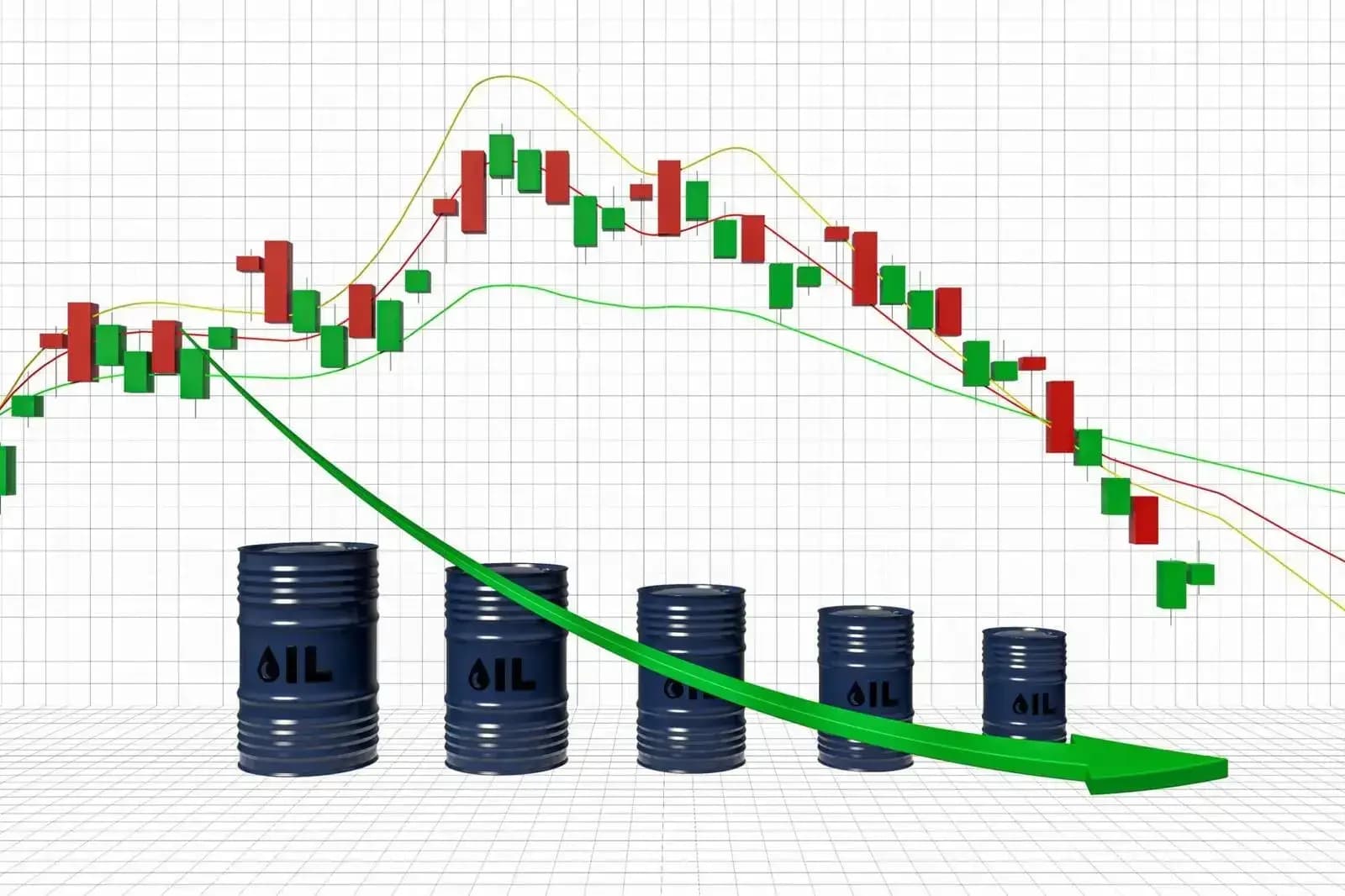
Oil markets experienced significant volatility as peace hopes weighed on energy prices, with crude prices falling more than 1% over the news of the potential ceasefire extension. Brent crude futures had previously fallen about 5% on Sunday to $98.47 a barrel as of 01:05 GMT, according to Al Jazeera, while U.S. West Texas Intermediate was at $92.03 a barrel, also down over 4%. The nearly three-month war in the Middle East has sent energy prices soaring and rewired global rates outlook due to worries over inflation as Tehran effectively shut down the strait through which much of the world's energy supply passes. Before the conflict, the Strait of Hormuz carried one-fifth of global oil and liquefied natural gas shipments, making its reopening crucial for global energy markets. June Goh, a senior oil market analyst at Sparta in Singapore, noted that "fundamentally, there is no change to the underlying picture, where 10-11 million barrels per day of crude oil continue to be shut-in for every day the Strait of Hormuz remains shut." However, markets are expecting a significant release once the deal is finalized, with Sparta estimating about 100 million barrels of crude oil from the stranded ships to flow out once the agreement is in place.
Australian shares booked their best session in seven weeks on Friday, with the S&P/ASX 200 index rising 1.6% to 8,731.70 as news of the potential ceasefire extension sparked a rush into battered stocks. According to The Economic Times, Kyle Rodda, a senior financial market analyst at Capital.com, noted that "The wobbles in the ceasefire that reinflamed geopolitical risks and sparked a pullback in the ASX200 are a thing of the past, with the market poised for a bounce as a U.S.-Iran peace deal comes within reach." Financials rose 1.2% for the day, but logged a 3.9% loss for the month, weighed down by investor jitters over slowing mortgage credit growth after major tax changes were announced in the federal budget. Miners gained 3%, helping the sub-index notch its best month since August last year on firm base metal prices, with BHP and Rio Tinto rising 2.9% and 1.2%, respectively. Energy was the sole sector to end the day in negative territory with a 0.1% fall, posting its worst month since September. New Zealand's S&P/NZX 50 index closed 0.3% higher at 13,244.55, with the benchmark rising 2.6% for the month after two straight months of losses.

Demand remained strong for emerging-market companies benefiting from the AI boom, particularly in Asia. According to Bloomberg, Guy Miller, chief markets strategist at Zurich Insurance, emphasized that "it's all about technology" as investors focus on semiconductor demand and supply dynamics. The technology sector continues to attract investment interest despite broader market volatility, with Nasdaq futures 0.89% higher and S&P futures up 0.6% showing continued strength in technology-focused markets. While the global energy crisis and resulting high costs of fuel, fertilizer, and food are expected to persist in the near term, the potential peace agreement offers market relief for regional economies. However, experts warn that Sparta estimates still about three to six months required to get everything back to status quo, including time to bring production and refineries back online.