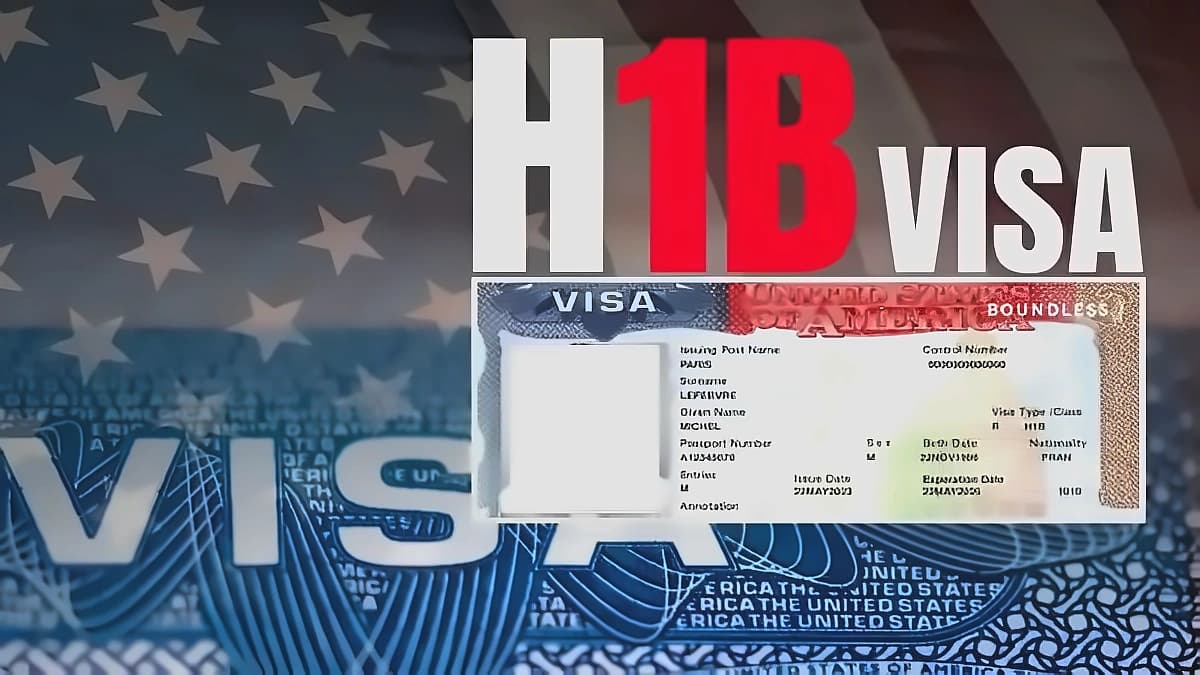
Two US district courts have successfully blocked enforcement of President Trump's $100,000 fee for new H-1B visa applications, providing temporary relief to Indian technology firms. According to reports from Mint, the latest ruling came just a week ago when a coalition led by a California-based nurse staffing firm won a case challenging Trump's proclamation in a California district court. On 30 September, Judge Haywood Gilliam ruled that the Trump administration went beyond its jurisdiction to issue such a proclamation, finding that US agencies skipped seeking public comments and conducted no analysis of impact on small businesses. The October 5, 2026 court decision represents a significant development for foreign professionals, including those from Kenya and other African countries, who rely on H-1B visas to work in the US. The court's injunction comes after concerns were raised about the legality of the fee and its potential impact on businesses and skilled workers.
Indians, particularly IT sector professionals, hoping to work in the US, have a steep uphill climb as the Trump administration's repeated tightening of H-1B visa restrictions creates significant uncertainty. As reported by The Times of India, Indians are the biggest beneficiaries of the H-1B visa programme, making up around 70% of the total approved list with 283,772 approvals out of 406,348 total petitions in FY 2025. Technology-related occupations dominate the programme, with computer-related roles accounting for 252,088 approvals, or 62% of all beneficiaries, and systems analysis and programming representing 50.4% of approvals. The median annual compensation for all approved H-1B beneficiaries in FY 2025 was around $133,000, with computer-specific roles at $140,000, though the range spans from $117,000 at the 25th percentile to $179,000 at the 75th. According to The Times of India, early-career Indian workers and IT-services staffing models are particularly squeezed due to the flat fee and wage-weighting policies that penalize volume at lower wage levels.
The fee implementation has significantly affected India's largest tech services companies, which rely heavily on H-1B visas for skilled worker deployment. As reported by Mint, around 57,000 new H-1B visas were approved for Indians last year, down 28% from FY24. The impact is already visible in registration patterns, with H-1B visa registrations by major Indian companies plunging 92% for FY27 to 1,763 from 21,919 a year earlier. The top seven Indian firms won a little under 5,000 initial H-1B approvals in the most recent cycle, down roughly 70% from FY2015 and 37% from FY2024. According to The Times of India, the traditional model of India employee + H-1B + US client site + onsite delivery is being replaced by US local employee + India-based engineering/delivery team + global technology platforms, with companies increasingly focusing on local hiring for client-facing work and expanding offshore delivery for roles that don't require physical presence.
A new bill introduced in the US House of Representatives proposes dramatic increases in penalties for H-1B visa programme violations, targeting employers rather than workers. The H-1B Visa Fraud Crackdown Act (H.R. 10643) was introduced on October 1, 2026, by Representative Beth Van Duyne along with five other Republican lawmakers, and has been referred to the House Judiciary Committee. Under the proposed legislation, the maximum fine for serious H-1B violations would rise from $35,000 to $250,000, while the minimum debarment period would increase from three years to 10 years. The bill specifically targets employers found to have committed willful violations, with fines reaching $250,000 and debarment periods extending to 10 years when violations result in displacement of American workers. As per Immigration Analytics, the bill does not change H-1B visa numbers, eligibility, or filing fees, but focuses on dramatically increasing penalties for employers who break the rules.
The labour tightening is expected to have significant implications for India's $300 billion tech sector, as the US accounts for at least a third to about half of its revenue. According to The Times of India, experts suggest that while the H-1B visa programme may not be scrapped entirely, it's experiencing "death by restriction" through multiple changes including the $100,000 fee, wage-weighted lottery favoring senior workers, new layoff and compliance scrutiny, and the $70,000 OPT/STEM-OPT fee for students. Alternative visa options remain available but have narrower eligibility requirements, including L-1 visas for intracompany transfers, O-1 visas for extraordinary ability, and employment-based green card pathways. However, these routes face major obstacles, with EB-2 and EB-3 facing long India-specific backlogs and all FY2026 EB-2 immigrant visas for India being exhausted before the fiscal year ended. Beyond the US, countries such as Canada, the UK, Australia, Germany, Singapore and the UAE continue to attract skilled Indian professionals through various work and residence programmes. As The Times of India reports, the unexpected advantage for India may be increased remote working opportunities, creating jobs in India for software development, testing and support services that can be performed remotely.