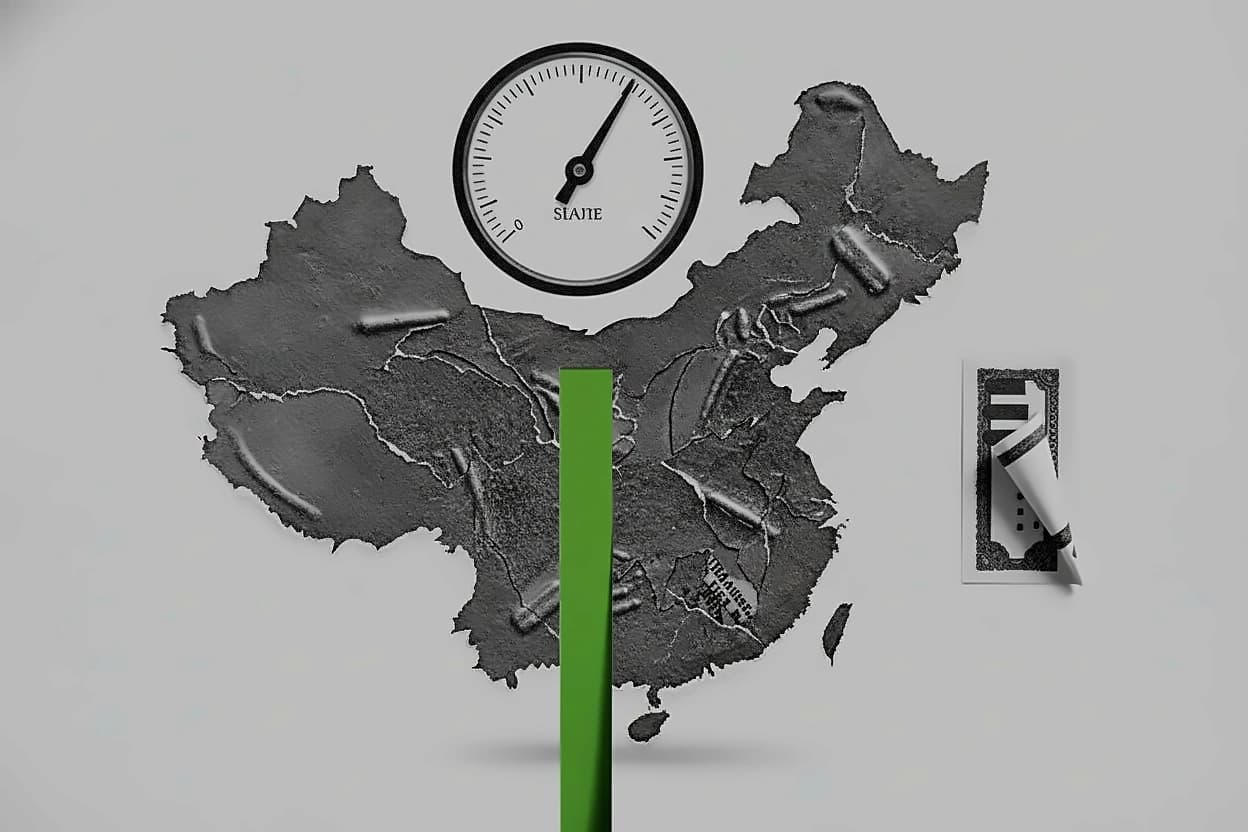
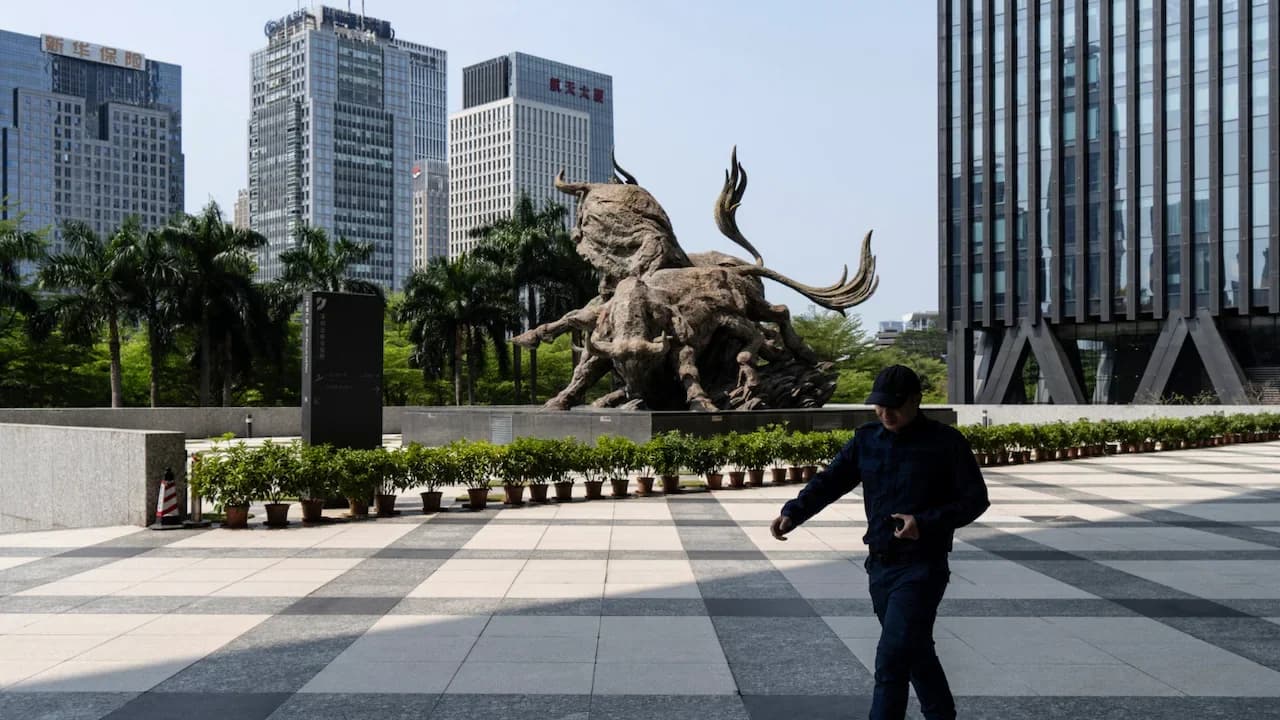
Chinese equity markets experienced mixed performance as investors responded to contrasting signals from AI sector optimism and ongoing policy uncertainty. According to Reuters, the blue-chip CSI300 index gained 0.5% by lunch break, while the Shanghai Composite Index rose 0.4% and the Hang Seng Index was up 0.1%. The gains were primarily driven by strong AI demand forecasts from U.S. companies, though broader market sentiment remained cautious amid concerns over weak consumption and uncertain returns on AI investments. However, the latest data reveals that China's GDP growth slowed to 4.3% in Q2 2026, falling below the government's annual target of 4.5%-5% and marking the lowest figure since China emerged from its strict Covid-zero policy in 2022. This economic weakness has translated into poor stock market returns, with the Chinese market failing to recover the all-time highs set in 2021 despite government stimulus measures.
Optical communications and technology companies emerged as the biggest gainers, benefiting from robust AI demand forecasts from U.S. firms. As reported by Reuters, Eoptolink Technology climbed 4.2%, TFC Optical Communication jumped 10.5%, and Zhongji Innolight rose 5.5%. The positive sentiment was reinforced by upbeat forecasts from U.S.-listed CoreWeave and Super Micro Computer, which pointed to strong demand for AI computing capacity. China's 5G Communication Index advanced nearly 3%, while the technology-focused STAR50 Index gained about 2%. Despite the sluggish economy, China's progress in developing artificial intelligence solutions remains strong, with domestic models increasingly becoming as advanced as those developed in the US while producing results at a cheaper cost. Adoption of AI throughout the economy was a key part of China's latest five-year plan.
Hong Kong-listed technology majors showed mixed performance, with Tencent Holdings falling 3.8% to a two-week low after reporting record quarterly negative free cash flow and increased capital spending on artificial intelligence investments. According to Reuters, investors were weighing concerns over weak consumption and the possibility that increased AI spending could take longer to generate corresponding returns. The decline contrasted with the positive sentiment in mainland markets, highlighting regional divergence in AI investment cycle impacts. The session highlighted that consumer cyclical companies, which make up around a quarter of the Chinese market and are more sensitive to the wider economy, have been some of the largest detractors from overall market performance.
The People's Bank of China provided some reassurance by stating it would maintain an appropriately loose monetary stance and introduce practical measures when necessary. As reported by Reuters, the central bank stopped short of signalling immediate reductions in policy rates or banks' reserve-requirement ratios. This measured approach reflects the bank's cautious stance while acknowledging the need for supportive measures when conditions warrant them. The bank's stance comes as China continues to struggle with soft domestic demand as the country struggles to recover from a prolonged downturn in the property market.
China's underperformance contrasts sharply with broader emerging market strength, as the MSCI Emerging Markets index gained 20.2% to the end of July 2026, ahead of the 11.5% growth of the broader global stock market. Korea emerged as the standout performer, gaining 81.4% as investors focused on high demand for memory chips used in everything from mobile phones to sprawling data centres. With Korea's two largest chip makers responsible for around two-thirds of global supply, share prices have reacted enthusiastically to the prospect of increasing profits. Meanwhile, Indonesia's stock market has fallen 34.3% in 2026 as the country continues its market reform attempts, with MSCI deferring its decision on whether Indonesia should retain emerging status until the autumn.