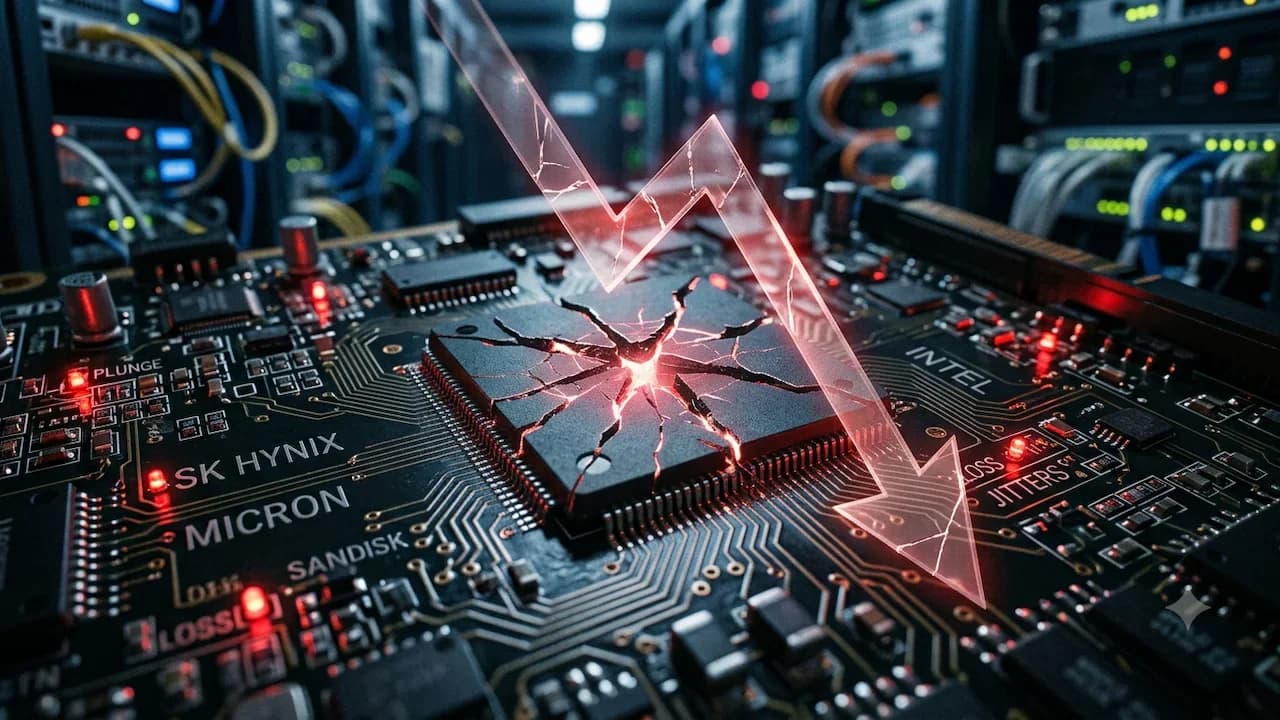
Chinese and Hong Kong equities advanced on Monday, with Shanghai Composite rising 0.8% to 3,960.19 and CSI 300 gaining 0.8% at the midday break, according to Reuters. The ChiNext Composite surged 1.3% and Shanghai's STAR 50 index climbed 3%, while Hong Kong's Hang Seng Index rose 1.6% to 25,521.99 and Hang Seng Tech Index gained 2%. Technology stocks significantly outperformed, with the CSI Semiconductor Index jumping 4% and AI Index gaining 1.5%, as reported by Reuters. The positive momentum was driven by strong corporate earnings in the semiconductor sector, though gains were partially offset by weakness in consumer-related stocks. The rally gained additional support from US chip stocks extending their rally on Monday, with SanDisk Corp rising 6% to $1,745.66, Micron Technology gaining 3.99% to $1,010.48, and SK Hynix shares climbing 3.76% to $172.59, as reported by NDTV Profit.
The semiconductor sector continued to drive market gains, with companies benefiting from strong AI-related demand and robust corporate earnings. Shenzhen China Micro Semiconductor rose 15% to a one-month high after reporting nearly doubled first-half profit, while memory chipmaker CXMT surged 9%, as reported by Reuters. SMIC shares surged after reporting that its second-quarter profit more than tripled from a year earlier, while Hygon Information Technology posted solid growth in revenue, profit, and R&D spending. The strong performance was attributed to robust demand for AI-related chips, highlighting the sector's growing importance in China's technology landscape. Cambricon Technologies, Zhongji Innolight, Eoptolink Technology, NAURA Technology, and Hygon Information Technology were among the top performers, with the sector's momentum building on previous gains. The gains were further supported by fresh optimism around the artificial intelligence boom that renewed investor appetite for semiconductor shares, as reported by NDTV Profit.
Despite the sector-wide gains, some semiconductor stocks faced significant pressure. Hua Hong Semiconductor fell 8.57% despite reporting record second-quarter revenue and strong profit growth, according to Business Standard. The divergent performance between SMIC and Hua Hong Semiconductor highlighted selective investor sentiment within the semiconductor space, with market focus shifting toward companies with stronger AI-related exposure. Top losers included Datang International (-6.21%), Greenland Holdings (-3.05%), and Yonghui Superstore (-2.44%). The mixed performance across Chinese semiconductor stocks reflects the sector's vulnerability to broader market sentiment and regional pressures, though the overall positive momentum from AI-related demand helped offset some individual stock weakness.
Gains were capped by significant weakness in consumer-related stocks, with the CSI Liquor Index falling 3.3% and heavyweight Kweichow Moutai declining 4.2% after reporting a drop in profit, as reported by Reuters. The consumer staples sector also fell 2.8%, creating a stark contrast with the technology sector's strong performance. This divergence reflects investor focus on technology stocks amid strong earnings, while consumer-related companies faced pressure ahead of key economic data releases. The weakness in consumer stocks suggests investors are prioritizing sectors with stronger fundamentals and growth prospects, with the CSI Liquor Index falling 3.3% highlighting the sector's vulnerability to current market conditions.
Despite technology sector gains, the broader economic picture remained weak with recent data showing fixed-asset investment, industrial output, and retail sales all fell short of expectations, pointing to a slow start to the second half of the year, according to Business Standard. The NBS said the economy remained generally stable but warned that weak domestic demand and an uncertain global environment continue to weigh on growth. Analysts at Nanhua Futures said the data would offer a direct test of the strength of domestic demand, with the focus increasingly shifting toward actual corporate earnings that could keep markets range-bound while encouraging rotation between sectors. The mixed economic signals contrast with the positive momentum in semiconductor stocks, suggesting investors are focusing on sector-specific opportunities rather than broader economic fundamentals.