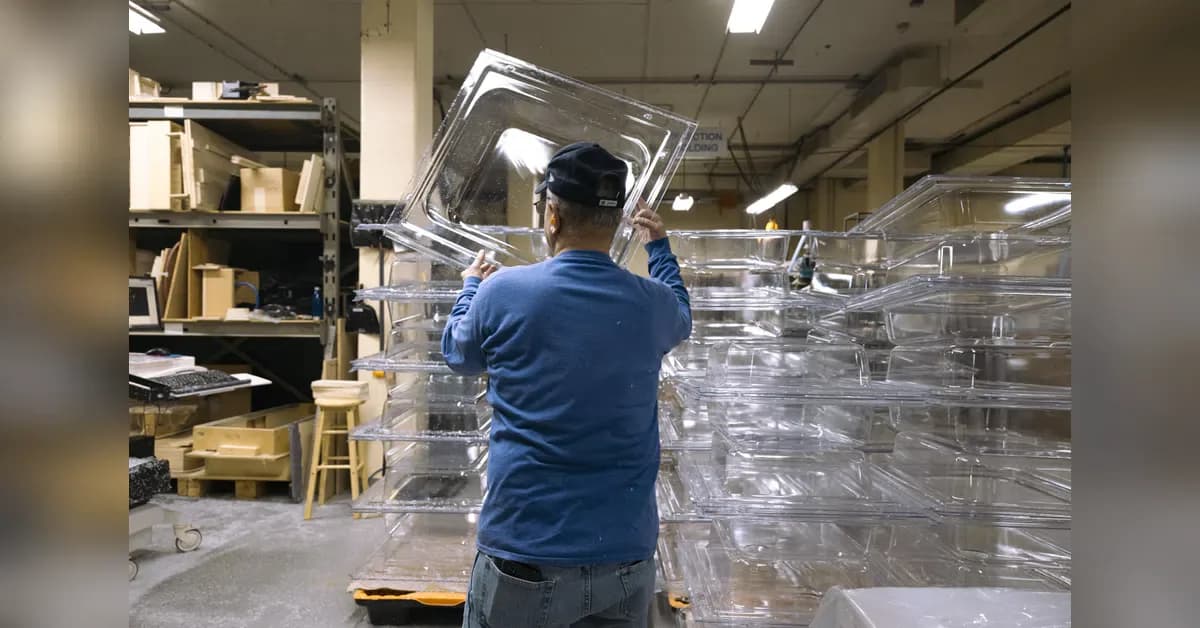
China's manufacturing sector demonstrated remarkable resilience in April, with factory activity expanding for the second consecutive month despite significant global headwinds. The official manufacturing PMI slipped slightly to 50.3 from 50.4 in March, according to the National Bureau of Statistics, though this reading exceeded economists' expectations. As reported by Associated Press, the manufacturing expansion comes as China's economy expanded at a 5% annual pace in January-March, accelerating from the previous quarter and beating economist estimates. Higher oil prices have so far not weighed on industrial activity in China, with the recent acceleration driven primarily by strong export demand, according to Capital Economics senior China economist Leah Fahy.
China's trade momentum accelerated significantly in April, with exports surging 14.1% compared to the same period last year, according to official data released on Saturday. This performance substantially exceeded market expectations and marked a dramatic improvement from March's modest 2.5% rise. The strong export growth comes despite ongoing challenges from the Iran war and elevated US tariffs that continue to create uncertainty in global markets. Exports to the US rose 11.3% from the year before, representing a significant recovery from March's 26.5% drop, as reported by Associated Press. U.S. tariffs on China have been lowered after a Supreme Court ruling earlier this year, which means China's exports to the U.S. could pick up in coming months, according to Capital Economics.
Imports also demonstrated robust growth, increasing 25.3% year-over-year, though this figure was slightly below the 27.8% growth recorded in the previous month. As reported by Associated Press, the stronger trade figures arrive just days before US President Donald Trump is scheduled to meet Chinese President Xi Jinping in Beijing next week. The summit timing coincides with broader diplomatic efforts to end the Iran war, which are increasingly shaping diplomatic priorities between the two nations. A private sector PMI survey by S&P Global and RatingDog showed China's factory activity rose to 52.2 in April, up from 50.8 in March, focusing more on smaller and export-focused private companies.
The upcoming summit comes amid ongoing tensions between Washington and Beijing, where longstanding disputes over trade restrictions, rare earth controls and US curbs on Chinese technology are expected to remain under discussion. According to Associated Press, analysts are anticipating that these broader trade issues will continue to be a focus during the diplomatic engagement. The long planned visit to Beijing by Trump to meet with Chinese leader Xi Jinping next month may help extend a year-long trade truce reached between the two leaders late last year. Major breakthroughs on export controls are unlikely, but HSBC economists suggest the leaders' meeting may bring "incremental" steps to troubleshoot trade friction. As noted by Capital Economics senior China economist Leah Fahy, "On balance, China looks to have more leverage," while Beijing has demonstrated preparedness to wait out US pressure.
Looking ahead, economists remain optimistic about China's trade prospects, with Lynn Song, chief economist for Greater China at Dutch bank ING, stating that they expect overall external demand to remain a solid driver of growth this year. This optimism is likely driven by China's exports of semiconductors and automobiles, which are expected to continue supporting the country's trade performance despite ongoing global uncertainties. China's trade surplus, which reached an all-time high of almost $1.2 trillion last year, could narrow for the whole of this year, according to ING's Song. Chinese leaders have set a 4.5% to 5% economic growth target for 2026, the lowest since 1991, with a prolonged property sector slump weighing on domestic investment and consumption. However, exports remain robust, and surging oil prices are driving up global demand for green technology, a boon for Chinese companies that dominate manufacturing of clean energy equipment, according to Capital Economics.