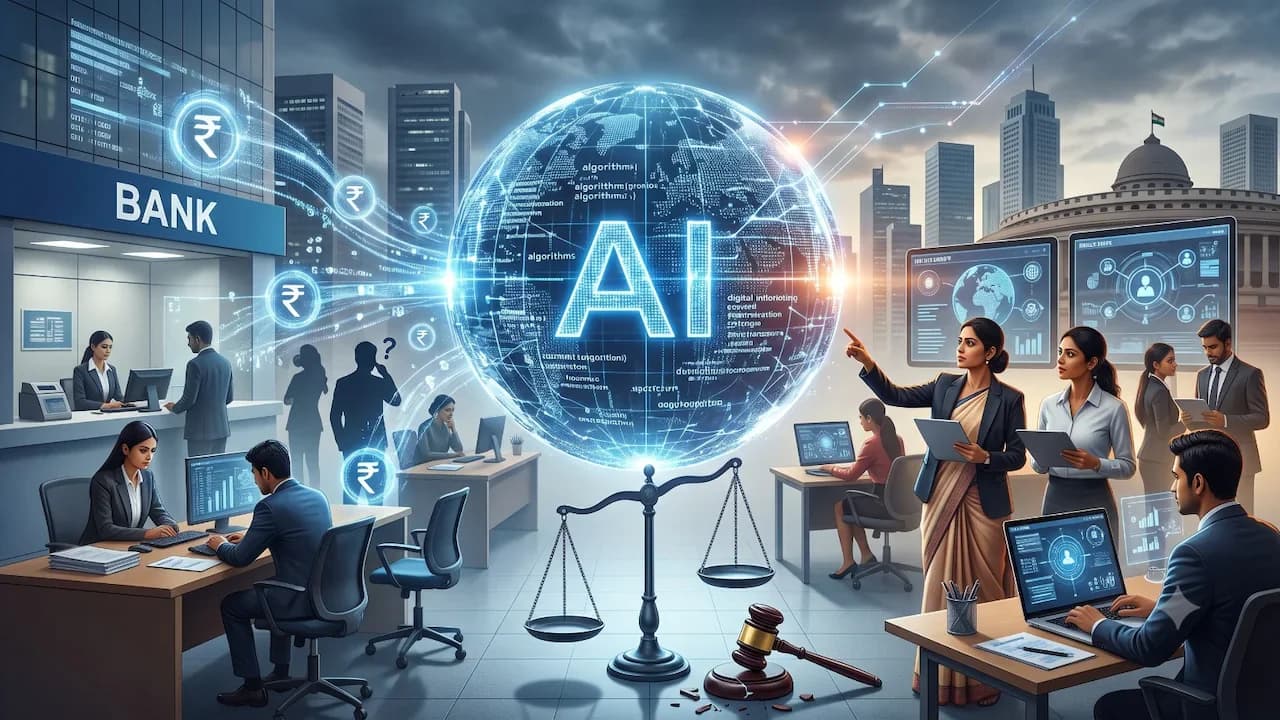
AI-linked stocks plunged across the globe on Monday after leaders of the biggest AI companies warned of risks from rapid development, marking the starkest threat yet to the billions of dollars being poured into the industry that have pushed world markets to record highs. According to Reuters, the selloff rippled through the industry where companies are increasingly relying on debt and circular financing to fund ambitious AI spending plans even as global borrowing costs, reflected in multi-year-high bond yields, continue to rise. Nasdaq e-mini futures fell 1.3% during Asian trade as chip stocks, which have led the AI sugar rush, fell the most. The Philadelphia chip index dropped 6%, with Nvidia down 3.5%, Advanced Micro Devices off 5.6% and Micron falling 6.7%, while Musk's SpaceX dropped 2.5%. As Interactive Brokers chief market analyst Steve Sosnick noted, "If this does lead to sort of a slowdown and a rethink of AI spending, that will have ramifications for the economy and some important sectors of the stock market, because essentially, we've been running hot based on AI spending."
Florida Governor Ron DeSantis has escalated the AI safety debate by warning of potential 'Bailout 2.0' risks if AI giants falter, accusing OpenAI and Anthropic of trying to become 'too big to fail.' According to TradingView News, DeSantis's comments come as the debate intensifies with multiple influential figures weighing in. DeSantis referred to this strategy as a play to be 'Too Big to Fail,' leading to a potential 'bailout 2.0.' "This is a play to be Too Big to Fail. Would lead to bailout 2.0. No thanks," DeSantis stated in a subsequent post on X. The warnings come as the US and Chinese governments are expected to hold AI safety talks as part of bilateral discussions taking place this month, according to two people briefed on the plans. The political dimension has gained new urgency as the U.S. and Chinese governments are expected to hold AI safety talks as part of bilateral discussions taking place this month.
Some investors dismissed the warnings from Anthropic and OpenAI, with Michael Burry, whose prescient bets against the U.S. housing market before the 2008 financial crisis were chronicled in the movie 'The Big Short,' saying in a message on X that the warnings were 'hype and puffery' and 'cover for real uncontrollable slowing growth.' However, Burry has now expanded his criticism, stating that the warnings were 'simply an attempt to increase the perception of their power before their IPOs'. Charu Chanana, chief investment strategist at Saxo Bank in Singapore, said: 'In the short term, these warnings could still weigh on AI and chip stocks. Their valuations assume both strong demand and a relentless pace of technological progress. When expectations are this high, even a possible delay can trigger profit-taking.' Meanwhile, Sebastien Mallet, portfolio manager at T. Rowe Price in London, noted that the bigger question for markets around AI was who would ultimately earn the return on all the capital being spent on building new capacity, saying 'There is little doubt that AI will change the world, but that does not necessarily mean every investment being made today will generate an attractive return.'
China has accused US tech bosses of 'fearmongering' after Silicon Valley called for a slowdown in AI development over safety fears, with Beijing issuing sharp criticism as the global selloff intensified. According to Reuters, Guo Jiakun, a Chinese foreign ministry spokesman, said: 'Fearmongering, confrontation and vicious competition will only disrupt the process of global AI governance and serve the interests of no-one.' He added that countries should promote 'open, inclusive, universally beneficial and ethical' development of AI. This diplomatic response comes as China's state-backed Global Times blasted the Anthropic essay in an editorial, calling it a 'Cold War playbook' intended to curb the country's technological development. The criticism echoes a sharp downturn suffered by tech companies last year when Chinese company DeepSeek released an AI chatbot claimed to have been developed at a fraction of the price of those made by OpenAI and Anthropic.
Anthropic CEO Dario Amodei, in a lengthy essay shared on X on Saturday, called on AI companies to slow the rate at which they advance model capabilities amid mounting fears of misuse of artificial intelligence. According to Reuters, both Elon Musk, who runs xAI, and Sam Altman, CEO of OpenAI, said they agree with Amodei. Altman also said the company would not proceed with an IPO this year, citing safety concerns, marking a significant shift in the industry's approach to public offerings. Amodei wrote that in six to 12 months, AI agents 'could be capable of taking over the entire internet potentially causing hundreds of billions of dollars in damage.' This unified stance from the industry's most influential figures represents the most coordinated effort yet to address AI safety concerns, with the leaders arguing that AI development must follow a 'narrow middle path' between losing control to AI and allowing too much power to accumulate in the hands of a single company. As reported by Al Jazeera, Altman said OpenAI is already conducting safety evaluations before major reinforcement-learning runs, adding that 'When we talk about 'pacing'', we do not mean 'stopping' and that AI progress 'has been rapid and will continue to be.'**