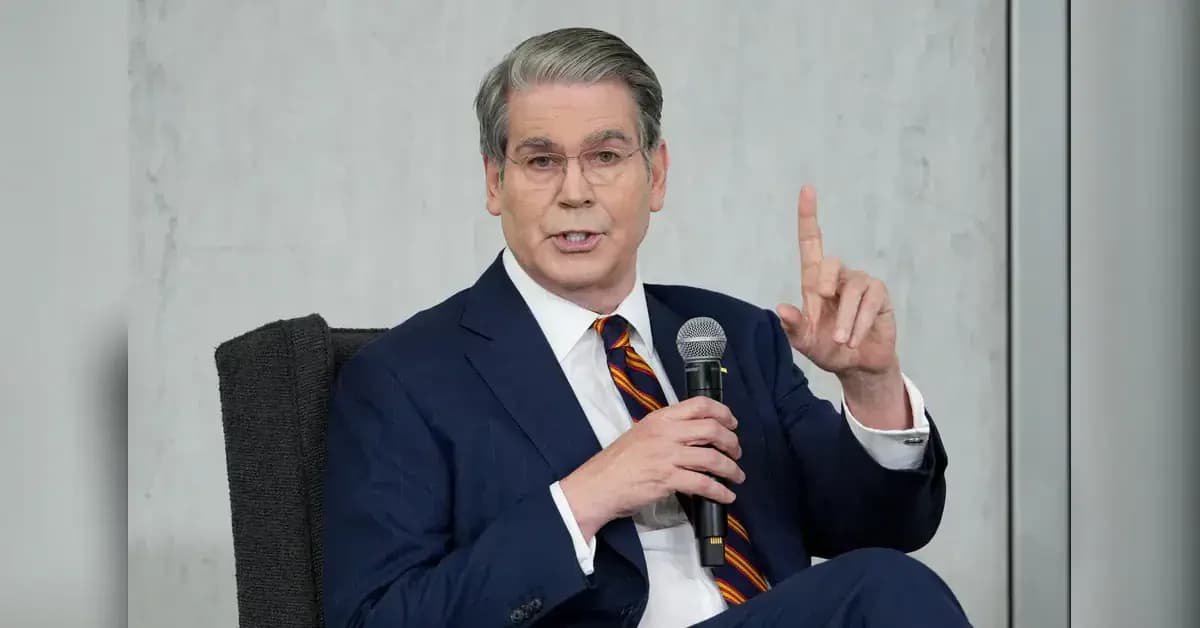
US Treasury Secretary Scott Bessent has issued a comprehensive statement during the World Bank and International Monetary Fund annual meetings, calling on the World Bank to formally rescind its current ban on upstream oil and gas financing that has been in place since 2019. According to Reuters, Bessent argued that the bank should adopt a "technology-neutral" principle in the energy sector, allowing borrowing countries to choose their energy mix based on their own resource endowments and development needs, rather than categorically excluding oil and gas development before project evaluation. The Treasury Secretary stated that "The Bank cannot credibly claim to champion country ownership while preemptively excluding upstream projects before their development value has even been assessed." This demand directly targets an energy policy framework that has been in place for nearly a decade, with the World Bank announcing in 2017 that it would no longer finance new upstream oil and gas projects after 2019, with limited exceptions for certain natural gas projects in the poorest countries. The proposed changes would mark a significant shift in the bank's approach to fossil fuel financing, moving away from outright exclusion to individual project merit assessment.
Bessent called on the World Bank to play a greater role in developing critical minerals mining and processing capacity, including deep-sea mining, as reported by Reuters. The US administration views such resources as important to strengthening supply chains for minerals used in advanced technologies and other strategic industries. The Treasury stated that the bank could help the emerging deep-sea mining sector by providing technical knowledge and guidance to support this critical infrastructure development. The United States even explicitly stated that the World Bank could participate in the still-early-stage deep-sea mining industry, playing a "catalytic role" through knowledge and policy guidance. For the United States, critical minerals such as copper, lithium, nickel, and rare earths now simultaneously involve energy, AI infrastructure, defense, and supply chain security, transforming development financing from a traditional resource policy issue into an economic security policy issue. These resources are increasingly important for advanced manufacturing, clean energy technologies and strategic industries, making the World Bank's involvement crucial for global economic resilience.
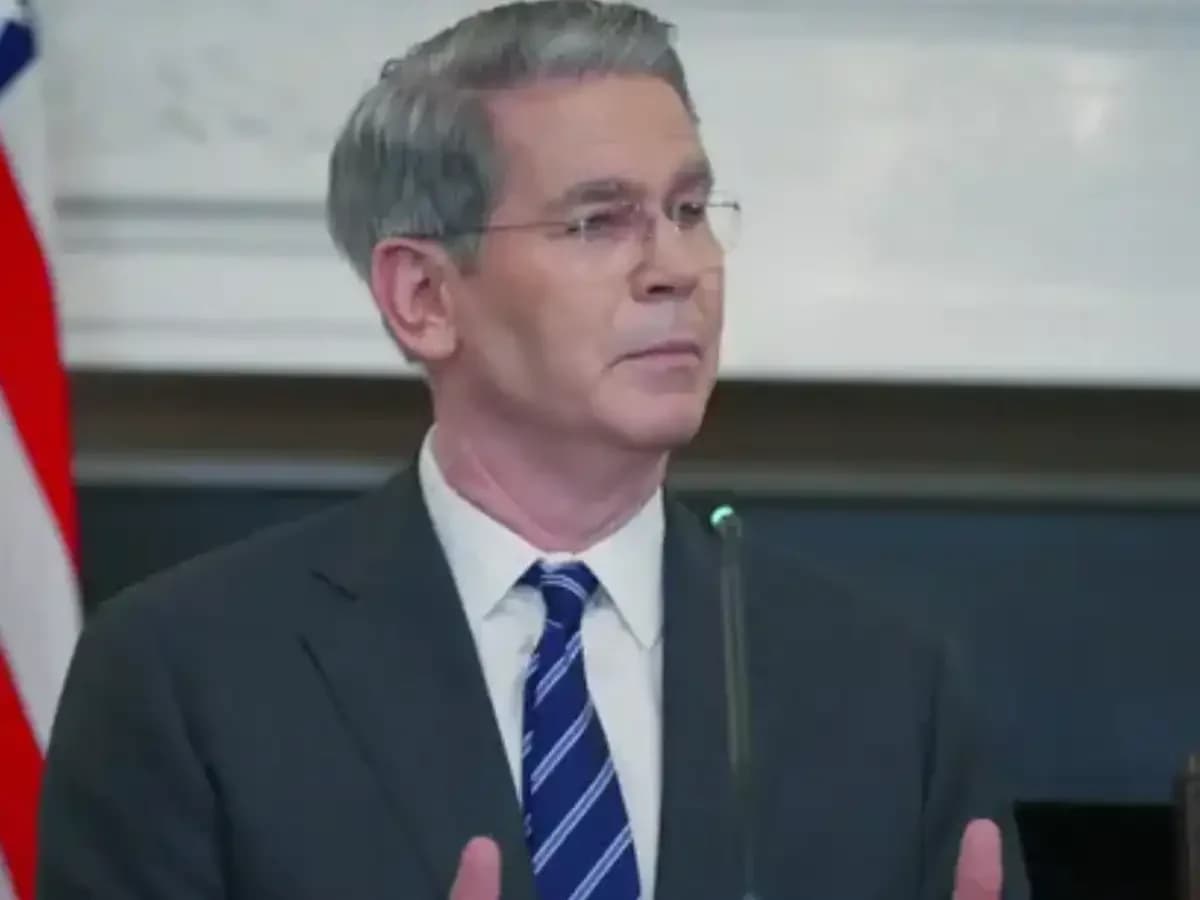
The US Treasury announced it was making an initial contribution to a new World Bank-administered Nuclear Energy Assistance Trust Fund to help countries establish the legal, regulatory, and project preparation frameworks needed for future nuclear power investment, according to Reuters. Additionally, Bessent called for stronger scrutiny of global economic imbalances by the IMF, particularly those arising from non-market policies and practices, as well as exchange-rate policies. The Treasury Department stated that "one of the IMF's founding purposes was precisely to prevent such distortions and the negative spillover effects they generate, and that if the Fund cannot play a greater role on this issue, it risks being marginalized." These demands reflect the Trump administration's broader push to reshape international economic institutions around its priorities, with the remarks appearing to echo Washington's criticism of China's economic practices and its use of state intervention in markets.
Bessent pressed the World Bank to accelerate the graduation of wealthier countries, including China and Poland, from its borrowing programmes, as reported by Reuters. He called for reforms to procurement policies to encourage greater competition and quality while avoiding incentives for subsidies or industrial policies that distort markets. The US Treasury Department believes that certain current procurement mechanisms may indirectly reward enterprises receiving substantial government subsidies, or give competitive advantages to countries implementing distortionary industrial policies. New rules should place greater emphasis on "competition and quality" rather than awarding projects based primarily on metrics like lowest bid price. The reform demands extend to the IMF, with Bessent stating that the Fund must exercise its voice on critical issues or risk being marginalized. These proposals put pressure on both institutions to reconsider aspects of their policies as the Trump administration seeks changes to global lending, energy financing and economic oversight.