Berkshire Hathaway has committed $16.8 billion in strategic investments within just two days, marking the clearest sign yet that new Chief Executive Greg Abel is beginning to put his own stamp on the conglomerate following his succession of Warren Buffett. The conglomerate agreed to invest $10 billion in Alphabet through a private placement as part of the company's $80 billion equity fundraising programme aimed at supporting artificial intelligence expansion plans. According to Reuters, this investment forms part of Alphabet's broader strategy to strengthen its position in the AI sector. The move comes after Berkshire began building a position in Alphabet in 2025, with the company holding Alphabet shares worth $16.6 billion as of March 31. The $10 billion investment comprises $5 billion in Class A common stock at $351.81 per share and $5 billion in Class C capital stock for $348.20 per share, both below Monday's closing prices, as reported by The Economic Times.
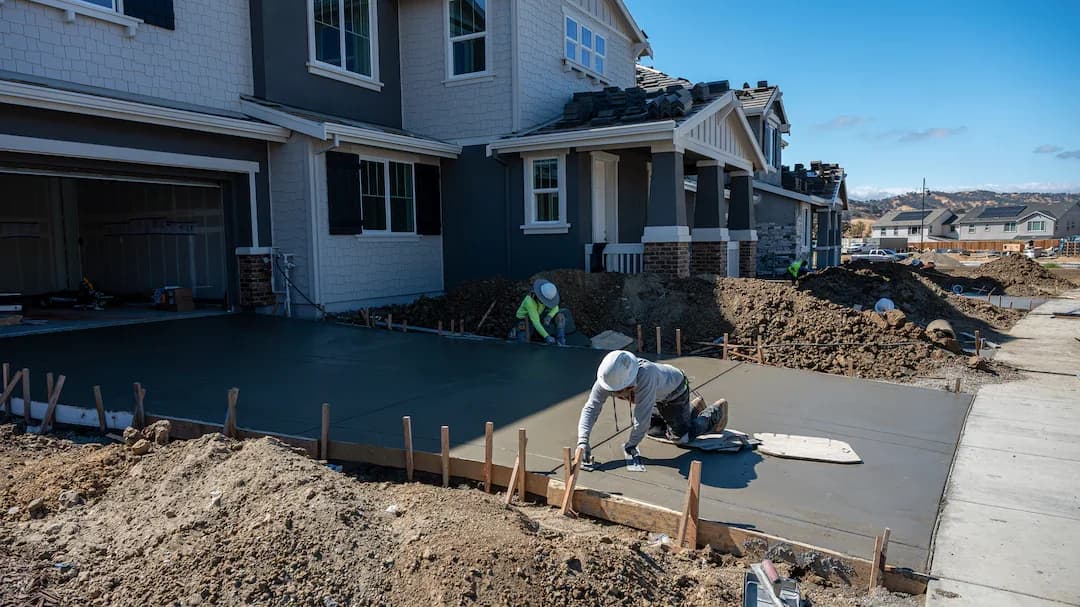
Berkshire has also agreed to acquire Taylor Morrison Home Corporation in an $8.5 billion all-cash transaction, marking the conglomerate's first announced takeover since Greg Abel became CEO at the start of 2026. The deal will see Berkshire pay $72.50 per share for the Scottsdale, Arizona-based homebuilder, representing a 24% premium to Taylor Morrison's latest closing price of $58.50 on Friday. The equity value of the transaction stands at $6.8 billion, with the total enterprise value reaching $8.5 billion. The acquisition extends Berkshire's presence in residential construction well beyond its longstanding base in manufactured housing, historically centred on Clayton Homes which Berkshire absorbed in 2003. Taylor Morrison builds site-built homes and operates across 21 markets in 12 US states, serving entry-level, move-up, and resort lifestyle homebuyers under its family of brands including Taylor Morrison, Esplanade, and Yardly, with over 350 communities concentrated in prime locations.
According to Business Standard, Taylor Morrison generated $8.12 billion in revenue in 2025 and posted net income of $782.5 million, demonstrating strong financial performance in the competitive homebuilding sector. The company, founded as a public company in 2013, provides a suite of ancillary financial services including mortgage, title, escrow, and homeowners' insurance products. Taylor Morrison CEO Sheryl Palmer emphasized that Berkshire's long-term orientation is uniquely well-suited to the multi-year investment cycle of homebuilding, noting the company's track record of strategic growth over the past 13 years. The acquisition comes as housing market forecasts show promising recovery prospects, with the National Association of Home Builders projecting a 1% rise in single-family home construction to 940,000 units this year, followed by 5% growth next year to 984,000 units. Berkshire's cash holdings climbed to a record $380.2 billion as of March 2026, providing substantial resources for future acquisitions.
The $10 billion investment in Alphabet represents a notable shift from Warren Buffett's historically cautious approach toward technology stocks. While Buffett ultimately made Apple one of Berkshire's most successful investments, he had long avoided many technology companies, preferring businesses he considered easier to understand and value. As of March 31, Berkshire held Alphabet shares worth $16.6 billion, and with the latest investment, Alphabet is expected to become one of Berkshire's five largest equity holdings. This investment underscores Berkshire's growing confidence in Alphabet's AI ambitions and strengthens a position the company only began building in the third quarter of last year. The move addresses long-standing concerns among Berkshire investors who have urged the company to deploy more of its vast cash reserves, as the company held cash and short-term investments worth $380.2 billion as of March 31. As reported by The Economic Times, Alphabet stated that the company is experiencing strong demand for its AI solutions and services from enterprises and consumers, at levels exceeding the company's available supply.
The twin deals address growing investor calls for Berkshire to put its massive cash pile to work, with the conglomerate holding $380.2 billion in cash and equivalents at the end of March. Berkshire's stock has fallen 13% from its record high in May 2025, while the S&P 500 has gained 34% over the same period. Investors see the latest investments as an early indication of Abel's capital allocation strategy, with market participants long debating whether Berkshire should pursue larger acquisitions, increase share buybacks or introduce a dividend to deploy excess cash. Under Abel's leadership, Berkshire remains a sprawling conglomerate with businesses spanning railroads, energy, manufacturing, insurance and retail, including BNSF Railway, industrial and energy assets, and consumer brands such as Dairy Queen, Fruit of the Loom and See's Candies. The recent transactions offer one of the clearest indications yet of how Abel intends to deploy Berkshire's enormous financial resources and shape the company's next chapter after Buffett's decades-long tenure.