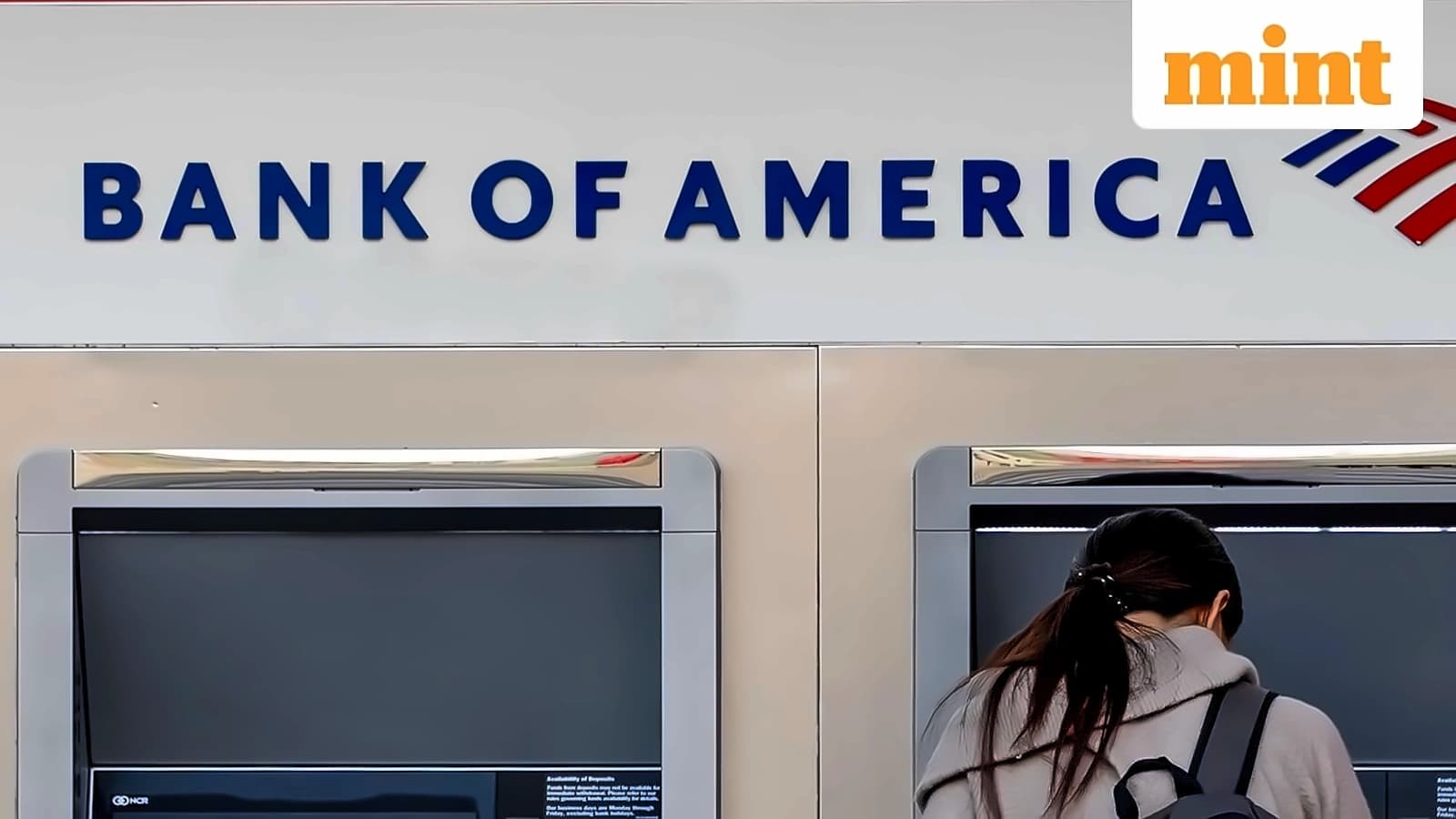
US regulators have imposed a $1.21 billion fine on Bank of America for widespread failures to detect potential money laundering and other illicit financial activity. According to reports from The Center Square, Business Standard, The Hindu BusinessLine, and The Times of India, the penalty stems from the bank's failure to report more than $5 billion in suspicious activity to the government, including $1 billion linked to national security-related and other priority illicit finance risks. The Treasury Department emphasized that financial institutions are on the front lines of protecting economic and national security, stating that when banks of this size fail to meet anti-money laundering obligations, the consequences extend far beyond their own walls. The enforcement actions include a $1.2 billion penalty from the Financial Crimes Enforcement Network (FinCEN), the third-largest fine in the Treasury Department's history after it fined crypto exchange Binance $3.4 billion in 2023 and TD Bank for $1.3 billion in 2024. The fine also includes a $750 million penalty from the Office of the Comptroller of the Currency (OCC), the largest ever imposed by that regulator, with the OCC penalty credited against FinCEN's assessment rather than added to it. The penalty was announced just one day before Bank of America's Q3 earnings report, creating immediate market pressure.
Bank of America reported net income of $6.93 billion, or $0.91 per share, for the third quarter, representing a 17% decline from the previous year. As reported by The Center Square, Business Standard, The Hindu BusinessLine, and The Times of India, the results fell short of analyst expectations of $1.10 per share. The bank's stock tumbled 9% on Wednesday, putting it on track for its steepest single-day decline since April 2025. The weaker-than-expected performance was attributed to the $1.2 billion regulatory penalty and a slowdown in trading revenue, which weighed heavily on investor sentiment. Bank of America, the second-largest US lender by assets, also faced pressure from the bank's compliance failures that were disclosed in connection with the penalty announcement. The penalty cut quarterly profit by 17 cents per share, as reported by BeInCrypto, while even without the fine, adjusted earnings of $1.08 per share missed estimates according to TipRanks.
The Treasury Department found that Bank of America prioritized revenues when building compliance programs and overly relied on inquiries from outside parties, such as law enforcement and other financial institutions, rather than on its own internal controls. As reported by The Center Square, Business Standard, The Hindu BusinessLine, and The Times of India, the Office of the Comptroller of the Currency levied a $750 million civil penalty against the lender, the largest ever imposed by the regulator, citing failures to address shortcomings in its anti-money laundering programs identified in a 2024 cease-and-desist order. The regulator determined the bank's compliance program was 'deficient and ineffective,' and its transaction monitoring system caused delays in filing suspicious activity reports on billions of dollars of transactions. OCC examiners reviewing a small sample of accounts in the bank's $102 billion credit card portfolio found 10 showing signs of potential trade-based money laundering, with the bank only reviewing those accounts after the OCC's request. The bank admitted to willful violations of the Bank Secrecy Act and failed to implement and maintain an AML program that satisfied BSA and FinCEN regulations. According to the OCC, Bank of America failed to properly monitor trillions of dollars in transactions and failed to report more than $5 billion in suspicious activity, including transactions potentially tied to Chinese money-laundering networks, narcotics trafficking, and fraud. The bank also failed to conduct due diligence for correspondent accounts for foreign financial institutions and lacked sufficient skills and expertise to effectively manage its BSA/AML program.
The $1.2 billion penalty came from three Treasury agencies - civil regulators that issue fines, not criminal charges. As reported by BeInCrypto, criminal cases come from the Justice Department, which was notably absent from Tuesday's Treasury announcements. The Justice Department changed course in 2025, with a May 2025 Criminal Division memo widening paths for companies to avoid prosecution if they self-report, cooperate, and fix problems. Law firm Paul Weiss counted 21 corporate guilty pleas in 2025, which the firm read as a slowdown in criminal enforcement. Then-Attorney General Eric Holder described a related problem to senators in 2013, stating "I am concerned that the size of some of these institutions becomes so large that it does become difficult to prosecute them." This enforcement shift is evident in the contrast between Bank of America's civil penalty and CZ's criminal case, where Binance never filed a single suspicious activity report with US authorities and let Americans trade $898 million with users in Iran, breaching US sanctions. Binance pleaded guilty and paid $4.3 billion, while CZ served four months in prison after prosecutors sought three years, though he has since called underestimating compliance his biggest Binance mistake.
The penalty comes amid broader market weakness, with the Dow Jones Industrial Average declining 0.35% to 51,670.10 and the S&P 500 ending flat at 7,805.45. According to The Center Square, Business Standard, The Hindu BusinessLine, and The Times of India, US banking stocks were under pressure, with JPMorgan Chase shares falling nearly 1% after third quarter earnings fell short of analyst expectations, though the company raised its net interest income guidance for 2026. Wells Fargo shares were down 3.1% after its NII missed estimates. Goldman Sachs and Citigroup dropped 0.2% and 5.6% respectively, even after their earnings surpassed expectations. The Treasury order requires Bank of America to submit to independent reviews of its transaction monitoring, customer due diligence and foreign correspondent account programs, and of the data governance behind them, with evaluations focusing on the bank's handling of three priority risks: the southwest border, cartels and potential narcotics trafficking; Iran; and Russia. Treasury Secretary Scott Bessent emphasized that "Even the biggest financial institutions are not above the law," underscoring the regulatory crackdown on major banks' compliance failures.