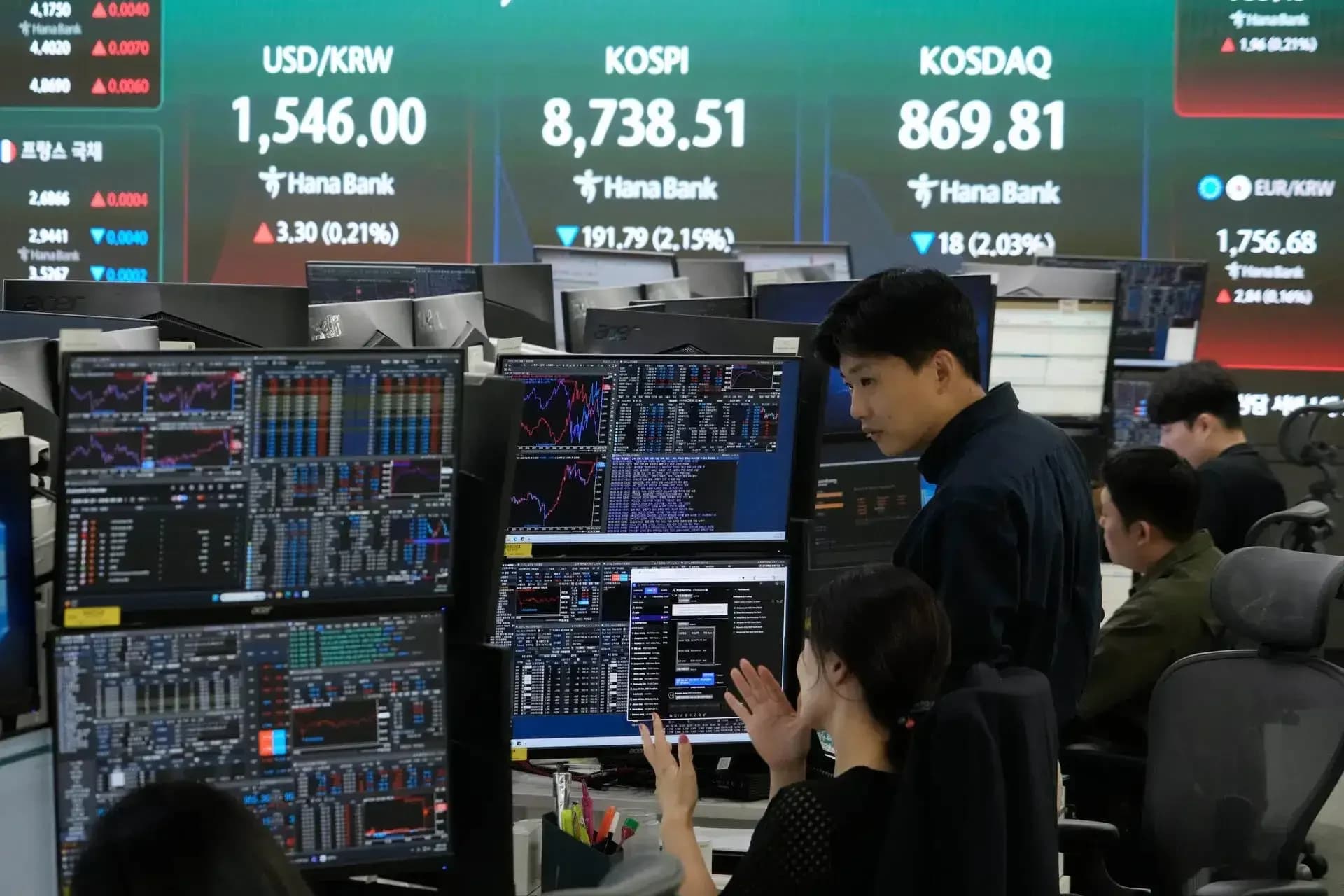
Asian stocks opened mixed on Thursday following Wall Street's strong rally after the Democrats swept the US midterm elections, with Japan's Nikkei 225 falling 0.5% to 61,914.53 and Topix rising 2.2%, while South Korea's Kospi slid 3.5% to 5,484.38 amid heavy selling of computer chipmakers. According to The Economic Times, the MSCI Asia Pacific Index lifted 0.3% as equity benchmarks in Japan and Australia advanced, with Hang Seng futures climbing 2.1%. The mixed performance reflects investor caution over potential regulatory changes, particularly regarding data centre investments, even as Wall Street showed renewed optimism following the Democratic sweep. Australia's S&P/ASX 200 rose 1.9% to 9,003.40 and Shanghai Composite edged 0.1% higher, showing broader regional strength. Taiwan's Taiex lost 1.6% as tech equipment suppliers dragged on major indices.
Wall Street reacted strongly to Democratic gains in Congress, with hyperscalers surging sharply while AI-chip, memory and data-centre stocks faced mixed reactions. Amazon surged 7.4% to a three-month high, while Meta Platforms, Alphabet and Microsoft rose between 2% and 6.3%. Apple, which has steered clear of Big Tech's heavy AI spending but has felt the pinch of an AI-driven jump in memory chip prices, leapt nearly 7% to a record high. If those gains hold, the five companies will add more than $750 billion in combined market value, according to Bloomberg. The rally reversed days of selling driven by worries over AI costs, after quarterly results showed the AI infrastructure race turning once cash-rich, debt-light companies into heavy spenders reliant on borrowing.
South Korea's Kospi mirrored struggles in the tech sector, particularly affecting AI stocks, with Samsung Electronics falling 5.7% and memory chipmaker SK Hynix losing 7.4%. According to The Economic Times, heavy selling of computer chipmakers drove the index down, with Samsung Electronics and SK Hynix among the biggest losers in the tech-heavy market. The decline reflects investor concerns over potential regulatory changes that could affect the AI industry, particularly given Trump's role as a big backer of the AI sector. Trump Media & Technology Group, down 24.5%, dropped to $4.49 from its peak of $175 five years ago, with its main business Truth Social facing scrutiny under Democratic control.
Oil prices steadied in early Asian trade after their biggest single-day drop since May, with Brent crude tumbling more than 8% on Wednesday to settle near $95 a barrel, and West Texas Intermediate falling towards $88. According to The Economic Times, the possibility of pressure to pull back on the war also sent the price for a barrel of Brent crude oil plunging 8.7% to $94.62, with early Thursday trading showing Brent down 0.8% to $93.91 per barrel. ExxonMobil fell 4.6% and ConocoPhillips dropped 5.2%, as falling oil prices usually hurt stocks of big oil companies that had been rallying for much of the year. A Democratic-led Congress could push Trump to pull back on the war with Iran, which has been a key driver of oil prices throughout the year.
Indian markets demonstrated resilience with GIFT Nifty pointing to a bumper start, showing a 350 point gap-up, as reported by CNBC TV18. The Nifty 50 has risen 6% since October 1 through Wednesday, while the MSCI Asia Pacific Index fell 7.5% over the same period. The Nifty IT index declined 2%, with nine of its 10 constituents trading in the red during the previous session, with Tata Consultancy Services (TCS) falling around 3%, Infosys and Mphasis dropping 2.21% and 2.24% respectively. The recovery comes after concerns over tighter regulatory scrutiny of artificial intelligence companies in the US weighed on global technology stocks, with investors fearing that a Democratic-controlled Congress could introduce greater oversight of the AI industry, potentially affecting the pace of data-centre investments and technology spending.
South Korea's current account surplus widened sharply to a record high of $61.46 billion in September 2026, compared with $46.11 billion in August, according to latest data. This represents a significant improvement from the previous month and demonstrates the strength of South Korea's external economic position. The substantial increase in the current account surplus indicates robust export performance and controlled import spending, providing a strong foundation for the country's economic growth and financial stability.