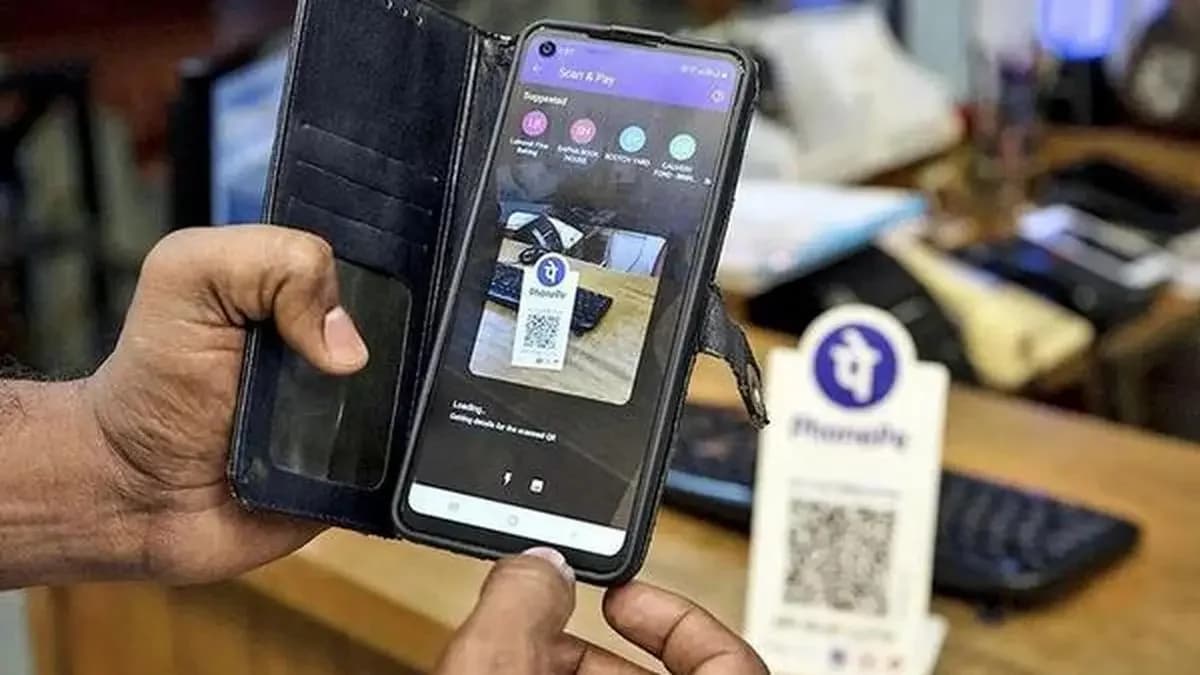
Seven leading Indian fintech companies have formally opposed the National Payments Corporation of India's proposed UPI Meta protocol, warning that the framework could undermine competition in the digital payments ecosystem. According to reports from The Economic Times, The Hindu BusinessLine, and Business Standard, the companies include Paytm, Navi, CRED, Super Money, Kiwi, BharatPe and FamPay. In their joint representation to NPCI, the fintechs argue that the proposed framework risks locking customers into a single default payment app chosen during onboarding rather than allowing active selection at every transaction. The opposition has intensified with the potential launch of Apple Pay in India this year, as tokenised credit cards paired with biometric authentication and one-click checkout have narrowed UPI's advantage in online payments. The companies have jointly written to the National Payments Corporation of India (NPCI), submitting that its proposed "UPI Meta" checkout protocol could kill the very competition it claims to enhance. NPCI is targeting a launch around the Global Fintech Fest later this year as it looks to make UPI payments as seamless as tokenised card transactions, particularly amid the expected entry of Apple Pay into India.
The third-party application providers (TPAPs) have requested NPCI to undertake broader consultation with TPAPs and other ecosystem participants before proceeding with the proposed framework. As reported by The Economic Times, The Hindu BusinessLine, and Business Standard, the companies warn that the framework could adversely impact competition, innovation, transaction success optimisation and ecosystem neutrality - principles they describe as fundamental to UPI's success. The letter, addressed to Nalin Bansal, Chief Relationship Management (Partnerships & Central Government), NPCI, emphasizes that the proposed framework does not have compelling customer benefits to justify the significant ecosystem, competitive, operational, and architectural implications associated with its implementation. The signatories argue that the framework risks altering foundational characteristics without addressing a clearly established ecosystem problem or unlocking meaningful incremental customer value. "In our view, the proposed framework risks altering these foundational characteristics without addressing a clearly established ecosystem problem or unlocking meaningful incremental customer value. We therefore respectfully request NPCI to undertake broader consultation with TPAPs and other ecosystem participants and comprehensively evaluate the concerns highlighted above before progressing with the proposed framework," the letter states. Beyond competition-related issues, smaller UPI apps have also raised questions around security, governance and operational complexity. They argued that aligning customer consent, linked bank accounts, payment instruments and preference changes across third-party application providers (TPAPs), banks, merchants, payment aggregators and NPCI could introduce new points of failure at UPI's scale of more than 22 billion monthly transactions.

UPI Meta, often referred to as UPI Checkout, functions as a higher-level framework sitting above standard UPI apps and acts as a tokenisation and data-storage layer that allows users to save a preferred UPI handle directly on merchant websites and apps for fast, one-click checkouts. According to The Economic Times, The Hindu BusinessLine, and Business Standard, the framework introduces significant changes to the existing UPI architecture and payment journey without adequately addressing a demonstrated customer problem. The proposed feature would let merchants store a buyer's UPI ID and linked bank accounts, allowing payments to proceed from the merchant's page straight to the authentication or PIN screen without the customer's UPI app ever opening. This could shift the choice of payment app from a decision users make at every transaction to a preference set once during sign-up, at a time when PhonePe and Google Pay already account for the majority of UPI transactions. The system is designed to work similarly to tokenised card payments already used on e-commerce platforms, with merchants able to save customer preferences once consent is provided. The feature is being seen as an attempt to keep UPI competitive with tokenised card payments and upcoming services such as Apple Pay, particularly when combined with biometric authentication. The framework would allow customers to securely save their preferred UPI ID with participating merchants, eliminating the need to select a UPI app or enter payment details every time they make a purchase. However, the system's impact will depend on how merchants obtain user consent, present alternative payment options and allow users to modify or remove their saved payment preferences.
The fintech companies' biggest concern centers on market concentration and customer acquisition dynamics. As reported by The Economic Times, The Hindu BusinessLine, and Business Standard, under the proposed UPI Meta framework, a TPAP would be set as a default during onboarding, with behavioural data showing people rarely change defaults once set. The signatories warn this could allow larger incumbent TPAPs with significant existing customer bases to permanently dominate transaction share, while making customer acquisition increasingly challenging for smaller and emerging applications. According to the latest industry data, PhonePe accounts for around 45% of UPI transaction volume, while Google Pay has about 33%. Smaller apps such as Navi, super.money and BHIM each account for around 1-2% of transaction volume. The letter states that "Over time, this may create structural advantages for larger incumbent apps with significant existing customer bases, while making customer acquisition and transaction share growth increasingly challenging for smaller and emerging UPI apps." The signatories say this runs counter to NPCI's own market-share-cap policy, which was designed to prevent exactly this kind of concentration. The representation also cautioned that while users may technically retain the ability to change their preferred UPI application, digital behaviour suggests that default preferences established during onboarding tend to persist unless customers have a specific reason to change them. The timing of the proposal has also attracted attention, with the potential launch of Apple Pay in India this year having sharpened concerns within NPCI. Tokenised credit cards, coupled with biometric authentication and one-click checkout experiences, have narrowed UPI's competitive advantage in online payments.
The proposed framework would fundamentally change how UPI operates by effectively shifting UPI towards a default routing model, where payment initiation becomes increasingly detached from the TPAP experience. According to The Economic Times, The Hindu BusinessLine, and Business Standard, since TPAPs would no longer interface directly during checkout for each transaction, the framework would not only reduce their visibility to users but also limit competition among players. The letter warns that reduced competition at the point of checkout may also diminish incentives for TPAPs to continuously invest in improving transaction success rates, customer experience, fraud prevention capabilities, and adoption of newer payment instruments. The signatories argue that the framework models card-tokenization checkout experiences such as Apple Pay, but those solved the real pain point of repeatedly entering card details. UPI, they say, doesn't have that problem; it is already a streamlined, credential-free experience. Despite UPI processing billions of transactions monthly, no data has been presented showing that customers are dropping off due to the current checkout flow. "Despite UPI processing billions of transactions every month and continuing to witness strong growth, no ecosystem-wide evidence has been presented to demonstrate that the current checkout journey is causing material customer drop-offs or transaction abandonment," the letter states. The industry's concerns are amplified by the current market structure, with the potential launch of Apple Pay in India this year having sharpened concerns within NPCI. Credit cards also remain strong competitors for higher-value transactions, particularly since UPI transactions do not attract a merchant discount rate.