Arya.ag, India's largest agricultural warehousing business, is using the Avalanche blockchain to tokenize grain deposits, warehouse receipts and loan status, giving lenders a more reliable way to verify the crops backing agricultural loans. As reported by CoinDesk, the initiative was announced by Infosys co-founder and project leader of India's Aadhaar identity system Nandan Nilekani at the Global Fintech Festival in Mumbai. The company is setting up its own dedicated, layer-1 blockchain built using technology from Avalanche, with plans to open it up to other warehouse companies in the future. Devika Mittal, head of India at Ava Labs, confirmed that "the L1 is run by Arya. It's a dedicated deployment as of now, which will scale to support other warehouse companies as well. To note that even now any bank can join, and three major banks are already joining the L1."
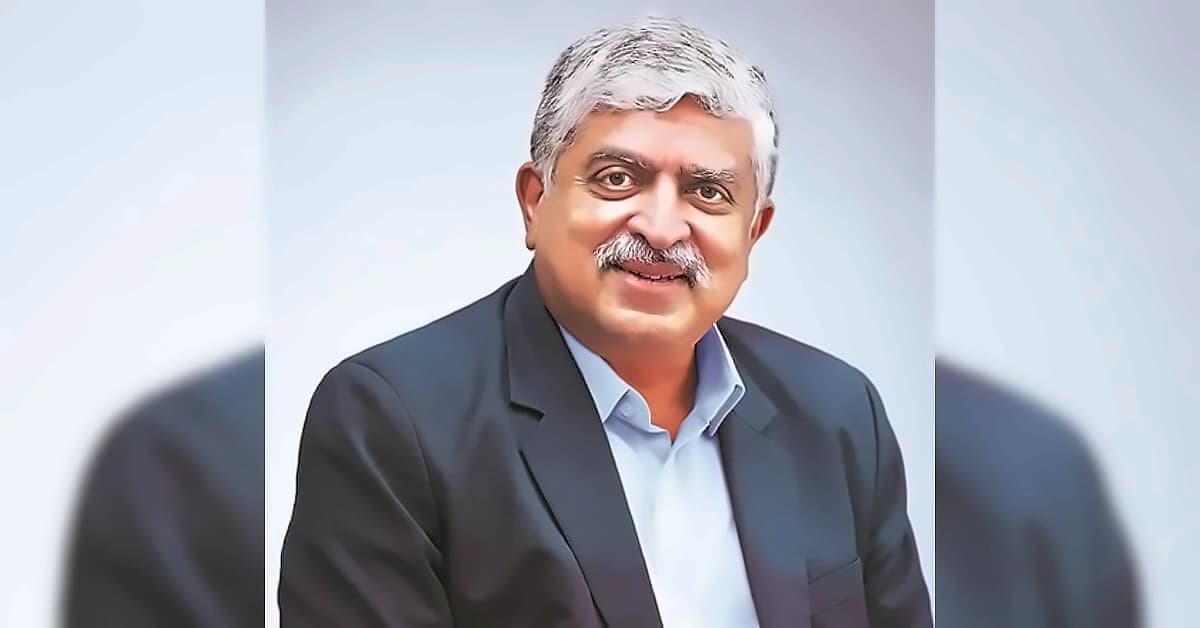
Speaking at the Global Fintech Fest 2026, Infosys co-founder and chairman Nandan Nilekani addressed regulatory concerns about cryptocurrencies and stablecoins, stating that regulators and central banks were worried about the rise of cryptocurrency and stablecoins, and their view was that if these things are not regulated well, then you could have all kinds of issues. According to Business Standard, Nilekani emphasized that regulators therefore wanted to use the power of tokenisation within a regulated framework, with the necessary checks and balances. He noted that regulators and central banks expressed concerns regarding cryptocurrencies and stablecoins, and that the underlying technology enables a unified architecture for various asset types across multiple situations. Nilekani co-authored a paper on this subject, which was published in 2024, and outlined three live pilots implementing tokenisation across different sectors.
The scale of Arya.ag's blockchain implementation is substantial, with the company holding around $2 billion worth of crops across its warehouses and facilitating roughly $1.3 billion in loans annually in its existing non-blockchain business. According to CoinDesk, Arya Dhan issues about $230 million in loans directly. The initiative addresses India's farm credit problem, where farmers make up about 40% of India's population, but only around 15% of them can get formal credit, with most borrowing happening through informal, often expensive channels. The loan documents at the center of the system are called electronic negotiable warehouse receipts (e-NWRs), which are legally recognized in India for securing bank loans against stored crops. However, the companies didn't disclose how much has already moved onto the blockchain system or provide a timeline for when it will scale up.
India needs to build tokenisation infrastructure that can operate at population scale and handle billions of transactions, rather than focus merely on issuing tokens, said Infosan co-founder and chairman Nandan Nilekani. Speaking at the Global Fintech Fest 2026, Nilekani emphasized that creating tokens alone would not be sufficient - the ecosystem would require interoperability, liquidity and the ability to operate at very high volumes if tokenisation is to extend across different asset classes and use cases. According to reports from Business Standard, he noted that the architecture being developed for the Finternet is specifically designed to address these requirements. The focus should be on building systems that can reach everyone rather than allowing the benefits of new technologies to remain concentrated among large institutions and companies.
Tokenisation is already gathering momentum, with initiatives involving certificates of deposit and corporate bonds currently underway, as reported by Business Standard. Globally, large banks and asset managers are experimenting with tokenised assets, while SEBI recently launched initiatives in this space. The Securities and Exchange Board of India (SEBI) has completed the first phase of its Demat 2.0 pilot for corporate bonds using distributed ledger technology and wholesale e-rupee settlement, with SEBI Chairman announcing that future phases will enable trading and retail investor access in India. Nilekani clarified that financial tokenisation involves bundling an asset and all its attributes into a single, portable digital package that can be transferred to another party, distinct from the tokens used in AI applications where tokens represent units of work or consumption. The Arya.ag initiative demonstrates practical implementation at the ground level, moving beyond digital gardens for yield-earning financial assets to solve real-world problems from farmers to lenders.
Nilekani sees AI agents playing an important role in creating demand for tokenised assets, as reported by Business Standard. He explained that agents operating round the clock could package an invoice as a token, offer it to different lenders and obtain financing. The larger opportunity from combining tokens and AI agents is to level the playing field between large companies and small businesses. In the past, a company needed functions such as a treasury desk, research team, credit rating and sales team to participate effectively in financial markets, but a small business can now potentially use a 24x7 AI agent, access analysis and have a token that can establish its credentials in a marketplace to raise a loan or undertake a transaction. The combination could help narrow the gap between large companies and smaller businesses, with start-ups potentially becoming an important source of future jobs.
Nilekani linked the growth of small businesses to the debate over AI's impact on employment, arguing that jobs at small businesses tend to involve employees doing different and more dynamic tasks, making them harder to automate. He expects the number of startups in India to continue rising sharply, noting that India had about 10,000 startups in 2015 and 150,000 in 2025, and projected that the number would reach one million by 2035. According to Business Standard, he emphasized that creating an 'AI-proof economy' would require job creation to be driven by millions of small businesses, making it important to use technology to make it easier for them to operate and compete with larger companies. The economy will also need to create new businesses and employment opportunities, putting entrepreneurs and start-ups at the centre of the transition, as AI's impact on employment remains a major concern with large companies potentially using AI to reduce worker numbers for certain tasks.