According to the Ministry of Finance, retail digital payment transactions reached ₹22,167.9 crore in FY2024–25, with UPI accounting for nearly 81% of all retail digital payment volumes. This dramatic shift signals that consumers increasingly expect financial services to be available instantly, seamlessly and through a single digital experience. The evolution of mobile banking apps from simple transaction facilitators to comprehensive financial management platforms reflects this growing demand for unified financial experiences.
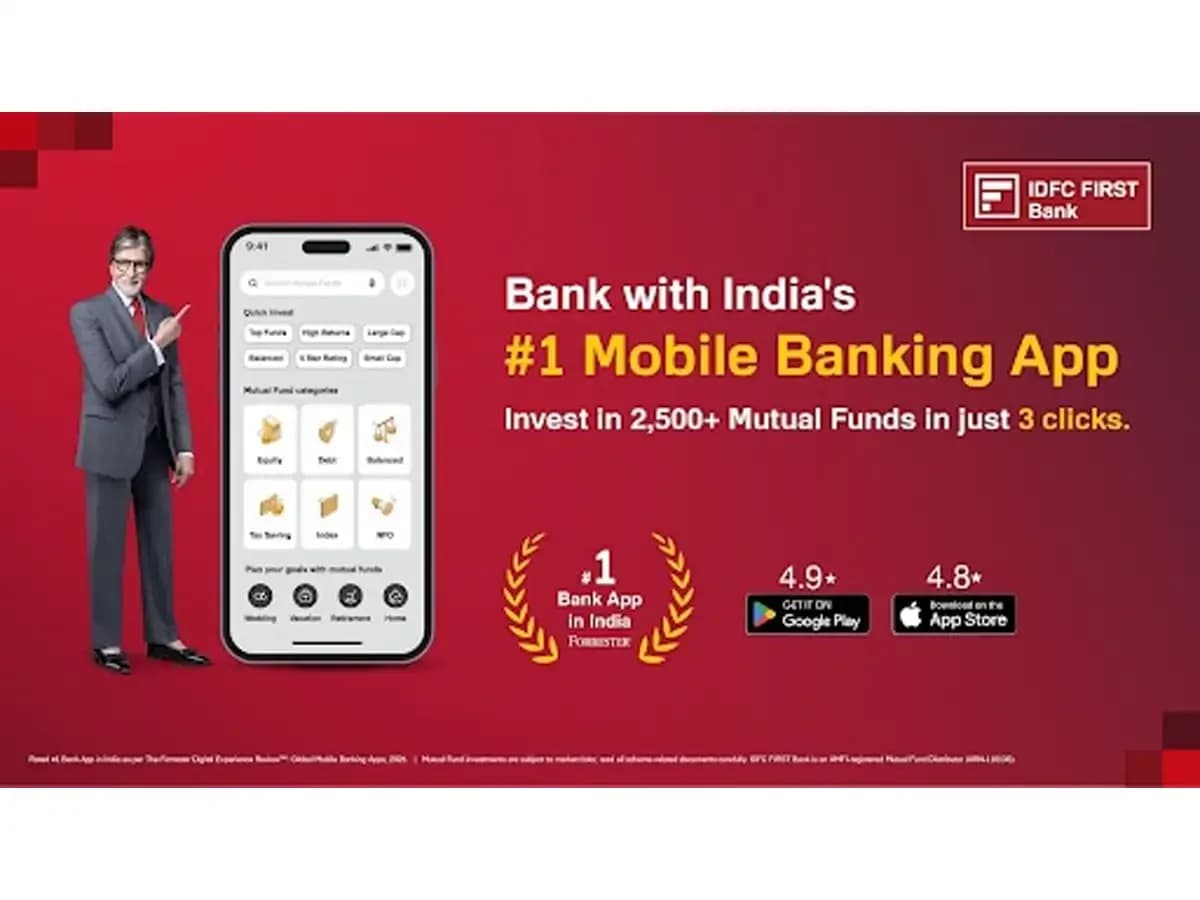
Modern mobile banking applications now serve as primary interfaces for millions of Indians, offering banking, investing, borrowing, payments and wealth management services within a single platform. The IDFC FIRST Bank Mobile Banking App exemplifies this evolution, bringing together more than 300 banking and financial services including over 2,500 mutual funds for investment, goal-based investment plans, loan and credit card management, and comprehensive wealth management services. These integrated platforms allow customers to manage different financial needs without switching between multiple applications, reducing friction and improving visibility.
Consumers no longer expect mobile banking apps to simply enable transactions, but rather seek one application that brings together every important aspect of their financial life. According to the Organisation for Economic Co-operation and Development (OECD), this represents the growing digitalisation of financial services as consumers gain access to more financial products through digital channels. The expectation extends beyond payments to include opening fixed deposits, starting SIPs, managing personal loans, tracking investments, redeeming credit card rewards, and reviewing financial goals all within a single platform.
The next phase of banking innovation will focus on connecting existing features in ways that help customers move effortlessly between saving, investing, borrowing and spending. As reported by The Economic Times, the top mobile banking apps will be judged not by how many services they offer individually, but by how effectively they bring those services together into one cohesive financial experience. This evolution represents a fundamental shift where mobile banking applications are becoming digital operating systems that power people's financial lives, moving beyond traditional banking applications to comprehensive financial management platforms. The global mobile banking market is projected to reach ₹1.93 billion in 2026 and grow to ₹3.3 billion by 2030, with the broader industry generating approximately ₹1.92 trillion in revenue in 2025 alone - a 28% year-over-year jump.
Advanced technologies are transforming mobile banking into sophisticated financial command centers. Artificial Intelligence (AI) has moved from backend tools to front-and-center features, with AI-powered assistants now analyzing spending patterns, predicting upcoming bills, and flagging unusual account activity in real time. Biometric authentication methods have become standard, with facial recognition and fingerprint authentication replacing traditional passwords for faster, more secure access. Open banking regulations are enabling customers to securely share financial data with third-party apps, while 5G technology ensures banking apps load faster and handle real-time features smoothly. Blockchain technology is being applied to cross-border transactions, reducing processing times and costs significantly. These technological advancements are making mobile banking more secure, personalized, and accessible than ever before.