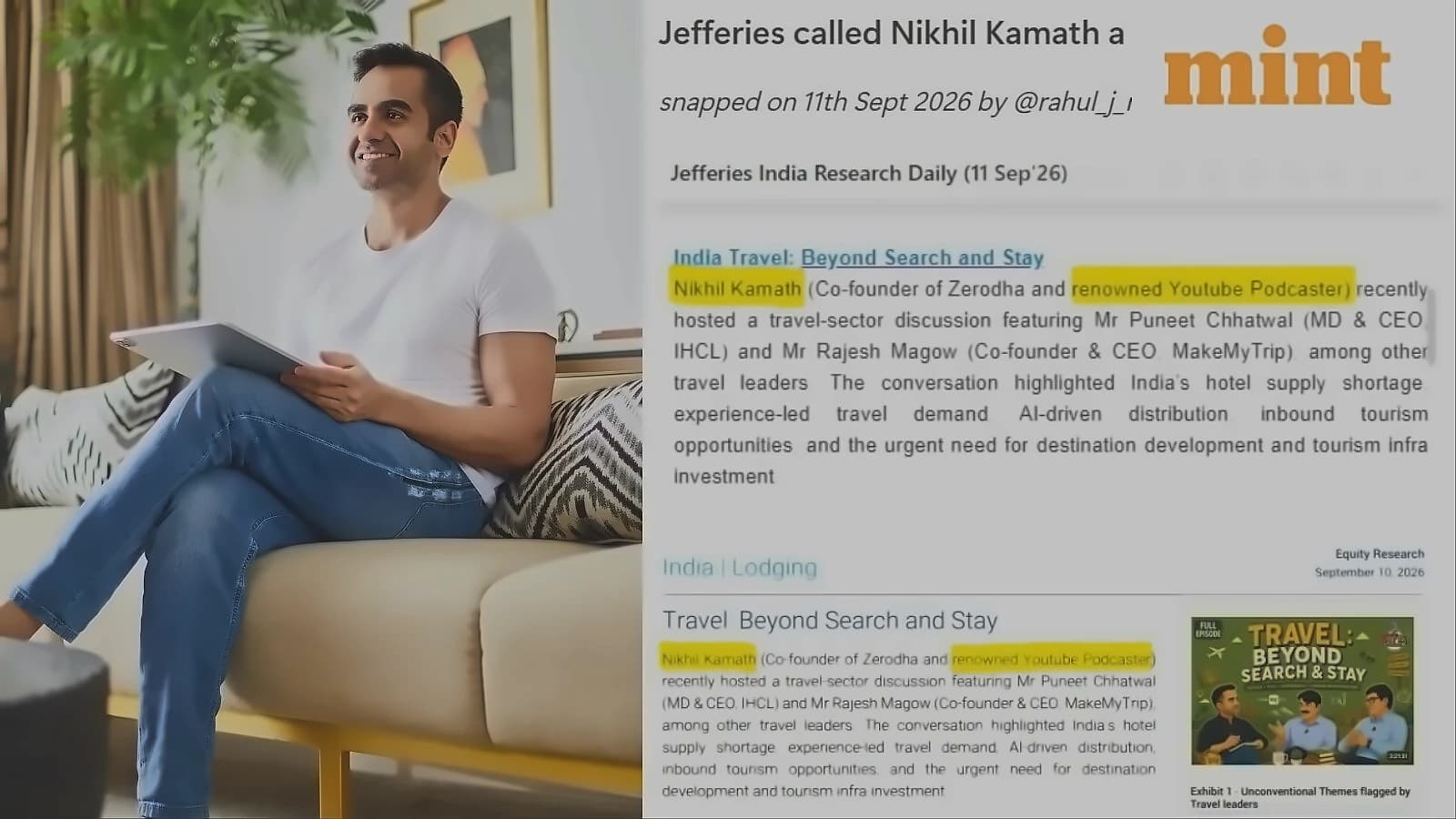
A Jefferies research note has sparked debate among investors by citing Zerodha co-founder Nikhil Kamath as a 'YouTube podcaster' in its analysis. According to reports from Mint, pre-seed investor Rahul Mathur came across the unusual reference while reading the brokerage's report titled 'India Travel: Beyond Search and Stay'. The report, which featured insights from executives at MakeMyTrip and Indian Hotels Company, described Kamath as 'Co-founder of Zerodha and renowned YouTube Podcaster' - a label that Mathur found amusing but significant for its implications.
Mathur highlighted the unprecedented nature of this reference, noting that he has never before seen a brokerage house use a public YouTube interview as a primary source for research material. As reported by Mint, the investor argued that this development effectively means retail investors can now access conversations and insights that were previously largely available through closed-door analyst days, investor forums, conferences and similar offline events. He suggested that investors should look beyond conventional financial sources and have their tools monitor platforms such as YouTube, Substack and other independent media platforms alongside conventional financial sources.
According to Mathur's analysis reported by Mint, the bigger change may be the growing importance of how investors interpret information rather than just accessing it. He pointed to Jefferies' four-page note as an example, arguing that while the underlying podcast was publicly available, the brokerage's value comes from connecting the discussion with previous research, management interactions and earnings calls. This demonstrates how public information can still create analytical edges when properly integrated with institutional knowledge, with the real value coming from Jefferies team members Prateek and Raghav connecting the dots between different sources.
Mathur also challenged perceptions that audiences watching Kamath's interviews are consuming entertainment or influencer content, arguing that the audience includes industry professionals, CEOs and investors seeking business and market insights. For Kamath, this episode represents another milestone for his WTF Podcast, which has evolved beyond conventional podcast format since its launch. The reference in Jefferies' research note validates the growing recognition of YouTube as a legitimate source of market intelligence for institutional investors, with Mathur noting that the podcast attracts a sizeable sophisticated audience including industry analysts, CEOs and market participants seeking investment signals.
According to Mathur's latest assessment, the Jefferies reference represents significant validation for Zerodha's broader independent media strategy. He noted the company's Zero1 Network experiment and its subsequent move towards building first-party media intellectual property, including WTF, Zero1 by Zerodha, Markets by Zerodha, and Rainmatter shows. The strategy reflects the importance of controlling the narrative through first-party content, even though creating such intellectual property is considerably more difficult. For Kamath, the development underlines how far the WTF Podcast has travelled in just three years, with Mathur writing that the coverage from Jefferies is 'very big validation for the WTF Podcast' and puts the show 'in the same league as national publications & research houses which get quoted as sources'.