India's digital public infrastructure is entering a transformative new phase, according to a comprehensive report by the Center for Digital Public Goods at IIM Bangalore. The second edition of the State of DPI in India 2026 report describes this transition as moving from 'DPI 1.0' to 'DPI 2.0', marking a shift from building standalone digital rails to connecting them into comprehensive networks. As reported by Business Standard, the report was commissioned by Protean eGov Technologies Ltd. and authored by CDPG at IIM Bangalore, highlighting India's demonstrated ability to build and scale digital infrastructure to population level.
The emerging phase demonstrates greater interoperability among identity systems, payments, credentials, registries, consent frameworks, data-sharing systems and sector-specific infrastructure. According to the report, the five sectors examined illustrate different dimensions of this evolution, with financial services demonstrating scale and maturity through interoperable digital transactions. Healthcare is developing connected health information infrastructure through shared registries and consent-based systems, while agriculture uses interoperable infrastructure to address fragmentation across farmers, markets, advisory services and government programmes. Commerce shows emergence of interoperable digital marketplaces, logistics and procurement systems, and education develops shared infrastructure for learner identity, portable credentials, digital learning and continuity.
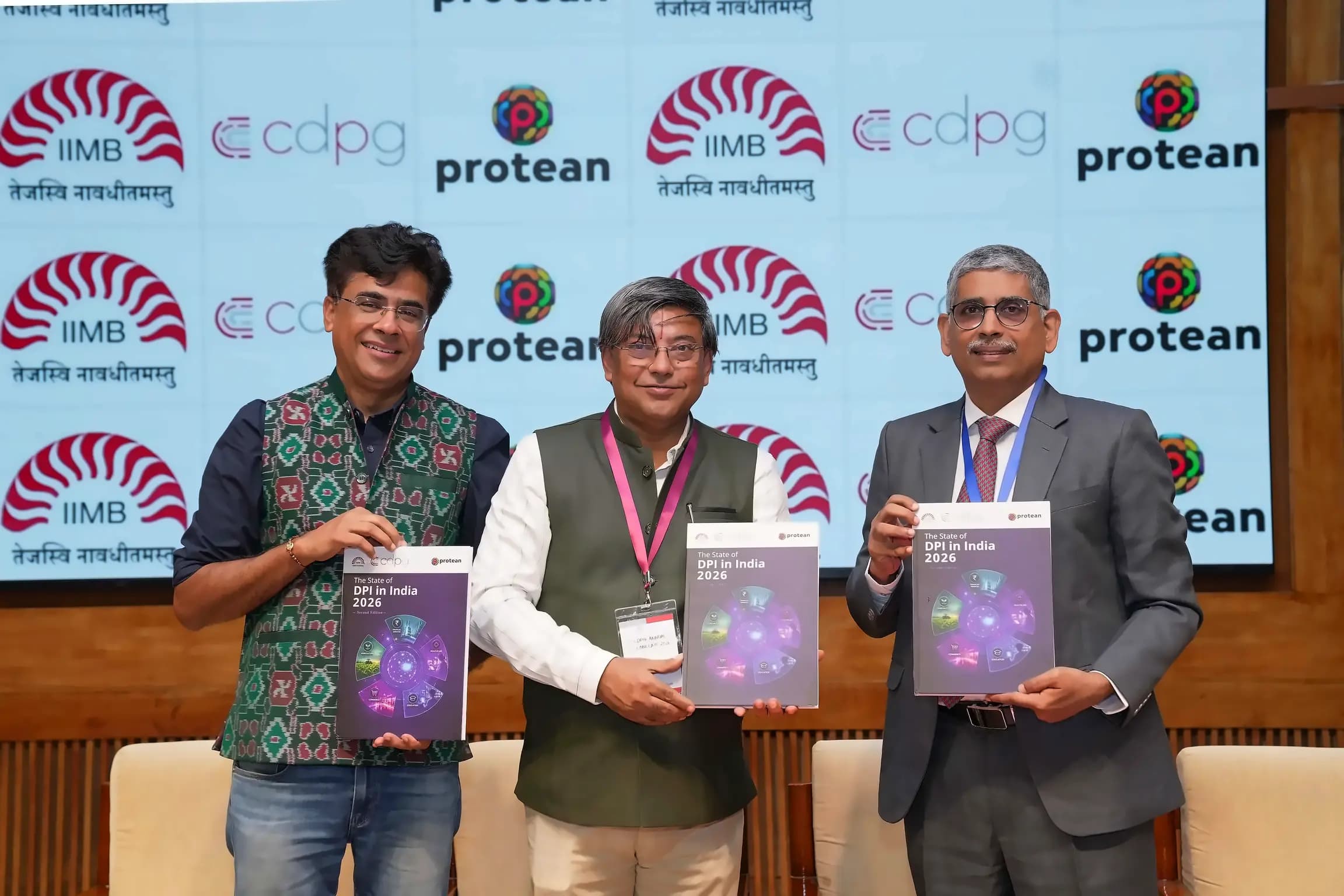
The report considers how emerging technologies, particularly AI, could add a new intelligence layer to DPI. As digital infrastructures become increasingly interconnected, AI could potentially draw on multiple trusted infrastructures to support decision-making, anticipate needs and enable more personalised and coordinated services. Looking ahead, the report looks beyond DPI 2.0 towards DPI 3.0, where digital institutions could increasingly support intelligent coordination across governments, markets and society. However, the report cautions that the proliferation of AI and its deeper integration into digital ecosystems must be accompanied by governance mechanisms that embed privacy, accountability, transparency and interoperability.
As digital infrastructure expands, the report emphasizes that the challenge increasingly involves enabling governments, businesses and citizens to interact across institutional boundaries through common standards, trusted data exchanges, shared registries and appropriate governance arrangements. According to Business Standard, R Srinivasan, chairperson of Center for Digital Public Goods (CDPG), IIM Bangalore, stated that the 2026 edition builds on efforts to develop an evidence base on India's evolving DPI landscape. V Easwaran, executive director and chief operating officer of Protean eGov Technologies Ltd., noted that DPI has always been about building trusted systems that make everyday interactions simpler, more inclusive and more accessible.