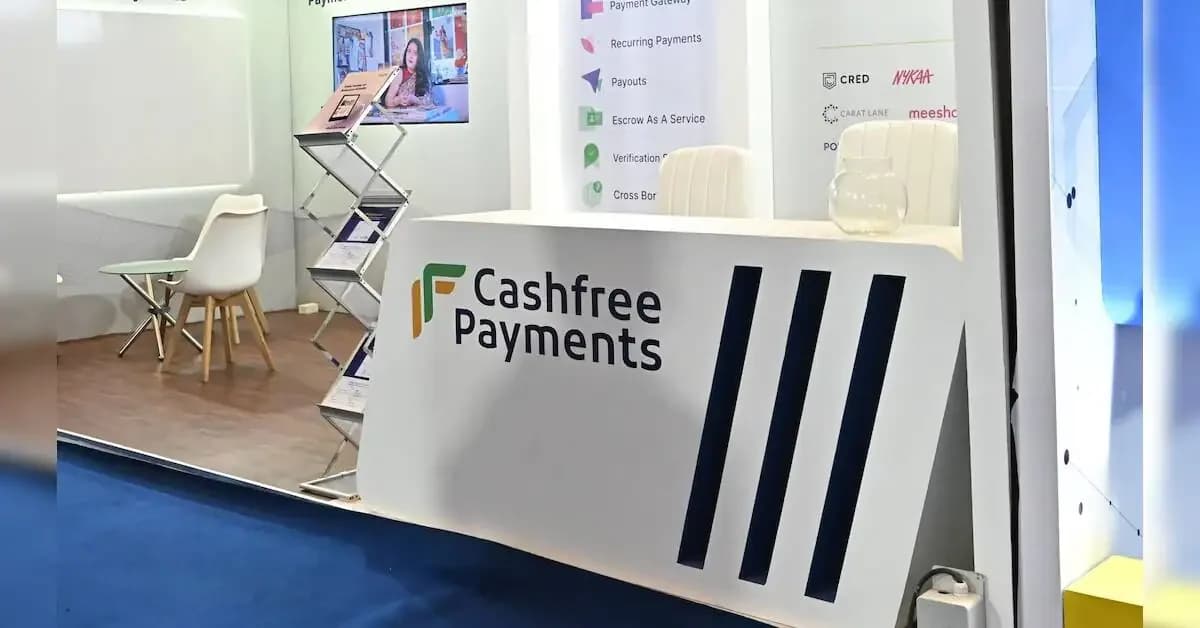
Payment aggregators are pivoting from large enterprises toward startups and small merchants, as UPI's zero-MDR regime and saturated top-end competition erode simple transaction-fee models. According to reports from Mint, the next contest in merchant payments is shifting toward startups, MSMEs, exporters, and importers, with payment aggregators such as Cashfree and MobiKwik moving more aggressively into that segment. Executives said the opportunity lies in companies with annual revenue of up to ₹50 crore and ₹100 crore, where smaller tickets are offset by higher frequency and deeper under-penetration.
The opportunity for payment aggregators in India is not in taking a percentage cut of every transaction. As reported by Mint, it lies in monetising merchant relationships through settlement tools, subscriptions, POS or device rentals, reconciliation, lending, Software-as-a-Service (SaaS) and, for cross-border merchants, FX and collection fees. In domestic online payments, standard card and gateway pricing is often around 1.5% to 2%, but realised yield is much lower once UPI zero-MDR, enterprise discounts and pass-through costs are factored in. RBI's 2020 framework separated payment aggregators from payment gateways and made merchant acquisition and value-added services central to monetisation.
Juspay reported a record ₹514 crore in revenue for FY25, up 61% year-on-year, and swung to a ₹62 crore net profit, as daily transaction volumes went over 300 million and annualised total payments volume hit $1 trillion. According to Mint, Razorpay last reported a 65% jump in operating revenue to ₹3,783 crore in FY25, up from ₹2,296 crore a year earlier, while gross profit rose 41% to ₹1,277 crore from ₹906 crore. However, Razorpay posted a post-Esop loss of ₹1,209 crore, largely due to restructuring, tax and redomiciling costs linked to shifting its domicile to India.

The shift is playing out differently across major players such as Razorpay and Juspay. As reported by Mint, Razorpay, which holds RBI licences across online, offline, and cross-border payments, is building what it calls a unified merchant stack rather than running separate businesses, while also tracking early-stage tech startups. Juspay's merchant mix remains skewed toward larger, digital-first businesses, even as the company seeks to win promising startups early in their lifecycle. India's payments market now has three layers: payment gateways at the base, payment aggregators in the middle, and orchestrators at the top, helping merchants connect to multiple payment providers through a single integration.
India's outward remittances under RBI's Liberalised Remittance Scheme were $26.4 billion between April 2025 and February 2026, which is the best proxy for estimating cross-border payments from India. According to Mint, at least 19 payment aggregators had received PA-CB licences by March 2026. For cross-border merchants, the focus is on FX and collection fees, while domestic opportunities lie in D2C and quick commerce where brands need strong checkout layers with UPI, cards and smooth conversion. The intense competition comes at a time when consumer-side monetisation is constrained by regulatory caps on UPI, making merchant relationships the primary battleground.