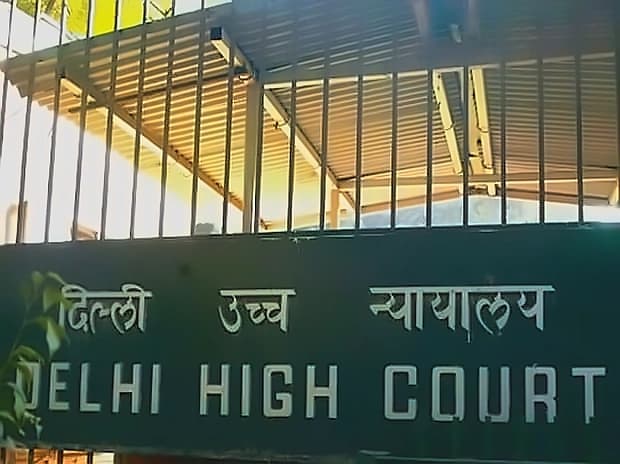
The Delhi High Court has directed the Reserve Bank of India (RBI) to mediate a dispute involving PayU Payments Private Limited, Yes Bank, ICICI Bank and Visa over the classification of merchants and related interchange fee claims. According to reports from Bar & Bench, Justice Subramonium Prasad directed the RBI to nominate a senior officer with expertise in the payments sector to facilitate discussions between the parties and attempt to resolve the dispute within 30 days. The court also ordered the parties to maintain the status quo with respect to disputed past transactions during the mediation. In an order passed after four consecutive days of arguments on the maintainability of PayU's suit and interim relief plea, the court reasoned that since the entire regime is being operated under certificates granted by the RBI and under its supervision, it would be more appropriate to request the RBI to act as a mediator instead of sending the parties to pre-litigation mediation. The court made it clear that the RBI's role would be confined to mediation and facilitation and that it would not act as a dispute-resolution authority under Section 24 of the Payment and Settlement Systems Act, 2007 (PSS Act).
The dispute centers on Merchant Category Codes (MCCs), four-digit codes used to identify a merchant's principal business. As reported by Bar & Bench, ICICI Bank, which issues Visa cards, alleged that certain merchants using PayU had been assigned incorrect MCCs, resulting in lower interchange fees. PayU, an RBI-authorised non-bank payment aggregator, disputed its liability, maintaining that it only collected and verified merchant information before forwarding details to acquiring banks for independent determination of appropriate MCCs. The dispute led to Yes Bank deducting amounts from PayU's settlements towards alleged IRF liabilities, with the bank retaining ₹6.88 crore while reversing deductions of more than ₹5.95 crore. PayU approached the High Court after apprehending further deductions over pending IRF claims involving other acquiring banks. PayU claimed that IRF claims of approximately ₹5.26 crore, ₹27.30 crore and ₹8.82 crore were pending against other acquiring banks, with the company apprehending that further deductions could be made from its ongoing settlements or escrow accounts if the pending claims were determined against the acquiring banks. The latest developments show that claims totalling about ₹41.38 crore are pending against three other acquiring banks beyond the original dispute.
PayU has challenged Visa's IRF process, arguing that disputes of this nature should be dealt with under the Payment and Settlement Systems Act, 2007. The company also challenged Visa's private IRF Compliance Process, contending that such disputes must be resolved under Section 24 of the Payment and Settlement Systems Act, 2007. It sought the return of the withheld amount and injunctions against further deductions. However, the High Court did not rule on these substantive issues at this stage, instead directing the parties to make an attempt at resolving the dispute through RBI-mediated discussions. The court specifically clarified that the RBI's mediation role would not take away PayU's appellate rights. Even if the High Court subsequently concludes that the suit is not maintainable and that the parties must pursue another mode of adjudication, the company's appellate rights would remain unaffected. The court also referred to Section 24 of the PSS Act, which provides a mechanism for resolving disputes between system participants, noting that certain disputes can thereafter be referred to the RBI, whose decision in that statutory process is final and binding. The mediation process provides a structured approach to addressing the technical and regulatory aspects of the dispute while maintaining the operational continuity of the payments ecosystem. The matter has been listed before the High Court on October 27, 2026.
According to Bar & Bench, the court has temporarily barred further deductions from PayU's settlements and stopped Visa from issuing final determinations on the pending claims while the mediation is underway. The court observed that it can refer parties to mediation even after institution of the suit, noting that it can refer parties to mediation even after institution of the suit. However, considering that the entire payment system operates under RBI authorisations and supervision, the High Court found it more appropriate to request the RBI itself to assist the parties in finding a solution. The court clarified that the mediation arrangement would not affect transactions between the parties conducted in the ordinary course. During the mediation, Visa cannot issue final Interchange Reimbursement Fee (IRF) determinations concerning those transactions, while acquiring banks have been directed not to make further deductions from PayU towards the disputed claims. The court emphasized that the parties should first attempt to resolve the problem through RBI-facilitated mediation before proceeding with more formal legal proceedings. The court also made clear that its directions were issued without prejudice to the rights and contentions of all parties and permitted the mediator to suggest any other solution which the parties may accept during the mediation.