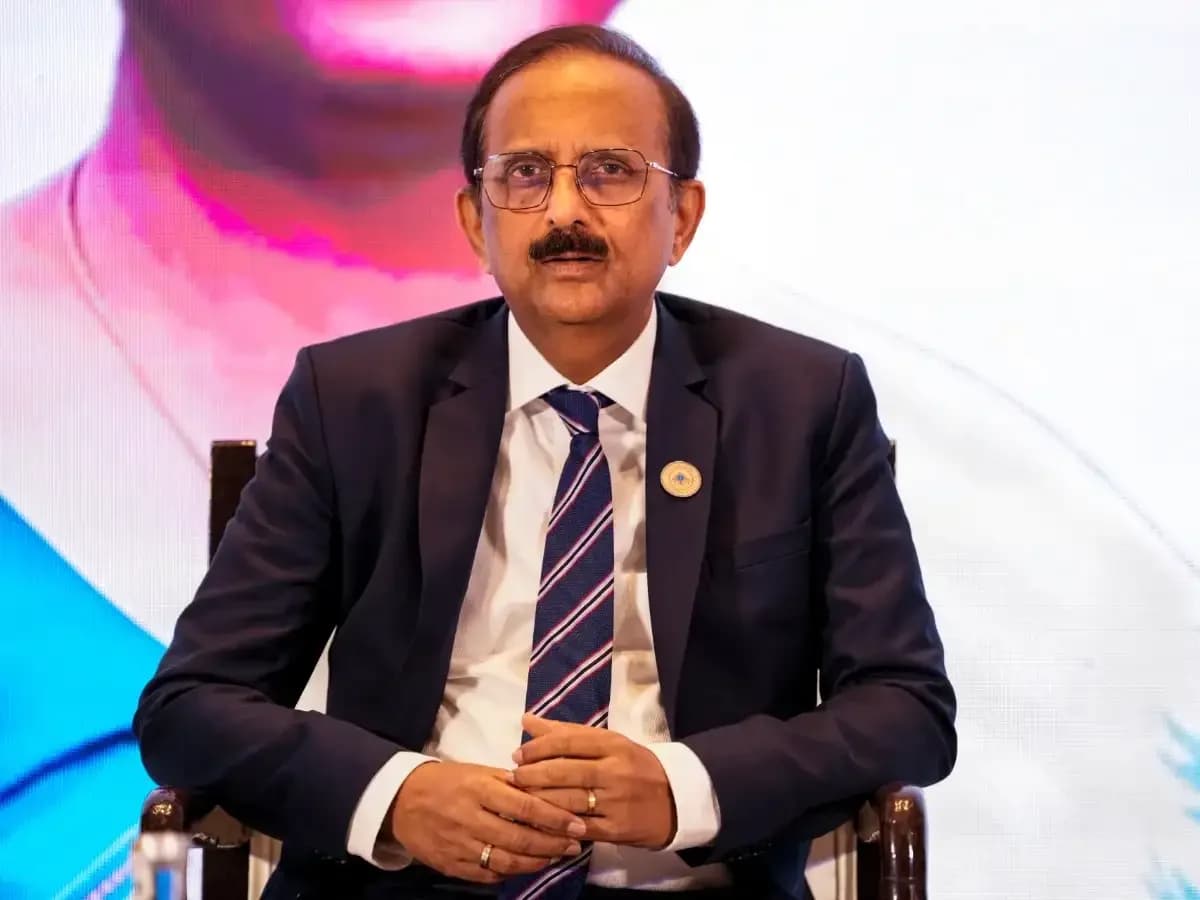
RBI Governor Sanjay Malhotra emphasized that AI can do to lending decisions what UPI did to payments, urging banks not to sit on the sidelines as India is well-placed to adopt the technology. Speaking at FIBAC 2026, he described AI influence to this decade what digitisation did in the 2000s and liberalisation held in the 1990s. The Governor stressed that banks must understand artificial intelligence deployment for future success, noting that AI can be used efficiently to build, improve and expand existing projects like unified lending interface (ULI), account aggregator which are public good projects on top of which the private sector can build. AI, well deployed, can close existing gaps in financial inclusion faster than any preceding technological innovation, but deployed carelessly, it can at the same time entrench new forms of exclusion and instability at a pace that regulators and banks may struggle to keep up with.
AI-enhanced credit risk models, liquidity forecasting, and scenario analysis allow banks – and, indeed, RBI – to see emerging stress earlier than lagging financial statements permit, as reported by The Hindu BusinessLine. Malhotra observed that AI allows banks to serve customers better – provided it is used to augment rather than merely replace human judgment. He explained that a relationship manager assisted by an AI system that presents the right product, the right risk flag, can serve a higher number of customers more efficiently. AI-assisted grievance redressal, and personalised financial guidance can enhance service quality to customers, with the Governor noting that AI-assisted grievance redressal, and personalised financial guidance can enhance service quality to customers. Predictive models can identify borrowers on the cusp of default early enough to counsel rather than merely recover, making AI the most powerful accelerator to financial inclusion.
AI can improve operational efficiency by reducing cost to income in some cases by up to 49%, according to The Economic Times. The Governor highlighted that AI can change the economics of credit delivery fundamentally by using AI models to use cash flows, GST filings, utility, payment bills, digital platforms and extend the frontier of bankable India. India, he said, holds a distinctive advantage through its public digital infrastructure, including Aadhaar, UPI, the account aggregator framework and the unified lending interface. AI had the potential to do for financial judgement what UPI did for financial transactions - making it instant, granular and available at the last mile. Customer service, vernacular voice interfaces, operational efficiency and real-time fraud detection are areas where returns are immediate, with the Governor noting that rules-based fraud engines remain perpetually a step behind fraudsters who adapt faster.
We in India stand at a unique vantage point to leverage AI. We have the most advanced public digital infrastructure, whether it is Aadhaar, the UPI, DigiLocker, ONDC, we are trying to build and improve and expand the Unified Lending Interface, the Account Aggregator, Malhotra explained. RBI is putting in place a Digital Payments Intelligence Platform that will augment India's digital infrastructure, including Aadhaar, UPI, DigiLocker, ONDC, the Unified Lending Interface and Account Aggregator, giving banks a stronger base to use AI across lending and other financial services. Models trained on alternate data such as cash flows, tax filings, utility payments and digital platform records could extend the frontier of bankable India well beyond the reach of traditional underwriting, which depends on financial histories that are thin or absent for large sections of the population. There has to be a very clear board level AI governance framework in the bank, that is very important, said Debadatta Chand, CEO, Bank of Baroda, adding that monitoring committees should oversee implementation at different levels.
RBI Governor Sanjay Malhotra identified seven key risks facing AI adoption in banking: the explainability of black-box decisions, bias and exclusion perpetuated from historical lending data, concentration risk from a small pool of models and vendors, third-party dependencies, data privacy obligations, cyber and adversarial vulnerabilities, and the erosion of human accountability. Speaking at FIBAC 2026, Malhotra emphasized that fairness in AI is not a compliance checkbox. It is a design requirement, adding that ultimate responsibility for a banks decision must rest with the bank, not the vendor or the algorithm. Drawing on the recommendations of the RBIs committee on the responsible and ethical enablement of AI, Malhotra set out immediate expectations: a complete inventory of models in production, a board-approved AI governance policy accountable for outcomes rather than procurement, the capacity to explain decisions that materially affect customers, red-teaming and stress-testing of AI systems, and meaningful human oversight wherever failure could cause material harm. The regulators own approach would remain principles-based and proportionate, given that capability and risk differ sharply between a large bank and a small one running a single off-the-shelf product.
Looking ahead, Malhotra said India needed to build further on the success of Jan Dhan while addressing a large underserved MSME credit market, improving customer service, lowering intermediation costs and preventing digital fraud. He emphasized that AI would need to be leveraged to address these challenges. RBI Governor Sanjay Malhotra announced that BRICS nations are exploring linkages between their respective fast payment systems and central bank digital currencies to enhance cross-border payments. Speaking at an event in Mumbai, Malhotra explained that cross-border payments is an area of interest for all of us, including the BRICS, because we feel there is a lot of scope for reducing cost. As reported by The Hindu BusinessLine, various options are on the table, but it is still at discussion stage, including CBDCs and linkages of fast payment systems. The central bank will also continue its efforts to internationalise the rupee and promote the use of local currencies for cross-border payments and trade.