At the seventh edition of Global Fintech Fest (GFF) 2026 in Mumbai, the launch of Flash UPI powered by BHIM VEGA represents a significant evolution in merchant payment integration. According to Cashfree Payments, this new solution addresses the traditional binary choice businesses face between standard integration with high friction and maximum drop-offs versus TPAP certification requiring significant time, investment and compliance. Flash UPI enables businesses to offer fully integrated, in-app payment experiences without the complexities of TPAP compliance, providing a middle path between ease of setup and premium functionality. The solution has been developed through collaboration with NPCI BHIM Services Limited (NBSL) and banking partners, leveraging the BHIM Vega framework as the next evolution of UPI plugins.
At the seventh edition of Global Fintech Fest (GFF) 2026 in Mumbai, a panel titled 'Reimagining merchant payments: From acceptance to intelligent commerce infrastructure' explored how India's payment landscape is maturing beyond basic acceptance. Gary Yang, President APAC at Adyen, emphasized that the industry now faces a different question: what can a payment do beyond moving money? The discussion highlighted how payments are becoming an integrated, more connected layer of intelligence and action, helping merchants understand what's happening around transactions and respond effectively. According to The Economic Times, this evolution represents a shift from the decade-long focus on reaching every shop and website with digital payment options to creating value through identity, risk, credit and growth capabilities.
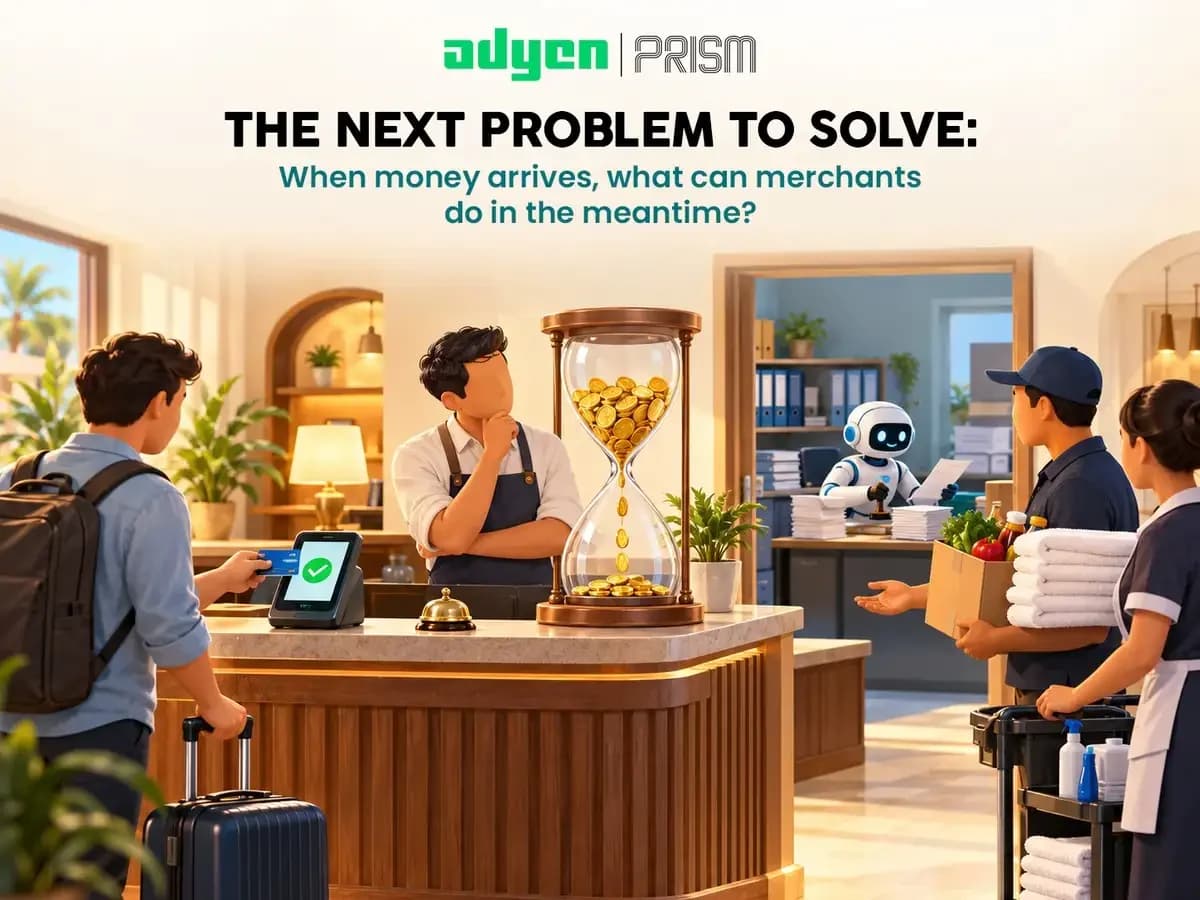
At the seventh edition of Global Fintech Fest (GFF) 2026 in Mumbai, PRISM founder Ritesh Agarwal and Adyen's Chief Commercial Officer Roelant Prins emphasized that merchant payments are evolving beyond checkout functions into critical financial infrastructure. According to reports from The Economic Times, Agarwal, whose hospitality business spans 35 countries with most revenue from the US and Europe, highlighted that early settlement is not about a feature but about merchants being able to make payments to their own staff on time. Prins argued that technology alone cannot solve cash flow needs, stating that combining technology with banking licenses allows providers to prefund slower payment methods, enabling business owners to access money sooner. The panel discussion reinforced this critical importance of settlement speed in modern commerce operations.
The panel revealed significant challenges in payment method availability that directly impact merchant revenue. Gary Yang from Adyen reported that up to 50% of consumers will refuse to buy a product if their desired payment method is not available, making payment method availability a critical business survival factor. Yang emphasized that a retail business wanting to go live in India without UPI, you're not going to make much progress. This data underscores the importance of comprehensive payment method support across different markets and consumer preferences, as merchants increasingly seek payments partners who can manage complexity across countries and regulations while they focus on customer relationships.
The discussion addressed the emerging challenge of AI agent commerce, where software acts on consumers' behalf in transactions. Sudhir Sehgal from Paytm highlighted that while 70% of people already use AI to research purchases, transaction volumes remain minimal for AI-driven commerce. The critical trust question emerged when Sehgal asked the audience how many trusted AI agents like ChatGPT, with only three hands raising - demonstrating the significant trust barriers in automated commerce. Sehgal noted that passkeys and biometrics are removing friction and making transactions more frictionless, but the harder question remains trust in automated transactions as authentication moves from cards to devices and agents.
The discussion highlighted India as a two-way market for global expansion, with the panel exploring how global brands seek assistance entering India while Indian companies want help reaching customers abroad. As reported by The Economic Times, UPI is now appearing overseas as Indians travel to Southeast Asia and the Middle East, accounting for a double-digit share of collections in some cities outside India. The Adyen-OYO partnership over roughly eight years has consolidated OYO's global payments across e-commerce, mobile and point-of-sale onto a single platform, replacing fragmented providers across the US, UK, Europe, Latin America and Asia-Pacific. The panel emphasized that embedded finance is becoming the anchor of merchant relationships, with merchants increasingly seeking pre-approved business loans and supply-chain finance that drive loyalty towards payment service providers.