Blackstone President Jon Gray predicts foreign investors will return to India as they search for global growth opportunities, supported by strong GDP growth exceeding 8% and solid mid-teens corporate earnings projections for the third quarter. Speaking in an exclusive interview with The Times of India, Gray emphasized that "We see this as a temporary cold patch and will continue investing" despite recent capital outflows triggered by energy-price shocks from the war, rising interest rates, AI disruption fears in IT services and India's once-high market valuations. His comments come amid contrasting trends in Indian capital markets, with strong initial public offering activity alongside record foreign portfolio investor outflows. Gray noted that market sentiment can shift quickly, with Indian equities previously commanding high valuation multiples when sentiment was particularly positive, but concerns over elevated prices, rising energy costs and AI's potential impact on IT services have since contributed to a correction. Gray also expressed confidence in India's long-term prospects, stating "We see this as a reset that offers a better entry point, with lower valuations improving opportunities for new capital" and pointing to the country's GDP per capita of about $3,000, roughly one-thirtieth of the US level as an indication of its potential for further economic expansion.
Blackstone's Chief Operating Officer Jonathan Gray has announced plans to double the firm's India investment to $100 billion over the next five years, up from the current $50 billion deployed. Speaking to The Economic Times, Gray emphasized that India is the best performing market for Blackstone and highlighted positive sentiment surrounding the country's economy, which is growing over 7%. The firm's India operations have already achieved significant milestones, with Blackstone taking 14 companies public in India, including five of the six REITs, and helping create the REIT rules in collaboration with the government. Gray noted that India has the stock market up five and a half times in the last 20 years, making it after the US, the easiest place globally to complete an IPO this year. In August alone, the firm sold more than $1 billion of stock in Knowledge Realty, demonstrating the scale and liquidity of India's public markets. The planned increase to $100 billion reflects Blackstone's long-term approach, with the firm looking to invest across sectors that could benefit from India's expanding economy and growing demand for goods, services and infrastructure.
Currency depreciation has emerged as the biggest headwind for foreign investors, making faster-growing businesses a better bet than bond-like assets with flat returns, according to Gray's latest comments to The Times of India. Despite being the fastest-growing large economy, India is witnessing capital outflows, with the energy-price shock from the war, rising interest rates, AI disruption fears in IT services and India's once-high market valuations triggering a correction. However, Gray emphasized that "For long-term investors, the reset offers a better entry point, with lower valuations improving opportunities for new capital" and noted that "Markets may turn fickle, but sustained earnings growth should draw global capital back." The firm's investment approach would remain focused on identifying businesses with strong management teams and helping them expand, with Gray noting that "As long as the economy continues to grow, and the government continues to support that growth with policies that give foreign investors certainty and clarity, I think the opportunity set will grow."
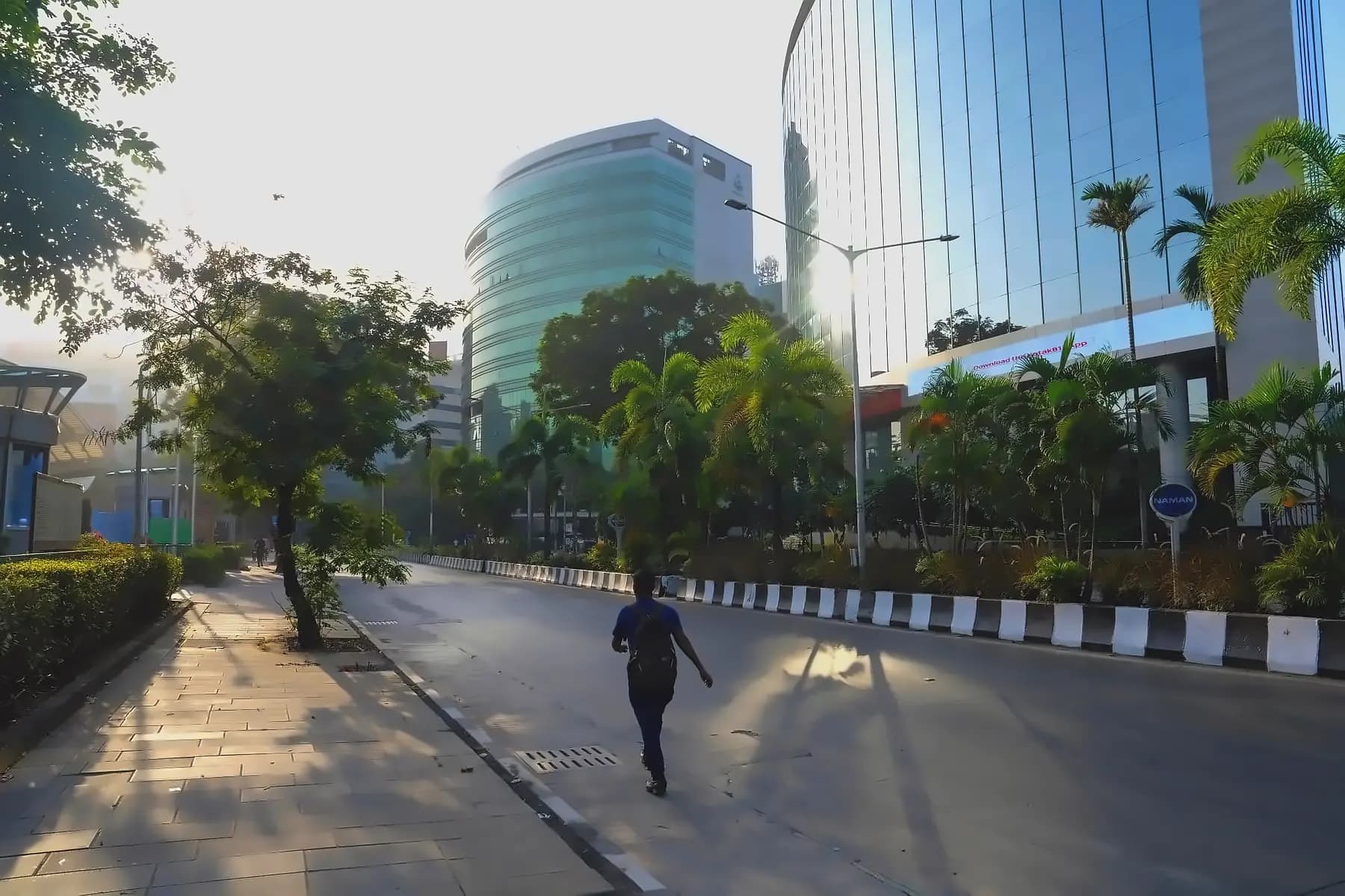
Blackstone plans to target real estate, digital infrastructure, financial services, healthcare and manufacturing sectors as part of its expanded India investment commitment. As reported by Live Mint, real estate remains a key part of Blackstone's India portfolio, with existing investments in logistics, hotels and shopping centres performing well. The firm is currently exploring opportunities linked to artificial intelligence (AI), including data centres, cloud infrastructure and computing capacity. Financial services, healthcare, travel and manufacturing are other sectors being considered as the middle class expands and businesses and consumers seek more services. Gray emphasized that "In a developed market, you might be buying existing businesses or real estate. Here, you have to be a builder" - unlike in developed markets where investors can acquire established businesses, investors in India often must build businesses and expand capacity to serve a growing domestic market. The firm's investment approach would remain focused on identifying businesses with strong management teams and helping them expand, with Gray noting that "As long as the economy continues to grow, and the government continues to support that growth with policies that give foreign investors certainty and clarity, I think the opportunity set will grow."

India has emerged as the world's most liquid market for initial public offerings, with Blackstone's President Jon Gray calling it the easiest place globally to complete an IPO this year. The country has already witnessed one of its biggest-ever IPOs recently, with a potential listing from billionaire Mukesh Ambani's empire valued at more than $100 billion making India one of the world's busiest IPO markets. According to reports from The Hindu BusinessLine, the average fee paid to bankers in India has risen to 1.86% of an IPO's value, higher than roughly 1.5% in Hong Kong, reflecting the competitive nature of the investment banking landscape. JPMorgan and Citigroup are both working on the IPO of Ambani's digital services giant Jio Platforms, which is expected to go public later this year at a valuation that could make it India's largest ever. Gray noted that despite challenges like rising inflation and currency depreciation, Blackstone has had very good success in areas like its logistics portfolio because "there's so much underlying demand that you can make up for the fact that the currency's been going down." He also highlighted India's capital markets as an important advantage for private equity investors, allowing them to take portfolio companies public and unlock returns, stating "I'm not sure Indians recognise how powerful and valuable their capital markets are. They've become an incredible asset to the country."
Private equity firms are significantly increasing their India commitments, with Brookfield Asset Management's CEO Connor Teskey announcing over $100 billion in investment plans for the next five years, up from about $30 billion in 2025. As reported by The Hindu BusinessLine, Teskey said the firm's investment is a bet on "India's immense scale, strong economic growth, respect for capital and growing demand for infrastructure." Firms like Brookfield and Blackstone are also betting on the country's real estate markets, with office space demand increasing as local and foreign companies expand operations in cities like Mumbai and New Delhi. The real estate boom has been fueled by rapid financialization of household savings, with Goldman Sachs India CEO Sonjoy Chatterjee noting that rapid financialization is creating a durable pool of domestic capital to support private-sector investment. According to Bloomberg News, this represents a dramatic turnaround from just a few years ago when private equity investors had limited options to exit investments in India, let alone at substantial profits. Gray emphasized that India's growth prospects, workforce, technology capabilities and infrastructure development underpin the firm's long-term investment case, with the country's expanding middle class driving demand across multiple sectors.