Trent shares plummeted 13% on Tuesday, marking the biggest one-day decline in 15 months and the top loser on the Nifty 50 index. The stock settled near the day's low at ₹2,927.8 apiece on Tuesday, with the decline wiping out about ₹13,356 crore from the company's market capitalisation. The sharp fall followed Trent's June quarter results that showed standalone revenue of ₹5,666 crore, up 19% year-on-year, but this growth fell short of market expectations of 22-23%. The disappointing update prompted heavy selling pressure with sell orders outpacing buy orders by roughly 72:28, while traded volume stood at 3.38 lakh shares with a traded value of ₹971.44 crore, significantly higher than the average daily volumes of 1.09 lakh shares in the past month. The stock had gained 20% in the last one month before Tuesday's session, having also entered the session on the back of a six-day winning streak before the quarterly numbers were announced.
Technical indicators suggest continued downside pressure following the sharp decline, with Trent shares having technically slipped below their 20-day EMA, according to SBI Securities. Sudeep Shah, Head of Technical and Derivatives Research at SBI Securities, noted that the RSI has witnessed a sharp downtick, signalling a shift in momentum from bullish to bearish. The monthly RSI at 49.98 has collapsed from a peak reading above 90 to just below 50, with every prior attempt to reclaim the 60 zone failing. Volume on the down-months has been visibly higher than volume on the up-months, confirming institutional distribution rather than accumulation. Dasani from SBI Securities identified ₹2,780 to ₹2,850 support as the first line of defence, with a decisive break below ₹2,780 opening the path toward the ₹2,400 zone on the monthly frame. The technical read remains cautious until either the monthly RSI reclaims the 60 zone or the price prints a higher high above ₹3,400 with volume confirmation.
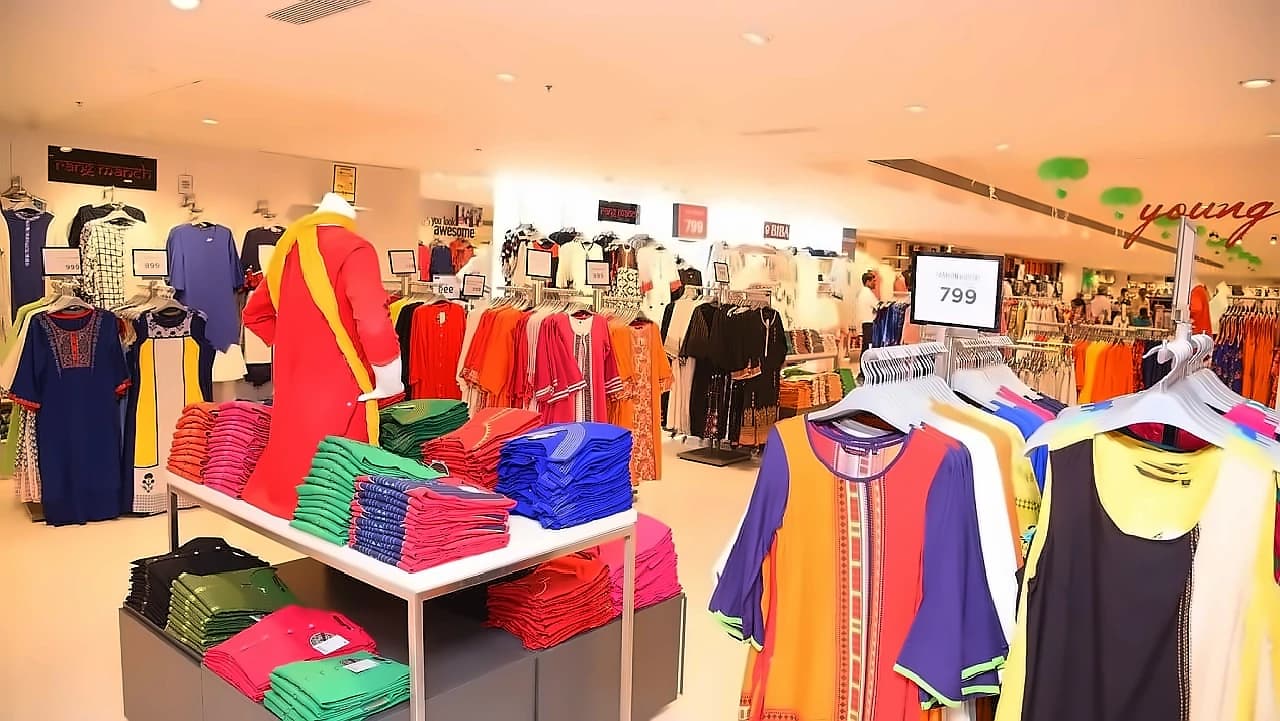
The latest quarterly results revealed concerning trends in store productivity, with revenue per square foot declining 5-7% year-on-year despite the company's aggressive expansion strategy. According to Business Standard, this decline was attributed to rapid pace of expansion leading to localised cannibalisation. The growth was primarily driven by a 26% YoY increase in store count, with Trent adding 26 stores in Q1FY27, taking its total fashion format store count to 1,312, up 26% YoY. As per Business Standard, the company's revenue per store declined 5% year-on-year, while Westside added one store, taking its count to 301 (up 21% YoY), Zudio added 19 stores taking total to 982 (up 28% YoY), and other fashion-format stores increased by net six stores to 29. Motilal Oswal flagged the results as "slightly weaker than expected," noting that the revenue miss "would likely lead to correction in the stock."
Another significant factor behind the exaggerated fall was better performance delivered by smaller peers in the retail sector. V-Mart reported revenue growth of 23%, while Bazaar Style Retail and V2 Retail saw revenue growth of 29% and 58% year-on-year respectively from the June quarter last year. This superior performance by competitors highlighted Trent's relatively modest growth rate and raised questions about the company's competitive positioning in the retail market. The contrasting performance of smaller players in the value-fashion segment has particularly impacted investor sentiment toward Trent, as analysts and investors compare the company's growth trajectory against more aggressive expansion strategies by competitors. Business Standard reports that comparable players such as V-Mart, Style Bazaar and others seem to have witnessed positive growth on this metric in Q1, while Trent's same-store sales growth (SSSG) also appears to have been tepid.
In a significant development, Noel Tata announced at the company's 74th AGM that this will be his last Annual General Meeting as Chairman, concluding a historic tenure where he built the Tata retail firm from a single storefront in Bengaluru into a leading Indian fashion and lifestyle giant. As reported by CNBC TV18, Noel Tata (69) will turn 70 in November this year, making him ineligible to continue as Chairman under the Companies Act 2013. However, he can continue with shareholder approval through a special resolution or central government approval if only an ordinary resolution is passed. Thanking shareholders, employees and partners for their support over the years, Tata said the company has evolved into a strong and resilient retail platform with a clear focus on creating long-term value.
Despite the current challenges, analysts are recommending cautious strategies for existing investors while maintaining optimism for the long-term. Nishchal Jain from Share.Market by PhonePe recommended that existing investors consider a "hold" or "accumulate on dips" strategy, noting that the prevailing sentiment shifts away from reactionary liquidation and advising this as a strategic window to deepen exposure near key technical floors. For those awaiting an opening, Jain believes this retracement provides a long-awaited gateway into a high-conviction retail powerhouse, though emphasizing that a methodical "Staggered Buying" tactical plan is essential to weather temporary price volatility. As the long-term investment framework remains structurally sound, seasoned investors may leverage this valuation breather strategically. Goldman Sachs and Citi had estimated revenue growth of 23% and 23% respectively, with Citi maintaining a cautious view citing weak store productivity, increasing competition and the impact of rapid store expansion. Business Standard reports that conservative analysts will look for 19-20% growth to be maintained, with downside risks appearing greater than the upside because consensus expectations may be higher, leading to further sell-offs.