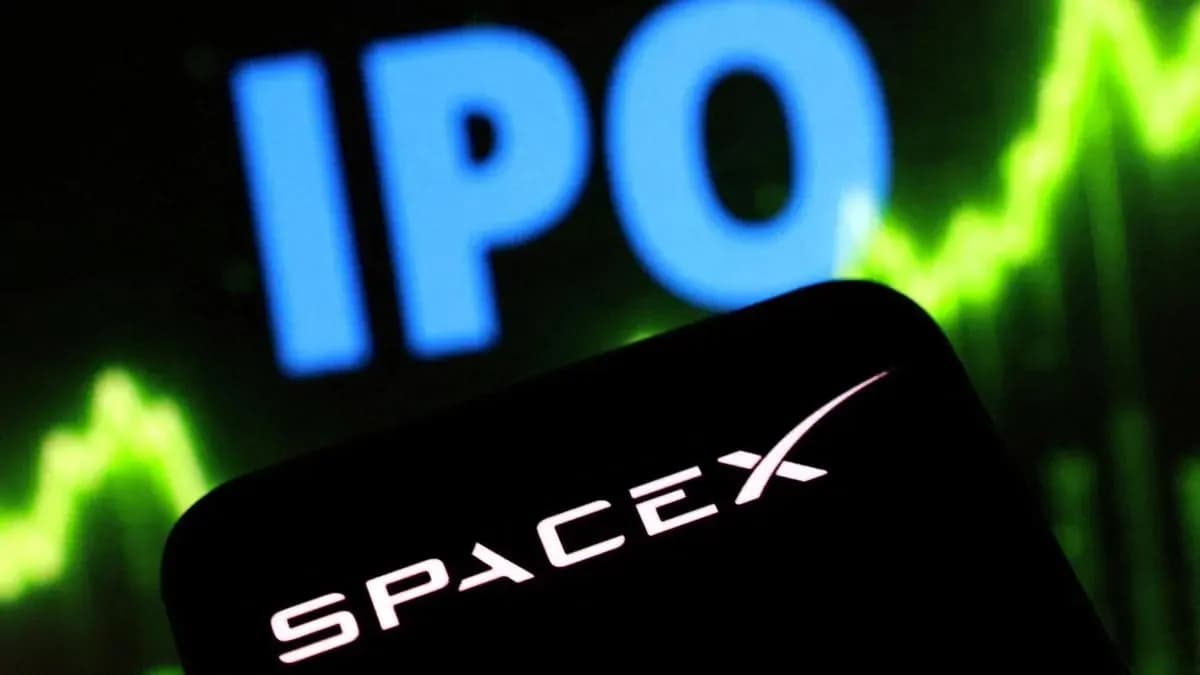
SpaceX's $75 billion IPO is creating significant access challenges for Asian investors, with the company's website and IPO marketing documents reportedly inaccessible in Hong Kong and mainland China. According to Reuters and Bloomberg, SpaceX's underwriters have barred investors in China and Hong Kong from participating in the IPO, citing regulatory and compliance concerns as the primary reason. Retail investors face particularly tough odds, with the company considering allocating as much as 30% to individual investors while targeting a valuation of about $1.8 trillion. The final IPO price is set at US$135 per share, with trading on Nasdaq starting the next day. As Business Standard reports, for local retail investors, getting a direct piece of the IPO book is going to be incredibly tough, with SpaceX being a must-own asset for global growth funds.
Chinese investors are turning to offshore brokerage accounts, Hong Kong-listed proxy stocks, and domestic China A-share investments linked to the commercial space sector as indirect routes to SpaceX exposure. According to The Times of India, one mainland investor, Wang Xi, who has long traded US stocks through an offshore brokerage account, said "I can only buy after it lists" after access was restricted to eligible clients in the United Kingdom. The restrictions come amid tighter regulation of offshore trading channels, with China launching a crackdown on unlicensed cross-border securities services, forcing major brokerage platforms to limit new account openings and deposits for mainland users. Despite these challenges, brokerage firms are trying to attract overseas users by offering promotional incentives linked to SpaceX-themed trading products. Recent developments show perpetual futures trading around $173 on Hyperliquid in Hong Kong, implying a valuation of more than $2.2 trillion, while IG International's CFDs are pricing a market value of $2.4 trillion, implying a gain of more than 35% from the IPO price.
Investors are focusing on Taiwan as a key gateway to the SpaceX supply chain, with the island home to satellite component makers including Chin-Poon Industrial, Wistron NeWeb, and Universal Microwave Technology, all of which have confirmed they supply parts to Musk's rocket company. According to Business Standard, Central Asset Management's Jeffrey Chan pointed to Taiwan's Compeq, Tong Hsing Electronic, and Kinpo as well as Japan's Meiko Electronics as names traded as proxies for SpaceX exposure in Asia. Man Group's Nick Wilcox noted that the IPO will inject capital that could trickle down to companies in the supply chain, with SpaceX forging greater tie-ups with suppliers to facilitate the next leg of capital expenditure. Recent performance data shows WNC Corp surging 175%, Chin-Poon Industrial up 91%, and Universal Microwave Technology soaring 147%, all outperforming even the Taiex index's 49% gain this year. Analysts say SpaceX's IPO could act as a benchmark for global commercial space valuations and may support sentiment across China's own space industry.
With limited access to the IPO, investor demand has shifted into China's domestic A-share market, with an index tracking China's commercial space sector rising for the year and outperforming blue-chip benchmarks. According to The Times of India, Eric Liu, a mainland retail investor investing in a domestic space-focused fund, said he hopes gains from SpaceX's listing could spill over into Chinese space-related stocks. However, his fund has fallen about 10% this year, showing the risks of such thematic bets. State-backed aerospace and satellite firms remain central to the sector, covering electronics, satellite manufacturing and communications infrastructure, while other listed companies producing components such as antennas, connectors and radio-frequency systems have surged, with some hitting record highs this year. Recent developments show Sunway Communication up 60% and Lens Technology jumping 41%, both significantly outperforming the CSI 300 Index's 2% gain.
Investors across Asia have been largely shut out of the world's largest-ever initial public offering, forcing them to find creative ways to make bets on SpaceX's potential gains. As The Hindu BusinessLine reports, Hebe Chen, an analyst at Vantage Global Prime, noted "We have seen rising curiosity from clients across unusually diverse trading profiles and risk appetites. The level of interest around SpaceX feels less like a normal IPO inquiry and more like investors trying to secure a seat before the rocket leaves the launchpad." The routes vary sharply by market, with Japan and Australia the only countries in Asia Pacific where retail investors have direct access to the IPO. In South Korea, some sought allocations through local broker Mirae Asset Securities via a private placement that sold out within one minute, according to Yonhap Infomax News. Companies linked to SpaceX have particularly attracted bets that a fresh influx of capital will ultimately filter down to suppliers, with some companies in China and Taiwan seeing significant interest as a result. The ETF route is proving equally popular, with investors increasingly drawn to space-focused products such as the ARK Space and Defense Innovation ETF set for its second consecutive quarter of at least $200 million of inflows, while others are opting for broad-based Nasdaq vehicles expecting SpaceX's enormous market value to quickly make it a meaningful component of major technology indexes.