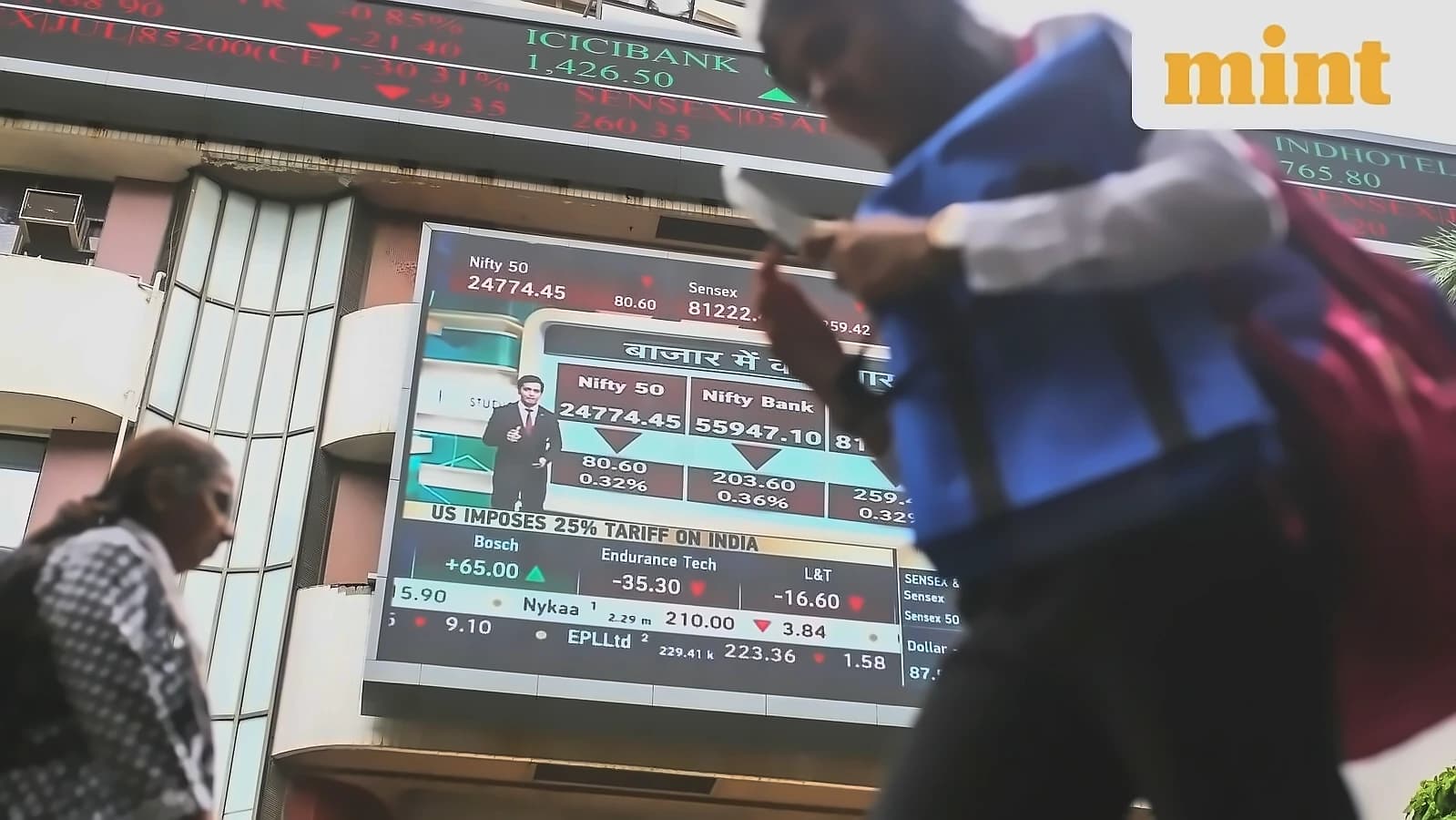
The broader indices outperformed benchmark indices during Wednesday's session, with Nifty Smallcap 100 surging 0.81% to close at an all-time high, while the Nifty 50 settled at 24,207.75, down 0.52% after touching an intraday high of 24,378. The BSE Sensex fell 0.24% to close at 77,472, reflecting a market in transition as investors rotated out of technology and consumer stocks into metals, banks, and the broader market. According to The Hindu BusinessLine, the session reflected selective risk appetite with gains in banking and metals largely offset by weakness in IT stocks after the US paused visa appointments amid an immigration crackdown. The Nifty 50 opened on a positive note but failed to sustain gains at higher levels, eventually settling lower with the CAS adjustment at the close leading to an additional downtick of nearly 68 points.
The Nifty formed a sizeable bearish candle on the daily chart, closing near the day's low, with the index erasing gains from the previous session. Following the CAS-led decline, the Nifty slipped below its 8-EMA but continued to hold the important 50-DMA support level. The India VIX declined 4.6% to 10.5, marking a multi-month low, with implied volatility staying near its lowest levels. The Nifty continues to trade within a narrow range of 24,000-24,400, with a sustained move above 24,400 needed to move out of the current consolidation phase. For Thursday's session, 24,115 is likely to act as the immediate support level, while the index needs to reclaim and sustain above 24,400 to move towards the 24,550-24,650 zone in the near term.
Sectoral performance showed significant divergence with Metals, PSU Banks, Chemicals, and Private Banks emerging as standout gainers, while IT, FMCG, Realty, and Consumer Durables bore the brunt of selling pressure. As reported by The Hindu BusinessLine, among Nifty 50 stocks, Kotak Mahindra Bank, Axis Bank, and JSW Steel led gains, while Infosys, Bharti Airtel, and Power Grid were the top drags. Vinod Nair from Geojit Investments noted that gains in banking and metals were largely offset by weakness in IT stocks after the US paused visa appointments, while the Nifty Midcap 100 slipped 0.10% despite the overall positive small-cap momentum. The session witnessed sectoral rotation with buying interest shifting towards metals, banking and financial services, while IT and FMCG stocks remained under pressure.

The Nifty Smallcap 100 index gained 0.81%, led by Welspun Corp, Jyoti CNC Automation, Aegis Logistics, Netweb Technologies India, Urban Company, Data Patterns (India), Hindustan Copper, JBM Auto and Brigade Enterprises. According to The Hindu BusinessLine, market breadth remained fairly healthy with an advance-decline ratio of 1.23 across the Nifty 500 universe. The small-cap outperformance was supported by stronger earnings visibility and their largely domestic-facing character, even as frontline benchmarks struggled to hold ground amid sectoral divergence. The small-cap outperformance was supported by stronger earnings visibility and their largely domestic-facing character, even as frontline benchmarks struggled to hold ground amid sectoral divergence.
A significant macro tailwind emerged on the energy front with Brent crude falling nearly 2% to around $85-86 per barrel, its lowest in over two weeks, after reports that Iran and Oman are in discussions over an interim framework to resume shipping through the Strait of Hormuz. As noted by The Hindu BusinessLine, domestic crude futures fell more than 2.5%, providing relief to India's import bill and rupee stability. Sarvam Goel from Pocketful emphasized that every dollar crude falls is a direct improvement in India's import bill, rupee stability, and the case for a rate cut. The India VIX fell 4.78%, pointing to easing near-term anxiety as the market found some stability.
Foreign institutional investors (FIIs) were net buyers, adding ₹1,593 crore to domestic equities, breaking the trend of recent selling pressure. According to The Hindu BusinessLine, the rupee found some support alongside the crude decline, even as the dollar index ticked up to around 98.99, keeping the currency's trajectory in check. Looking ahead, key triggers include Nvidia's earnings report after US market close, with revenues expected to nearly double year-on-year, US core PCE inflation data and Q2 GDP figures that will shape Federal Reserve rate trajectory expectations. The Jackson Hole symposium and Middle East developments, particularly on the Iran front, will remain closely watched for their impact on crude prices and global risk sentiment.