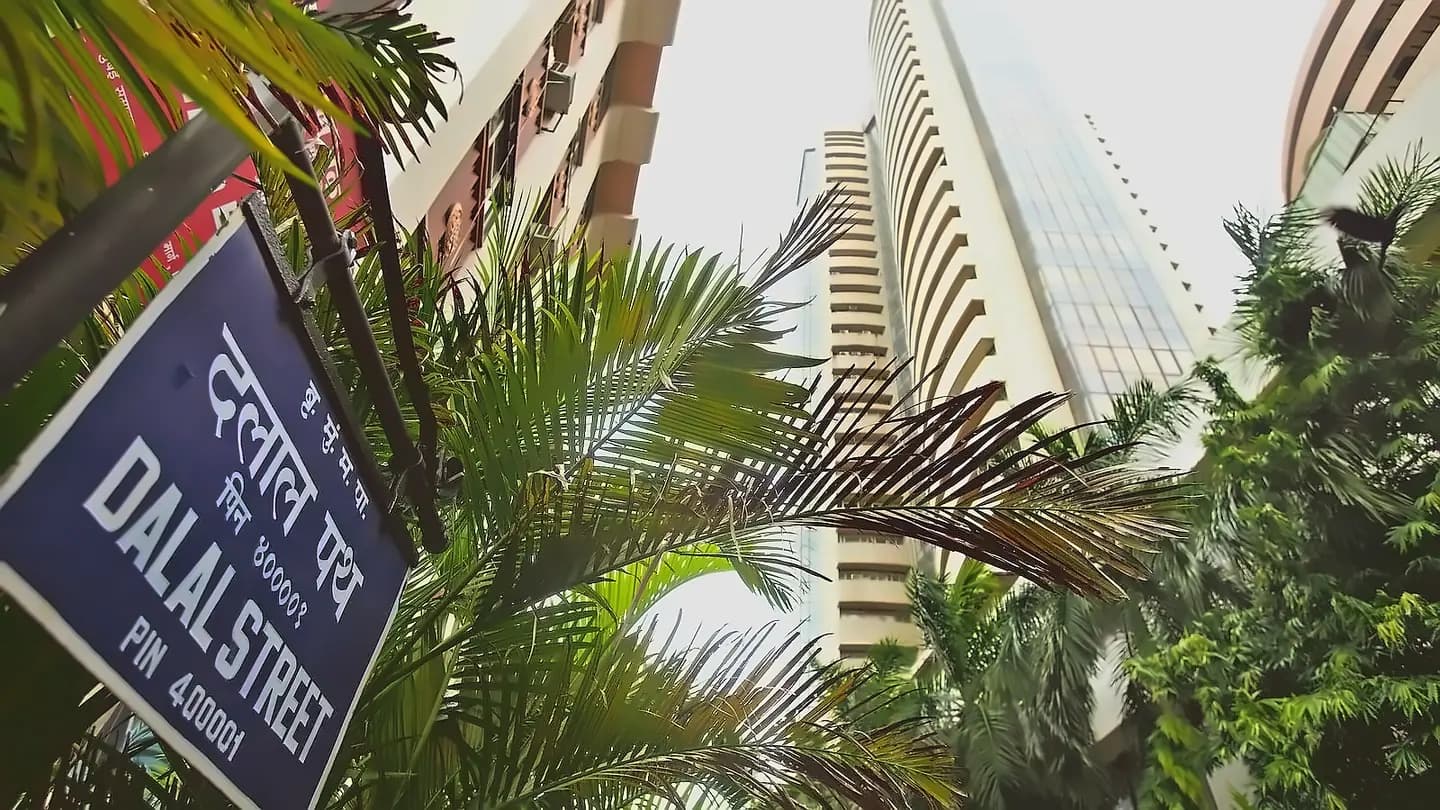
The 30-share BSE Sensex rallied 789.74 points or 1.06% to end the session at 75,398.72, while NSE Nifty50 surged 277 points or 1.18% to settle at 23,690.60, according to provisional closing data from Business Standard. The markets closed higher for the second consecutive session, with Sensex jumping 1.13% and Nifty 50 adding 1.33% in two consecutive trading sessions. Nifty Bank index advanced 673 points to 54,129, and the Midcap index climbed 675 points to 60,840, demonstrating broad-based strength across market segments. Nifty Metal and Nifty Pharma emerged as top sectoral gainers, jumping 2% and 2.7% respectively, while Nifty IT index was the lone laggard, falling nearly 2%, weighed down by concerns over intensifying global AI competition. Bharti Airtel (up 5.32%), HDFC Bank (up 2.67%) and ICICI Bank (up 0.84%) boosted the indices today, with Nifty touching an intraday high of 23,777.20 before ending near peak levels. The rally added around ₹5 lakh crore to the combined market capitalisation of all BSE-listed companies, taking the total valuation close to rise above ₹463 lakh crore. The Nifty opened higher at 23,530.25 and briefly slipped into negative territory during late morning trade, hitting an intraday low of 23,426.55 before strong buying in banking, pharma and metal shares pushed the index steadily higher through the afternoon session.
Nifty Pharma emerged as the top-performing sectoral index with a 2.74% gain, leading the market recovery for the second consecutive session, as reported by Business Standard. Nifty Pharma jumped 2.98% in the two consecutive trading sessions, with Cipla surging 8.19%, Zydus Lifesciences gaining 5.77%, Ipca Laboratories rising 4.96%, Ajanta Pharma up 4.32%, Gland Pharma advancing 3.19%, Dr Reddys Laboratories up 3.1%, Torrent Pharmaceuticals rising 2.89%, Laurus Labs gaining 2.8%, Glenmark Pharmaceuticals up 2.76%, and J.B. Chemicals & Pharmaceuticals advancing 2.53%. Nifty Metal also rose 2%, demonstrating broad-based strength across multiple sectors, with metals gaining on higher metal prices and improving demand expectations from China. Barring the Nifty IT index, all sectoral indices on the NSE ended in the green, with Nifty IT declining 1.99% to 27,360.35 amid concerns over AI-led disruption following OpenAIs latest enterprise push. IT stocks have fallen 6.92% over the last four consecutive sessions and hit a 52-week low of 27,078 during the day, with Persistent Systems leading losses at 4.44%, followed by LTIMindtree down 3.95%. Among Sensex firms, Bharti Airtel emerged as the biggest gainer, rallying over 5% after the telecom carrier's annual revenue crossed the ₹2 lakh crore mark for the first time, while Eternal rose 3.32% and HDFC Bank advanced 2.67%, emerging as the major contributor to the Sensex gains. Around 1,725 stocks advanced on NSE, while 1,540 declined and 105 remained unchanged, with Nifty Midcap 100 gaining more than 1% while Nifty Smallcap 100 underperformed, closing in the red with marginal losses.
The day's rally was anchored largely by optimism around the ongoing US-China summit, according to The Hindu BusinessLine. Trump and Chinese President Xi Jinping concluded the first round of talks during their two-day summit, with Chinese state media reporting that discussions on trade were making progress, although Xi reportedly cautioned that disagreements over Taiwan could strain bilateral ties. U.S. Dow Jones futures were up 363 points, indicating a positive opening for Wall Street later today, while European markets had closed in the green yesterday, and continued to record gains on Thursday, with France's CAC, UK's FTSE and Germany's DAX rising up to 1%. Wall Street indices also closed in the deep green, with tech-heavy Nasdaq gaining more than 1%. Sentiment was further anchored by positive cues from the Trump-Xi summit, which raised hopes of expanding economic cooperation, as noted by Vinod Nair, Head of Research at Geojit Investments Ltd. Aditya Agrawal, CIO at Avisa Wealth Creators, noted that "a constructive US-China summit could improve global risk appetite, support equities, ease supply chain concerns and strengthen emerging market inflows." Sentiment was further aided by reports that the Indian government is considering reducing taxes on foreign bond investments to attract overseas capital and support the rupee. The India VIX, which measures volatility in markets, dropped more than 4% to 18.61 amid the renewed optimism. Market breadth remained positive with 2,107 shares rising and 2,076 shares falling on the BSE, with 189 shares unchanged.
Bharti Airtel rose 5.32% after reporting a 10.47% quarter-on-quarter rise in consolidated net profit to ₹7,325.1 crore for Q4 FY26, compared with ₹6,630.4 crore in Q3 FY26, with revenue from operations increasing 2.59% QoQ to ₹55,383.2 crore. CARE Ratings surged 7.99% after the company's consolidated profit after tax stood at ₹52.83 crore in Q4 FY26, up 23.98% from ₹42.61 crore in Q4 FY25, with revenue rising 19.17% YoY to ₹130.67 crore. NLC India surged 14.01% to ₹376.40 after the company's consolidated net profit soared 189.12% to ₹1,393.46 crore on a 31.45% jump in revenue to ₹5,042.46 crore in Q4 FY26. Oil India rose 2.11% after its standalone net profit jumped 12.44% to ₹1,789.53 crore in Q4 FY26, supported by higher crude oil production (up 6%) and improved crude price realisation rising 5% to $77.89 per barrel. Balaji Amines hit an upper limit of 20% after reporting strong earnings growth with consolidated profit after tax jumping 57.79% to ₹63.21 crore in Q4 FY26. MTAR Technologies surged 12.18% after the company announced purchase orders worth $238.76 million, equivalent to around ₹2,278.96 crore. Kaynes Technology India plunged 20.07% after the company's consolidated net profit declined 21.5% to ₹91.22 crore despite a 26.22% increase in revenue to ₹1,242.63 crore in Q4 FY26. Among other gainers, Adani Ports, Sun Pharmaceuticals, Bajaj Finance, Mahindra & Mahindra, NTPC, Kotak Mahindra Bank, Titan, Trent, UltraTech Cement, ITC and State Bank of India were among the other gainers, while Infosys, Tech Mahindra, HCL Technologies, Tata Consultancy Services, Hindustan Unilever, Axis Bank and Maruti Suzuki India ended lower.

Despite the equity recovery, macro headwinds remained prominent with India's wholesale inflation surging to a 42-month high of 8.30% in April 2026, accelerating sharply from a 3.88% rise in March, as reported by Business Standard. This marked the fastest growth since October 2022, driven by a faster rise in manufacturing and food costs and a sharp increase in fuel prices due to the Middle East crisis. The rupee fell to a low of 95.73 against the US dollar due to high crude oil prices and foreign fund outflows, hitting a fresh record low. Brent Crude, the global oil benchmark, rose nearly 1% to $106.48 per barrel, adding to inflationary pressures. Foreign Institutional Investors (FIIs) sold equities worth ₹4,703.15 crore on Wednesday (May 13, 2026), while Domestic Institutional Investors (DIIs) purchased stocks for ₹5,869.05 crore, according to exchange data. On the commodities front, MCX Gold futures for the 5 June 2026 settlement shed 0.03% to ₹162,145. Looking ahead, markets are expected to stay sensitive to crude oil price movements, rupee trajectory, foreign fund flows and geopolitical developments, particularly in West Asia. The market capitalisation of BSE-listed companies climbed by ₹6.82 lakh crore to ₹462,85,684.68 crore (USD 4.83 trillion) in the last two trading sessions, with BSE SmallCap Select index rising 0.86% and MidCap Select index gaining 0.40%. VK Vijayakumar, Chief Investment Strategist at Geojit Investments, said sustained rupee depreciation has emerged as a key concern for the economy, noting that "the situation will change only if the Strait of Hormuz is opened and crude price falls, or the AI trade, which is attracting FPI flows into the AI leaders, ends." Market veteran Arun Kejriwal urged investors to remain in 'wait-and-watch' mode over the next few sessions, while Kranthi Bathini from WealthMills Securities advised investors to stay cautious at higher levels, adding that the current environment favours a 'buy-on-dips' and 'sell-on-rallies' strategy.