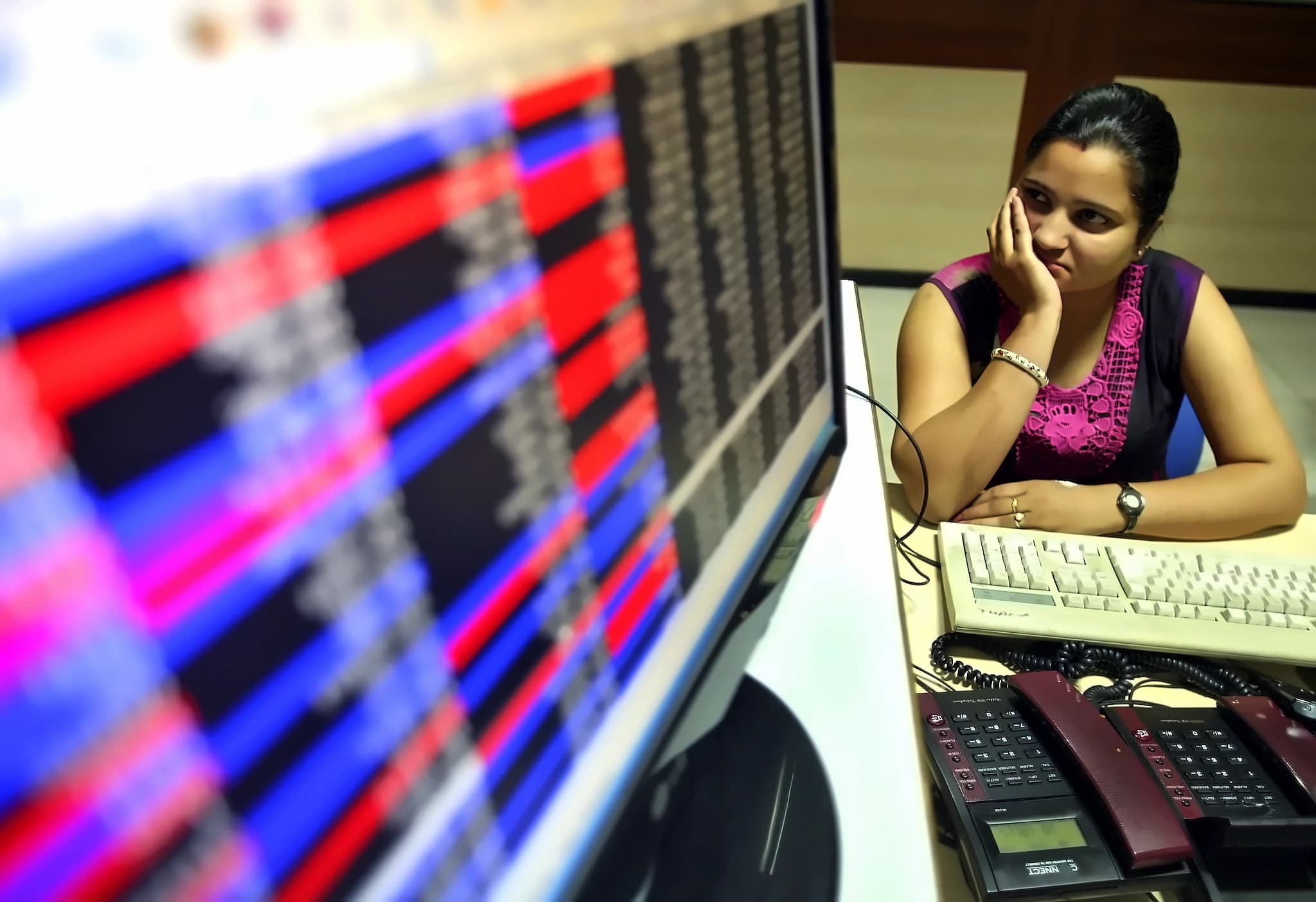
Indian equity markets continued their impressive rally on Thursday, November 5, 2026, with both the BSE Sensex zooming 2,008.61 points, or 2.60%, to settle at 79,310.01 and the NSE Nifty surging 576 points, or 2.40%, to end at 24,536.60. According to CNBC TV18, the Nifty opened with a gap-up of more than 400 points and sustained its upward momentum through the session, ending firmly in positive territory. This marks the sixth consecutive session of gains for both indices, building on the previous four sessions that saw gains of over 1.6%. The upward movement was supported by easing crude oil prices, improved foreign fund flows and renewed hopes of easing in the US-Iran conflict. The recovery was not limited to the benchmark indices, as buying interest was also visible across the broader market, with the Nifty Bank rising over 1,860 points to 57,773.65, marking its biggest single-day gain since April 2026. The Nifty reclaimed the 24,500 mark, gaining nearly 5% over the past six sessions to post its biggest six-day advance in seven months. As per Hemant Sood, Founder and Managing Director of Findoc Group, "This was the sixth straight day of gains and the first clean break above the 24,000 level on the Nifty, which had capped the index through the recovery", with investors adding roughly ₹7 trillion in market value in a single session. The Nifty has now gained over 8% across the six-session streak, its strongest such run since February 2021.

The Indian rupee strengthened for a fifth consecutive session, appreciating 17 paise to close at 94.47 against the US dollar, marking its strongest level since June 30, 2026. As per CNBC TV18, a weaker US dollar, easing US Treasury yields, foreign fund inflows and lower crude oil prices supported the domestic currency. The rupee's strength comes amid Brent crude declining nearly 16% this week to around $94 per barrel, easing concerns over the potential impact of the West Asia conflict on energy supplies and India's import bill. The outcome of the US midterm elections has also lifted global sentiment, amid expectations of a more measured approach to trade and tariffs. The US dollar has weakened, while the yield on the 10-year US Treasury has eased to around 4.85%, providing additional support to risk appetite. Indian equities have also outperformed their Asian peers so far in Q3FY27, with the Nifty gaining 8.5% during the quarter, while the MSCI Asia Pacific index has declined 7.6%. The Nifty has now gained over 8% across the six-session streak, its strongest such run since February 2021.
India's stock market has successfully reclaimed its position in the $5 trillion market capitalization club, with BSE-listed companies' market cap surging to ₹500.79 lakh crore, up by nearly ₹8 lakh crore during Thursday's session alone. As per CNBC TV18, from the October 28 lows of 22,497, the Nifty 50 index has rebounded nearly 2,000 points, having gained over 7% during this period. The broader market has underperformed the Nifty, with the Midcap index gaining 5% and the Smallcap index gaining 3% during this period. This represents a significant shift in market sentiment and marks a crucial psychological win for Indian equities, with all 50 stocks of the index having gained during this period. Among the 4,287 stocks listed on BSE, 3,091 stocks are in green, 984 have declined, and 212 are unchanged, while at least 98 stocks have touched new 52-week highs and 170 stocks have hit their upper circuits. The Nifty50's price-to-earnings ratio touched 19x, the lowest in four years, compared to its five-year median of 21.9x, making it attractive and affordable at lower levels.
The latest rally was significantly boosted by foreign portfolio investors returning with a vengeance, pumping around ₹55,000 crore ($5.8 billion) into Indian equities over the past 14 trading sessions. On Thursday alone, FPIs purchased shares worth ₹14,975 crore ($1.6 billion), their biggest single-day buying since September 20, 2024, according to provisional exchange data. Investors' wealth swelled by ₹8.13 lakh crore on Thursday to ₹501.57 lakh crore, with the market adding nearly ₹29 lakh crore in value over the six-session rally. However, domestic institutional investors booked profits, selling shares worth ₹10,445 crore, highlighting the shift in investor sentiment. The buying in banking and FMCG names comes on the back of continued foreign institutional investor activity, with FIIs recording net equity purchases of ₹7,284.03 crore on Wednesday (November 4, 2026). According to Dr. V K Vijayakumar, the 'hope that LTCG's tax may be abolished in the coming budget has completely changed the FII's stance towards India'. Both the US and Indian treasury yields have dropped marginally to 4.849% and 7.248% respectively, while the dollar index has softened with a higher risk of correction in US equity markets.
The rally was broad-based with all sectoral indices closing in the green, as reported by CNBC TV18. Auto stocks led the charge with the sectoral index jumping 4.14% amid expectations of tariff relief following the Democrats' victory in the US midterms, while financial services, realty, private banks and public sector banks were among the other major gainers. Bajaj Finance, Shriram Finance and Mahindra & Mahindra were among the top Nifty gainers, while Apollo Hospitals, ONGC and NTPC emerged as the key laggards. The Nifty Midcap 100 rose 1.90% and the Nifty Smallcap 100 gained 0.56%, with the BSE advance-decline ratio at 2.992 stocks advancing against 1,450 declines. Sectoral performance was broadly positive, with all indices except Nifty Media and Nifty Chemicals closing in the green. Vinit Bolinjkar, Head of Research at Ventura, noted that "fuel- and crude-linked cost structures at IndiGo, Asian Paints and CEAT" were the clearest beneficiaries, while "sustained lower oil prices could weaken realisations for ONGC and Oil India". Market breadth remained firmly positive on the NSE, with 2,547 stocks advancing, 1,084 declining and 92 remaining unchanged out of 3,723 stocks traded.
The six-session rally has strengthened momentum, with the Nifty decisively reclaiming its 200-day simple moving average at 23,997 for the first time since February 26, 2026, as per Nandish Shah of HDFC Securities. The near-term outlook for Indian equities remains positive, supported by easing crude oil prices, a resumption in foreign institutional investor buying and firm global cues. With the festive season approaching, improving sentiment and expectations of stronger domestic demand could provide further support to the market. Immediate resistance for the index is seen at 24,773, followed by 24,990, while support has shifted higher to 24,300. Sudeep Shah of SBI Securities said the 24,430-24,400 zone is likely to act as a crucial support area for the index, with the index likely to test the 24,650-24,680 zone in the near term. Vatsal Bhuva of LKP Securities recommended a buy-on-dips strategy, seeing immediate support around 24,200, while 24,000 remains a crucial positional support level. Any dip towards 24,200 could act as immediate support, while 24,000 remains crucial positional support, with resistance placed at 24,800 and 25,000.
Indian equities were among Asia's standout performers, with the benchmark indices second only to Hong Kong's Hang Seng, which surged 3.67%. In contrast, South Korea's Kospi plunged 5.28% and Taiwan's benchmark index fell 3.2%, highlighting the divergence in regional market performance. However, amid the euphoria, market experts cautioned against assuming that the worst of the volatility was over. As per Vineet Bhatnagar, CEO of PhillipCapital India, "There will be volatility. Global events will continue to test nerves. But for those with a horizon of three to five years, years like the one we just lived through have historically been the best time to build." The sharp reversal in foreign flows coincides with a fall in crude prices, with Brent crude trading around $94 a barrel on Thursday, down sharply from its recent highs, while the Democrats' sweeping gains have raised expectations of an early de-escalation in the US-Iran conflict. Investors will track Q2FY27 results from Hindalco, Bosch, Siemens, Aster DM Healthcare, Gland Pharma, Voltas, Jubilant FoodWorks and Data Patterns (India), among others.