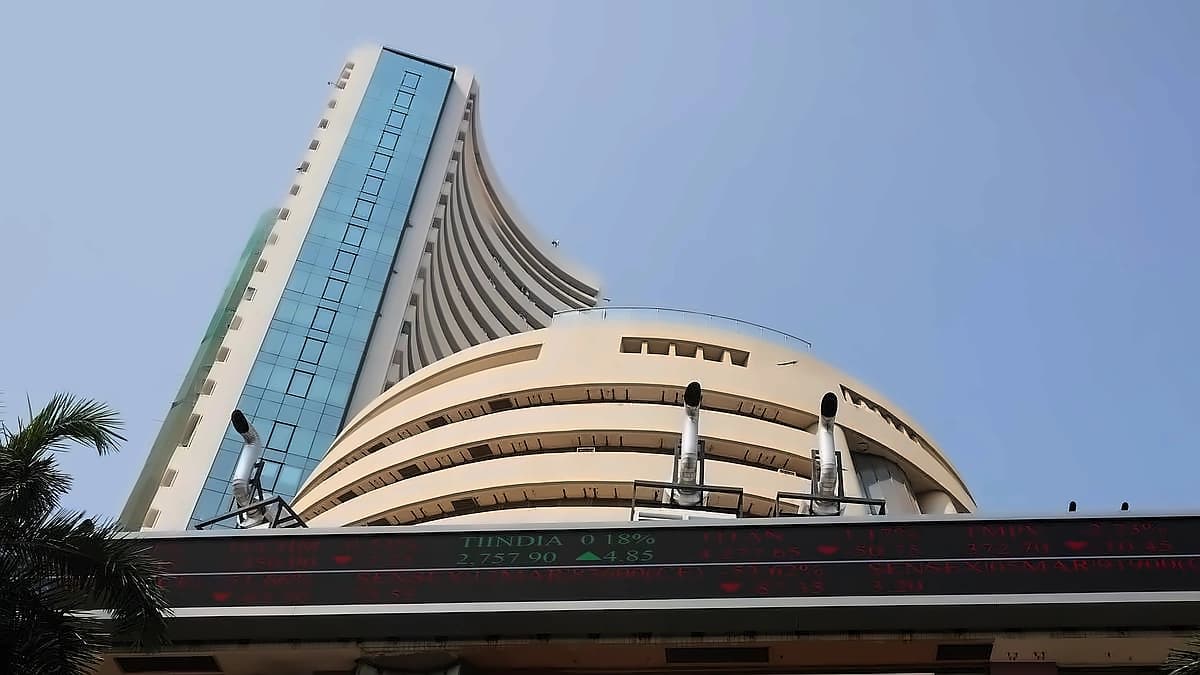
Indian benchmark indices experienced a significant crash on Tuesday as the BSE Sensex declined over 1,300 points to settle at 74,700, while the NSE Nifty tumbled more than 380 points to close trade at 23,815 at 3:30 PM. According to latest reports, GIFT Nifty was trading around 374 points lower at 23,866, indicating continued weakness in early trading. The market decline was primarily driven by rising crude oil prices, uncertainty surrounding the West Asia conflict, and persistent foreign fund outflows. In the 30-share BSE Sensex, the top gainers included stocks like NTPC, State Bank of India and Bharti Avi, while the laggards included Tata Steel, Axis Bank, HDFC Bank, Kotak Bank and Sun Pharmaceuticals.
Brent crude prices rallied over 3.5% to approximately $104.90 per barrel as the Strait of Hormuz remains largely shut, threatening global energy supplies. This surge in crude oil prices was a key factor weighing on investor sentiment throughout the trading session. On Monday, crude prices surged nearly 3%, triggering fresh concerns over inflation in the domestic economy. The ongoing US–Iran conflict continues to weigh on global sentiment, keeping risk appetite subdued across financial markets and resulting in heightened headline-driven volatility across equities and commodities.
US President Donald Trump on Monday said the ceasefire with Iran was at its weakest and "on massive life support", a day after he rejected Tehran's proposal to end the months-long war as "totally unacceptable". According to The Times of India, Trump told reporters at the Oval Office that "It is at its weakest… After reading that piece of garbage they sent us... It's on life support, massive life support." This escalation in tensions has contributed significantly to the market's risk-off sentiment and volatility concerns, with peace talks between US-Iran stalling and global markets under shock from the ripples across the Indian economy.
Foreign Institutional Investors (FIIs) sold equities worth ₹8,437.56 crore on Monday, according to exchange data reported by The Times of India. This heavy selling by foreign investors has added significant pressure on domestic markets and contributed to the sustained decline in benchmark indices. The persistent foreign fund outflows have been a key factor weighing on investor sentiment and market performance, with investors starting to tread carefully amid high oil prices and foreign investor pulling out.
Consumer Durables have seen the sharpest decline, falling close to 4%, while Healthcare and Pharma stocks are moving higher, supported by defensive buying interest. Banking and Financial services remain under pressure, acting as a key drag on the market, with heavy losses in stocks such as HDFC Bank and SBI. FMCG stocks are relatively stable, benefiting from a shift of funds toward safer, less volatile sectors. Analysts suggest that 23,800 to 24,000 acts as a crucial support zone for the Nifty, with a decisive fall below 23,800 leading to a deeper retracement toward the 23,400 level. On the upside, 24,400 remains a major resistance hurdle. Meanwhile, the Indian rupee is trading near 94.26 against the US Dollar, close to its record lows due to rising crude oil prices.