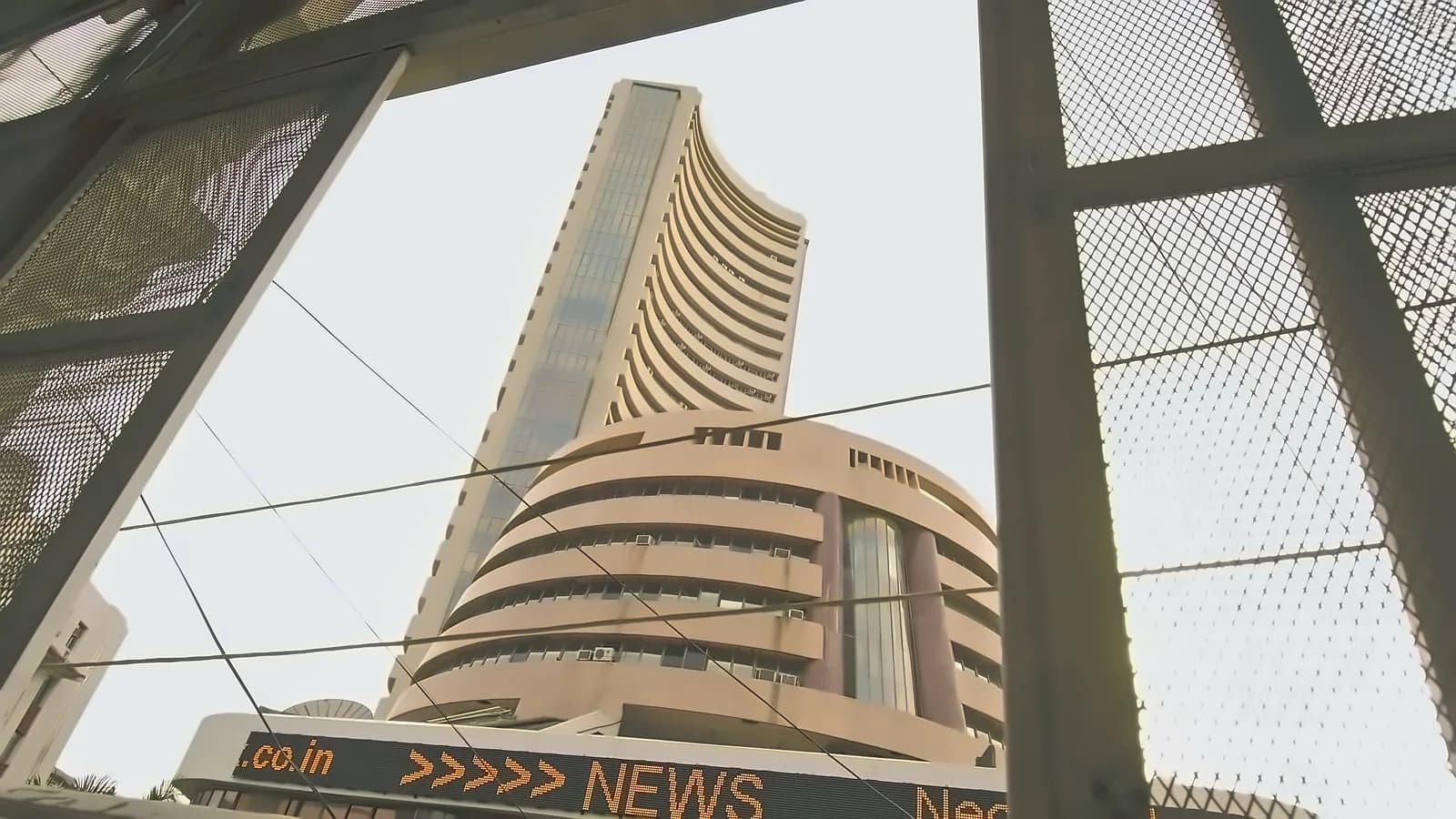
Indian markets experienced significant volatility in May, with benchmark indices declining sharply amid persistent geopolitical uncertainty. According to Business Standard reports, the BSE Sensex fell 2.8 per cent during the month, while the Nifty 50 declined 1.9 per cent, marking a sharp reversal from April's strong performance when the Nifty had surged 7.5 per cent following an 11.3 per cent decline in March. The losses came after a strong rebound in April, highlighting the market's continued sensitivity to West Asia developments and elevated oil prices. Latest data shows the Sensex tumbled 1,092 points on Friday, closing below 24,550 as markets ended the month on a significantly lower note due to last-minute profit booking in financials and oil & gas shares. As reported by Business Standard, many market participants had dismissed the old Wall Street adage -- "Sell in May and go away" -- arguing that India's structural growth story and strong domestic liquidity would help markets outperform, but a combination of rising crude oil prices, foreign portfolio investor selling, hardening US treasury yields, and fresh military actions between the US and Iran weighed on markets as the month progressed.
Market breadth remained weak throughout May, with 10 of the 16 major sectoral indices ending the month lower, as reported by Business Standard. Consumer durables emerged as the worst-performing sector, declining 6.2 per cent, followed by oil & gas which fell 4.2 per cent. In contrast, metal and pharma sectors outperformed significantly. Among Nifty 50 constituents, Adani Enterprises emerged as the top gainer with a rise of nearly 22 per cent, while ONGC fell 11.4 per cent, with SBI and ITC among other major laggards. Latest trading data shows selling pressure was seen across most sectors, except IT, which gained 0.6 per cent, with oil & gas, metal, and auto stocks among the biggest losers, each falling around 2 per cent. Oil & Gas, Metal, and Auto stocks were among the biggest losers, each falling around 2 per cent.
Oil price movements continued to influence market sentiment throughout May, with Brent crude futures declining about 18 per cent as concerns over supply disruptions eased, according to Business Standard. However, prices remained 27 per cent higher than before the Iran conflict, keeping concerns alive over India's import bill and inflation outlook. Foreign portfolio investors continued their selling spree, pulling out money worth nearly ₹34,000 crore during the month up to May 27, compared with a record ₹1.22 trillion in March. Latest data shows Foreign Portfolio Investors (FPIs) continued their selling streak in Indian equities in May, with net outflows amounting to ₹32,963 crore during the month, marking the third consecutive month in 2026 in which foreign investors remained net sellers in the Indian equity market. According to Business Standard, Foreign Institutional Investors (FIIs) dumped Indian stocks worth ₹55,963.3 crore last month as rising US Treasury yields made dollar-denominated assets more attractive. The pressure on the rupee, which hit a record low of 96.96 per US dollar, further added to concerns around capital flows. US 10-year Treasury yields hit 4.6 per cent-mark, their highest level in a year in May, making dollar-denominated assets more attractive to foreign investors.
Markets traded within a narrow range for most of May as traders assessed conflicting signals emerging from West Asia and awaited greater clarity on the proposed extension of the ceasefire between Washington and Tehran. As reported by market observers, investor sentiment remained subdued throughout the month as reports suggested that the US and Iran have agreed in principle to renew their truce for another 60 days while negotiations continue towards a broader peace settlement. However, optimism was tempered by fresh military developments, with Iran reportedly launching missiles at unspecified targets late on Thursday, while earlier reports indicated ballistic missile launches towards Kuwait and drone activity around the Strait of Hormuz. The repeated setbacks in West Asia peace efforts, combined with lingering uncertainty surrounding the Strait of Hormuz, kept investors on edge despite recent corrections in energy prices. Latest developments include Iranian state media reported on Saturday that a proposed memorandum of understanding with the United States included an agreement to release USD 12 billion in frozen assets, though the report cited an "unofficial" draft and was dismissed by the White House as a "fabrication".
The rupee showed remarkable strength on Friday, jumping sharply to log its best single-day gain in nearly two months as likely intervention by the central bank converged with a drop in oil prices, as reported by ET Now. The rupee ended the session at 95 per dollar, up 0.7 per cent from the previous session, its best day since April 2. The rupee gained by a similar amount week-on-week, but was flat for the month. While the rupee appeared set to endure a weaker day, likely dollar selling intervention reversed the trajectory, with a drop in crude prices adding to the upward momentum. The Reserve Bank of India's rate-setting panel will begin its three-day meeting on June 3, with Governor Sanjay Malhotra scheduled to announce the outcome on June 5 at 10:00 AM. Nearly 80 per cent of economists, 44 of 56, in the May 22-29 Reuters poll expected the Monetary Policy Committee to keep the repo rate unchanged at 5.25 per cent on June 5, though a majority now expect at least one increase by year-end due to risks from high oil prices and pressure on the rupee from weak capital inflows. According to Business Standard, the March quarter (Q4FY26) earnings season was broadly in line with expectations, but analysts said the absence of meaningful upgrades or major surprises kept markets range-bound.
Analysts believe the trajectory of crude oil prices, rupee movement, FPI flows, the Reserve Bank of India's commentary in its June policy statement, monsoon progress, and trends in rural consumption will drive the markets in the near-to-medium term. As reported by Business Standard, the second and third order impact of inflation due to fuel price hikes will be another market moving trigger. Ajit Mishra of Religare Broking expects markets to remain range-bound in the near term and become increasingly driven by stock-specific opportunities, advising investors to focus on companies with strong earnings visibility, healthy balance sheets and consistent cash-flow generation. Beyond immediate geopolitical risks, analysts at Morgan Stanley said Indian equities are poised for a strong year ahead, with Indian markets' trailing 12-month relative performance being the worst in history, relative valuations at previous troughs, and foreign positioning at multi-year lows. The brokerage expects India to be a big gainer in a multi-polar world, with manufacturing share in GDP likely to rise in the coming decade, and pegged Sensex's June 2027 target at 89,000 under its base case scenario. It is 'Overweight' on Financials, Consumer Discretionary and Industrials; and 'Underweight' on Energy, Materials, Utilities and Healthcare.