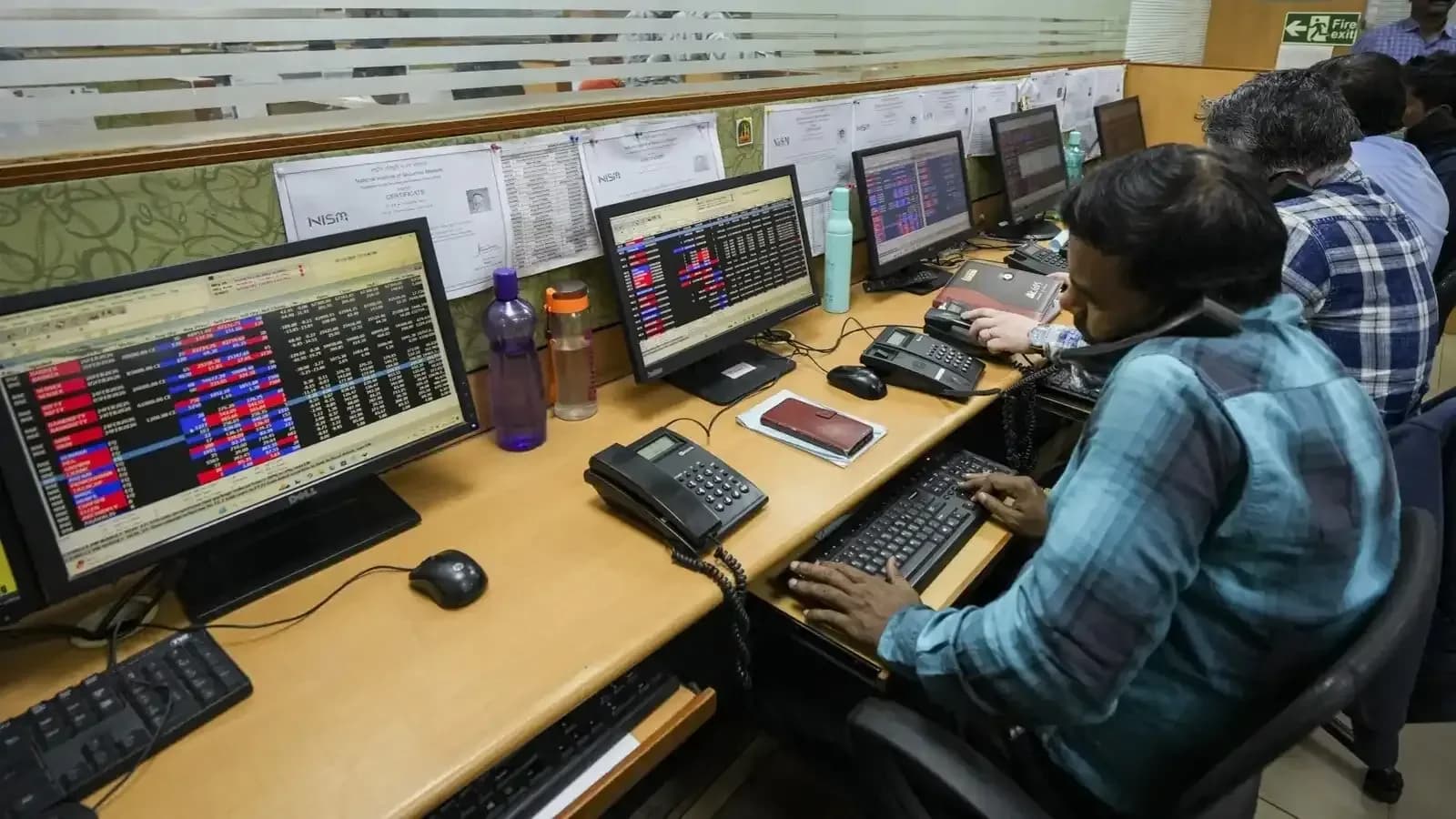
Indian equity markets showed mixed performance in Thursday's session as BSE Sensex added 41.83 points or 0.06% to trade at 74,786.01, while NSE Nifty50 rose 10.80 points or 0.05% to reach 23,442.30. According to Business Standard, the Sensex gained while the Nifty edged higher after several sessions of losses. The performance across broader markets reflected this divergence, with BSE 150 MidCap Index rising 0.16% and BSE 250 SmallCap Index shedding 0.03%. Market breadth remained negative with 1,835 shares rising and 1,263 shares falling on the BSE, while 194 shares remained unchanged. As many as 2,400 stocks, or 60% of 4,100 actively traded stocks, declined over the eight-session period, with 42 of the 50 Nifty stocks falling during this period. The benchmark indices have declined in seven of the past eight sessions, with the Sensex losing 3.24% and Nifty falling 3.08% during this period.
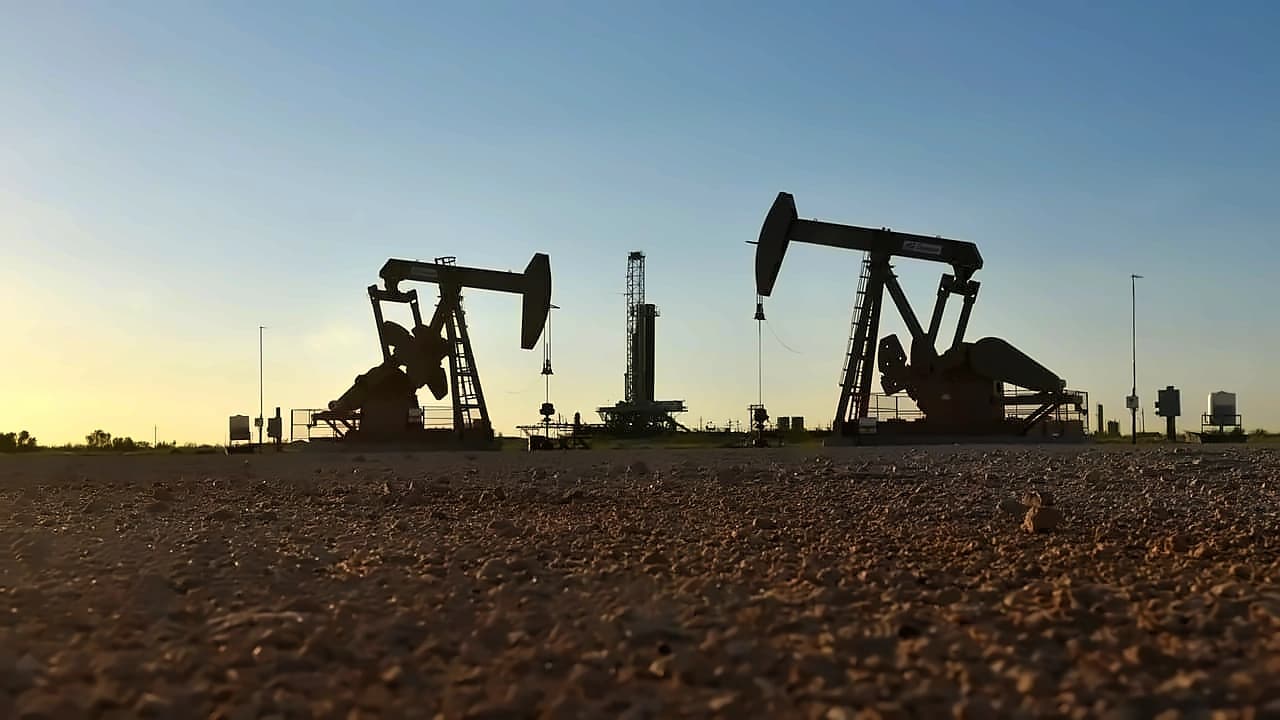
The Nifty Oil & Gas index emerged as the best-performing sector, marking its second consecutive trading session of decline with a 1.65% total drop despite the broader market weakness. As reported by Moneycontrol, major oil and gas companies experienced significant losses including Bharat Petroleum Corporation (down 2.88% to ₹303.90), Hindustan Petroleum Corporation (down 2.42% to ₹348.25), Indian Oil Corporation (down 0.92% to ₹133.90), Oil India (up 2.02% to ₹496.85), and ONGC (up 1.19% to ₹236.47). The decline was primarily driven by Brent crude futures jumping 1.2% to $101 per barrel, gaining more than 12% so far in September, hitting seven-week highs amid heightened tensions in West Asia. US West Texas Intermediate (WTI) crude climbed more than 3% to around $93.79 a barrel after Iran-backed Houthis attacked Saudi energy facilities, forcing operations at some facilities to be halted. Brent crude for November 2026 settlement fell 23 cents or 0.23% to $100.98 a barrel in the latest trading session. Oil prices remained elevated on Wednesday, trading close to their highest levels since July as tensions around the Strait of Hormuz raised concerns about potential disruptions to supplies from the region. The Indian crude basket reached $108.91 per barrel, with India importing more than three-fourths of its crude oil requirement, making the country particularly vulnerable to rising oil prices.
IT stocks led the market decline with Nifty IT trading 7.6% lower, making it the worst-performing sectoral index over the eight-session period. As reported by The Hindu BusinessLine, Infosys, HCL Tech, Tech Mahindra, Wipro and HDFC Life led the declines among Nifty 50 stocks, while Adani Enterprises, Max Health, Coal India, Adani Ports, Tata Steel and Hindalco were among the top gainers. In the midcap segment, Paytm, NALCO, JSW Energy, BHEL and GMR Airports gained 1-4%, while Coforge, BSE, MphasiS, Tata Elxsi and Glenmark were among the biggest losers. Smallcap stocks showed mixed performance with MRPL, Aegis Logistics, CESC, HBL Engineering and RPower gaining 2-6%, while Netweb Tech, IFCI, PPL Pharma and Urban Company fell 3%. Among individual stocks, M&M and Adani Ports shares dropped around 1% each, while Axis Bank, SBI and ITC shares gained nearly 1% each. Nifty PSU Bank index gained around 1% while Nifty Auto fell over 0.5%, as reported by The Economic Times. All sectoral indices have declined over the eight-session period, with IT sector leading the losers followed by auto, realty, consumer durables and financial services. The metal index bucked the trend and gained 1.75%, providing some relief to the broader market weakness.
Foreign portfolio investors who had turned buyers in August have sold close to $750 million worth of shares in September so far, as reported by The Financial Express. FPIs sold shares worth ₹13,200.41 crore in September so far through September 9, 2026, following net cash purchases of ₹17,366 crore in August 2026 and ₹6,731.97 crore in July 2026. The rupee edged lower against the dollar, hovering at 95.2800 compared with its close of 95.0800 during the previous trading session. Dilip Parmar of HDFC Securities noted that the relentless four-day surge in global oil prices had reignited inflation fears. Investors' wealth eroded by ₹8.62 lakh crore over these eight sessions, including ₹2.01 lakh crore on Wednesday alone, with the total market capitalisation of BSE-listed companies standing at ₹484.20 lakh crore on Wednesday. Market experts observed that the spike in oil prices was expected to drive up prices of a range of imported goods, especially oil derivatives, which could stoke inflation and result in a rise in interest rates.
Sudeep Shah, Head of Technical and Derivatives Research at SBI Securities, identified crucial support levels for Nifty at 23,410-23,430 and resistance at 23,620-23,640. As reported by The Hindu BusinessLine, a break below 23,410 could take the index towards 23,280-23,300, while a move above 23,640 could extend the rally towards 23,800. For the Sensex, support is pegged at 74,600 and resistance at 75,500. Shah highlighted that Nifty Oil & Gas is the best-performing sector while Nifty IT is the worst-performing sector, with meaningful call writing at 23,600 and 23,700 strikes, while 23,500 has substantial open interest on the put side, followed by 23,400. Shrikant Chouhan, Head of Equity Research at Kotak Securities, noted that the benchmarks have continued to see profit-booking at higher levels, with the technical setup remaining weak and maintaining a "lower high-lower low formation" on both daily and intraday charts. Chouhan identified 23,500-23,600 on the Nifty and 75,200-75,500 on the Sensex as the immediate resistance zones, stating that as long as the market trades below these levels, weak sentiment is likely to persist. On the downside, the Nifty could move towards 23,300-23,200, while the Sensex may decline towards 74,300-74,000. However, a sustained close above 23,600 on the Nifty and 75,500 on the Sensex could trigger a recovery towards 23,750-23,800 and 75,900-76,100, respectively.