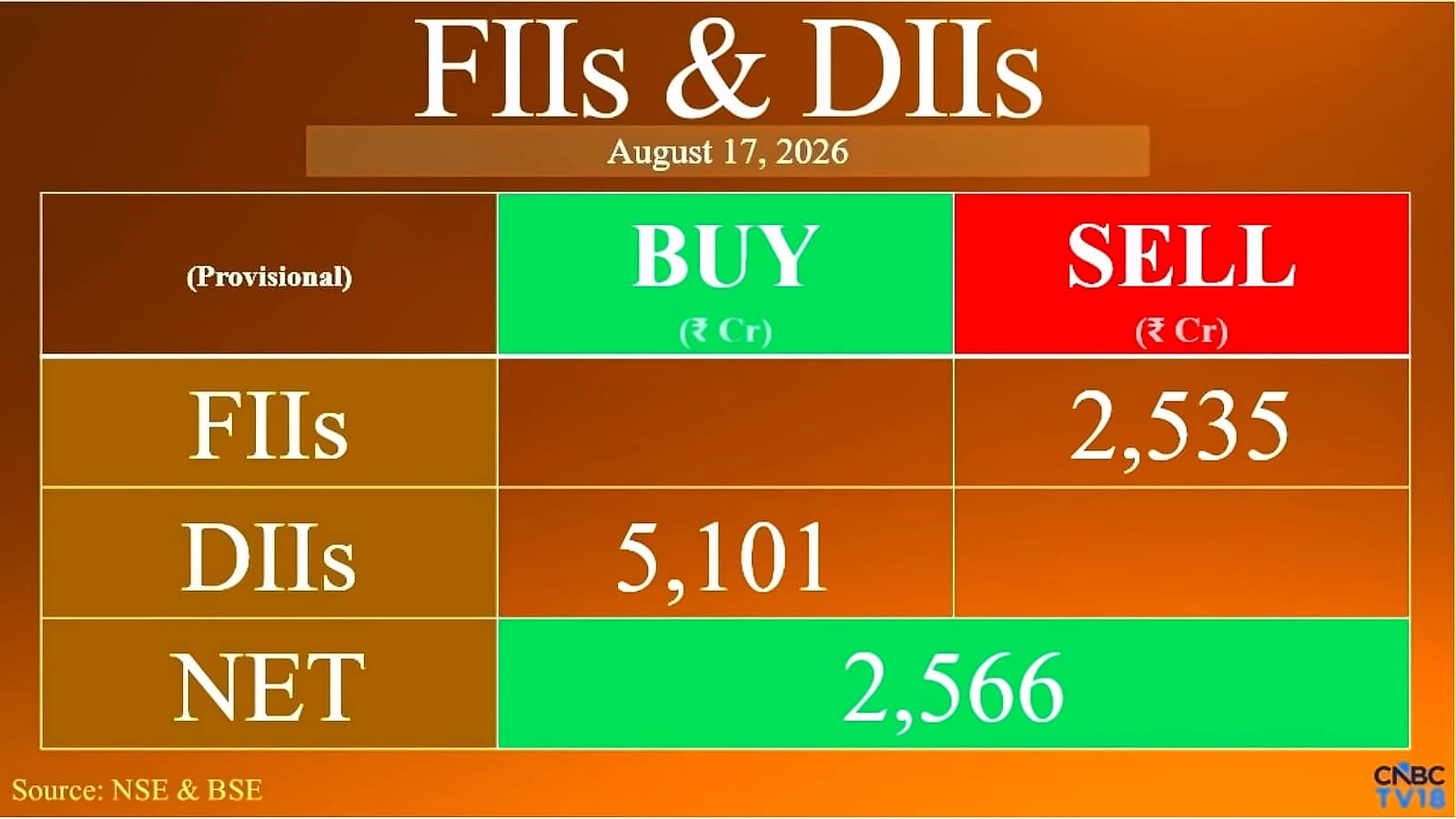
Foreign institutional investors (FIIs) dumped a record ₹21,105 crore worth of Indian equities on Friday, May 29, marking the largest single-day sell figure on record and renewing concerns over foreign money leaving domestic markets. According to CNBC TV18, the massive outflow was not entirely driven by routine FII selling, as part of the move was linked to the latest MSCI rebalancing exercise, with MSCI-related outflow estimated at around $1 billion by Nuvama Alternative. Even after excluding that component, the net selling remained significant, with Rs 6,881 crore in FII selling on May 29 triggered by MSCI rebalancing, which caused the Sensex's 1,092-point crash on that single day - the largest single-session fall in the current losing streak. The cumulative FII selling during the US-Iran conflict in March 2026 had reached approximately $49 billion in a single month, the largest monthly outflow since January 2025.
The benchmark Sensex crashed by 508 points (-0.68%) to 74,267.34 on June 2, 2026, extending its losing streak to four consecutive trading sessions. According to market reports, the sustained decline reflects mounting pressure on Indian equities amid multiple headwinds affecting investor sentiment. The Nifty 50 also declined 165.15 points (-0.70%) to 23,382.60, indicating broad-based selling across the Indian stock market. FMCG, auto realty and PSU bank stocks emerged as the worst performers, with persistent profit booking erasing gains from a strong gap-up opening in the markets. Nifty Auto emerged as the worst-performing sector, declining 1.70%, followed by Nifty Bank (-1.10%). However, Nifty IT bucked the trend, surging 2.66% to 29,854.25, with Tech Mahindra (+1.68%), HCL Technologies (+1.44%), and Wipro (+1.25%) leading the gains. As per Univest analysis, 43 of 50 Nifty stocks declined on June 1, indicating broad-based selling that typically precedes either a sharp technical bounce or an acceleration of the corrective phase.

The MSCI Standard Index rebalance had been widely anticipated, with several heavyweight Indian stocks witnessing a reduction in their index weightage. According to CNBC TV18, Bajaj Finance was estimated to face around $204 million in outflows, while TCS, Infosys, Mahindra & Mahindra and Hindustan Unilever were projected to see outflows ranging from about $109 million to nearly $200 million. The massive outflow was not without precedent, with Indian markets witnessing similar episodes of sharp foreign selling over the past year. On October 4, FIIs sold more than ₹15,000 crore worth of equities shortly after markets peaked on September 27, while another selloff of over ₹12,000 crore was recorded on June 5 a day after Lok Sabha election results. Markets also saw selling exceeding ₹12,000 crore on March 24 amid heightened US-Iran tensions and rising crude oil prices.
Despite the sustained outflows, market valuations have turned relatively more attractive as the Nifty is currently trading at around 18.1 times one-year forward earnings, below its five-year average valuation of 20 times. According to CNBC TV18, after making little progress since the September 2024 peak, the Nifty is currently trading below its five-year average valuation, raising questions over when overseas investors may return to India. The valuation comfort, along with expectations of policy reforms and easing geopolitical tensions in West Asia, has kept hopes alive for a return of foreign flows. Arvind Maheshwari of BofA Securities believes the current phase of FII selling is cyclical rather than structural, expecting foreign investors to return to Indian markets over time, supported by reforms, improving global conditions and more reasonable valuations.
Elevated crude oil prices above $90 emerged as a primary factor weighing on market sentiment, with Brent crude at $90-93 and WTI near $88. As reported by Univest, the sustained high crude prices continue to create uncertainty for investors, particularly given their impact on inflation and economic growth prospects. Unresolved US-Iran conflict remains a significant concern, with a proposed 60-day ceasefire MoU requiring Trump approval and fresh drone incidents on June 1. Additionally, lack of resolution on the Middle East conflict has contributed to market volatility and investor caution. IMD's below-normal monsoon forecast at approximately 90% of LPA has introduced a fresh domestic headwind, with the forecast classifying rainfall as slightly below normal, raising concerns about rural income, food inflation, and FMCG demand. Cautious investors monitored developments amidst increased oil prices and ongoing geopolitical tensions, with persistent foreign institutional selling in the wake of MSCI rebalancing-related outflows continuing to weigh on market sentiment.