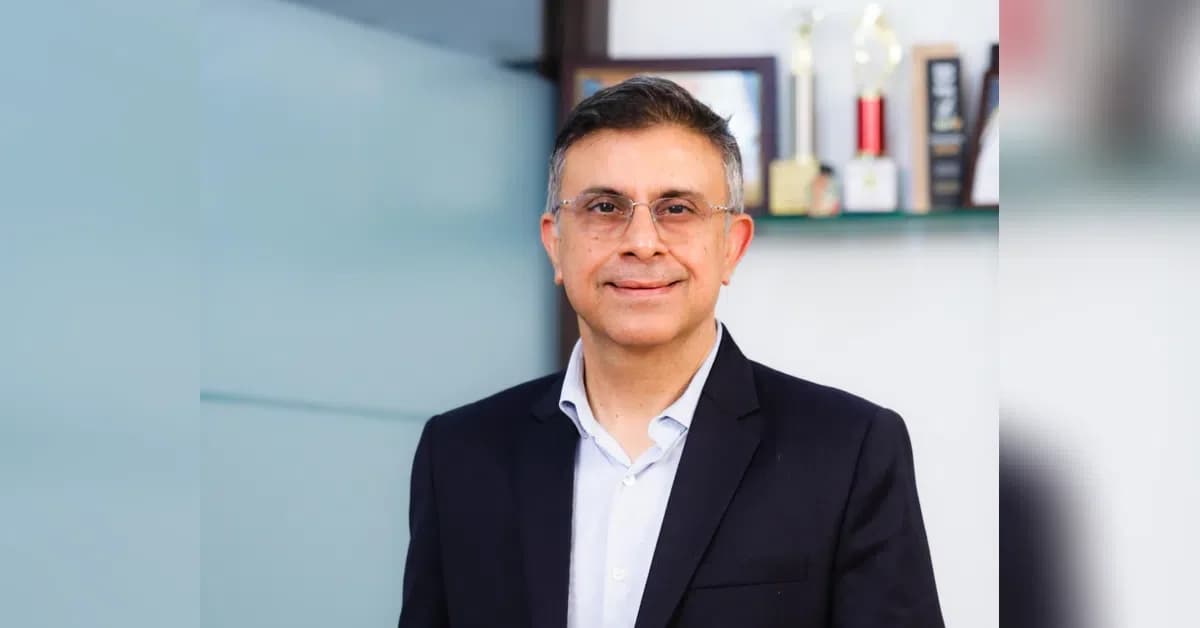
SEBI Chairman Tuhin Kanta Pandey announced that India's securities market has experienced unprecedented expansion, with market capitalisation rising nearly fivefold from ₹95 lakh crore in FY16 to ₹463 lakh crore by April 2026. Speaking at an event organised by the Association of Mutual Funds in India (AMFI), Pandey emphasized that the nation's financial markets have evolved from a niche investment avenue into a powerful engine of economic growth, capital formation, and household wealth creation. The corporate bond market has expanded dramatically from ₹20 trillion in FY16 to about ₹59 trillion in FY26, while India's primary market activity remained robust with 366 initial public offerings (IPOs) during FY26 collectively raising around ₹1.9 trillion. Overall, approximately ₹13.6 trillion was mobilised through equity and debt markets during the last financial year, demonstrating the market's evolution as a 'bridge between savings and investments' linking household savings with businesses requiring capital for expansion.
According to SEBI Chairman Tuhin Kanta Pandey, India's securities market has drawn in more than three times the number of investors in the last five years, with retail participation surging dramatically to 145 million unique investors, compared with just 38 million in FY19. Mutual funds continue to serve as a key entry point for retail investors, with assets under management rising from ₹12 trillion in FY16 to nearly ₹82 trillion by April 2026. As reported by Business Standard, monthly SIP flows have increased significantly from around ₹3,000 crore a decade ago to over ₹31,000 crore, demonstrating that an increasing number of Indians are embracing disciplined, long-term investing as a pathway to wealth creation. Pandey noted that systematic investment plans allow investors to start with as little as ₹250 per month, emphasising consistency and long-term investing over ticket size.
SEBI Chairman Tuhin Kanta Pandey emphasized that Indian markets possess significant resilience to absorb global shocks, particularly during the ongoing West Asia crisis. Speaking to mediapersons about concerns over the crisis, Pandey noted that "the current crisis is difficult in terms of its global reach, particularly through oil. It has created both price and supply shocks, and all economies are feeling the impact. There are inflationary risks and spillover and second-order effects on economic growth. But Indian markets have remained quite resilient. Volatility has increased, but it is still within what markets can handle." He acknowledged that the prevailing conflict in West Asia has affected oil supply chains and prices globally, creating inflationary risks and spillover effects across economies. Despite these challenges, Pandey highlighted that domestic investors have continued to support the market despite corrections and foreign institutional investor outflows since September 2024. He noted that FPIs at one point held 22 to 24 per cent of listed equities, which has now come down to about 14 per cent, with this gap being substituted by domestic institutions, reflecting the Indianisation of ownership.
Despite strong growth, SEBI's Investor Survey 2025 reveals a significant gap between awareness and participation. As reported by Business Standard, while 63% of households are aware of securities market products, only 9.5% actually invest. Urban participation stands at approximately 15%, compared with just 6% in rural areas. Pandey emphasised that the focus must be on 'inclusive growth' to ensure broader participation across regions and income groups, particularly as markets face global volatility and crisis situations. Odisha has emerged as a key success story, with the number of investors from the state increasing more than tenfold over the past decade — from around 2.5 lakh in FY15 to 28.5 lakh in FY26. The state now has around 15 lakh unique mutual fund investors holding nearly 59 lakh folios with assets worth about ₹71,000 crore as of FY26, with SEBI planning to open an office in Odisha to deepen market outreach and investor engagement.
Pandey highlighted the growing importance of municipal bonds in supporting infrastructure development, noting that 22 urban local bodies have raised more than ₹4,500 crore through 31 municipal bond issuances as of FY26. He also pointed to improvements in ease of investing, including Aadhaar-based e-KYC for instant onboarding and the availability of Basic Services Demat Accounts, which offer low-cost maintenance for holdings up to ₹10 lakh. On investor protection, the SEBI chairman said the regulator has introduced multiple technology-driven safeguards to make investing safer and more transparent, while strengthening surveillance of digital platforms to curb misleading financial content, fake investment apps, impersonation frauds, and unregulated advice spread through social media. These developments reflect the market's evolution as a 'bridge between savings and investments' linking household savings with businesses requiring capital for expansion.
Speaking on emerging risks from artificial intelligence, Pandey warned that advanced AI tools could create serious cybersecurity challenges for financial markets if misused by malicious actors. "The AI, particularly the Mythos, poses a real risk. Mythos has not been released yet, but it has been given only to a few entities. There are similar other AI tools which claim they can identify vulnerabilities much faster than traditional tools. In the hands of bad actors, they could potentially exploit vulnerabilities much faster," he said. SEBI has taken proactive measures, claiming the regulator was among the first in the world to issue a formal advisory to market participants on AI-related cyber risks. "We have established accelerated patch testing, patch management, and incident response management frameworks. A cybersuraksha.ai group has also been created to proactively identify and plug vulnerabilities so that our market ecosystem and intermediaries remain protected," Pandey explained. On algorithm-based trading, he clarified that algorithmic trading remains permissible but under strict governance standards, noting that algos cannot be disruptive and must be simulated at exchanges before deployment.