


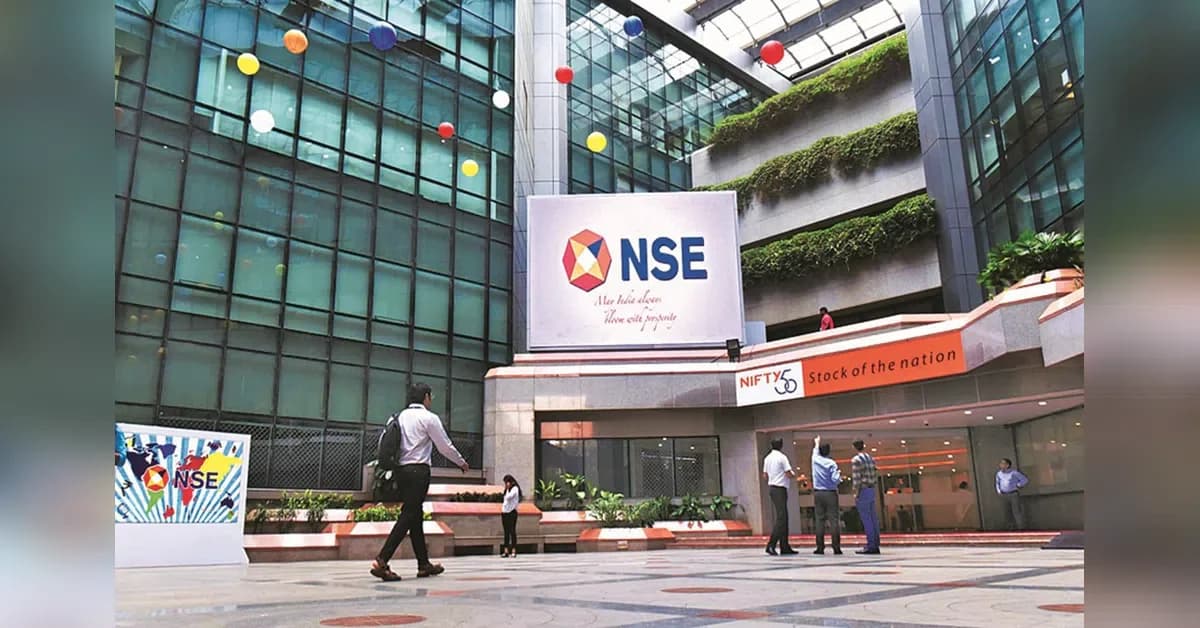
Proprietary traders' share of equity derivatives turnover has fallen to 54.7% of the ₹193 trillion in notional daily futures and options turnover in August, according to bourse data. This represents the lowest level since December 2022, when the proportion was about 62% in November 2024. The decline comes as problems with the closing auction mechanism add to an increasingly restrictive trading environment.
The closing auction system has struggled to attract enough players since its launch on August 3, resulting in thin liquidity that has amplified price swings in both cash equities and derivative contracts. The 20-minute window and single-price mechanism have also limited opportunities for market-making and arbitrage. These disruptions come on top of new curbs on bank funding for proprietary trading that took effect in July.
According to Hariselvan Radhakrishnan, chief executive officer of research firm HST Wealth, regulatory limits on weekly contracts, tighter central bank rules on leverage and greater regulatory scrutiny have made high-turnover strategies more expensive to run in India. The Securities and Exchange Board of India on September 12 proposed changes to the framework, including a possible return to the previous method for settling derivatives on expiry days, after concerns emerged over sharp price swings.
The retreat is also showing up in cash equities, where proprietary traders have lost ground to individual investors. Their share of turnover fell 172 basis points month-on-month in August, while retail investors' share rose 53 basis points to 33.5%, according to exchange data. For high-frequency firms that rely on turnover, tight spreads and rapid position adjustments, changes to auction mechanics, order-cancellation rules and settlement can affect the profitability of individual strategies.
The shift toward AI-assisted quantitative trading represents a fundamental transformation in market participation. While traditional rule-based strategies rely on predefined rules created through research and statistical testing, machine learning extends this approach by helping identify more complex relationships within large datasets. The global generative AI in financial services market was valued at approximately USD 2.2 billion in 2024 and is projected to grow at a compound annual growth rate of about 30% through 2033. In India, algorithmic trading crossed 50% of NSE cash-market turnover for the first time in FY25, reaching about 53.8%, up from roughly 17% in FY11, as per Business Standard.