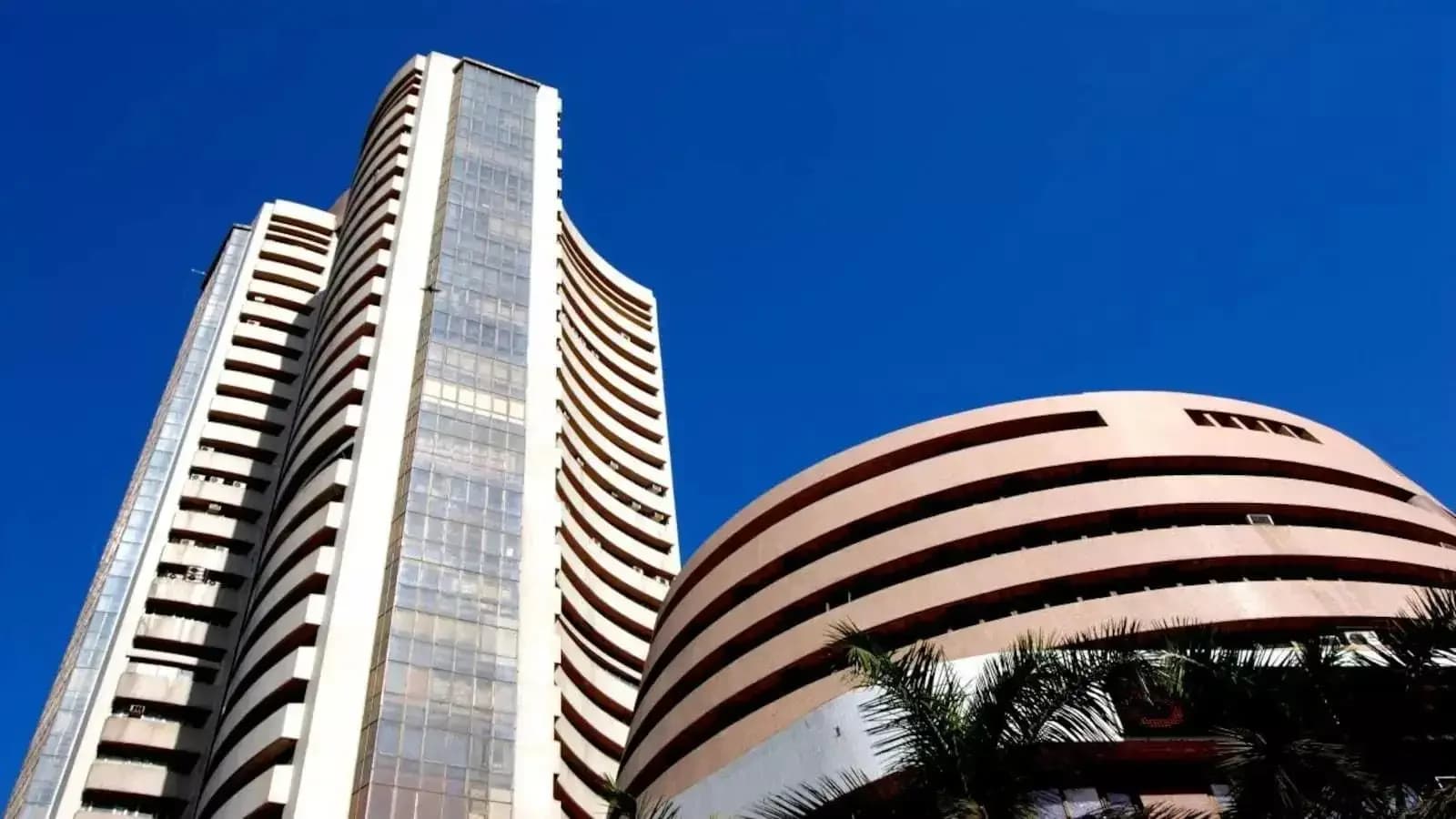
Indian equity markets experienced a sharp reversal on Friday, with the Nifty falling 315 points to settle at 24,450, marking its lowest closing level since August 29, 2025. The session reversed Thursday's move after opening 109 points lower on weak global cues and trading within a narrow 130-point band with negative bias until noon. Selling pressure intensified in the latter half, with the Nifty dropping over 200 points from its mid-session high and ending close to its intraday low. Bharat Electronics, ONGC and Reliance Industries emerged as the top gainers, while ICICI Bank, Eternal and Shriram Finance finished among the biggest losers. Most sectoral indices ended in the red, with Financial Services, Bank and Realty recording the sharpest losses, though Nifty IT bucked the trend. The broader market showed relative resilience, as the Nifty Midcap 100 declined 0.69% and the Nifty Smallcap 100 slipped 0.24%. The GIFT Nifty was trading lower at around 23,760, indicating a gap-down start for the day, with Indian benchmark indices likely to see a sharp opening on Monday, March 9. Last week, the BSE benchmark tanked 2,368.29 points or 2.91% and the Nifty declined 728.2 points or 2.89% as escalating geopolitical tensions in West Asia and sharp spike in crude oil prices weighed heavily on investor sentiment. Based on the GIFT Nifty implied open, the Nifty 50 index is likely to begin trade around the 23,776 mark, signalling a sharp gap-down opening.
Crude oil surged 26% to $117.16 per barrel in early trade on Monday, reaching its highest level since July 2022, as the Iran war intensified and threatened production and shipping in the Middle East. Brent crude jumped as much as 26.4% to $117.16 a barrel, and was up 25.5% at $116.4 by 8:00 a.m. IST. West Texas Intermediate, the light, sweet crude oil produced in the United States, also was selling for about $114 a barrel, that's 25% higher than its close Friday at $90.90. The war's toll on civilian targets grew early Monday as Bahrain accused Iran of striking a desalination plant vital to drinking water supplies, and oil depots in Tehran smoldered following overnight Israeli strikes. Oil prices had already rebounded on Friday evening after an initial decline, following comments from Qatar's Energy Minister warning that prices could surge to $150 per barrel if Gulf countries are forced to halt production due to the ongoing conflict in West Asia. Following the military offensive, Iran has continued its attacks across the Persian Gulf, striking key infrastructure, while Israel also launched fresh strikes which hit oil storage sites in Tehran. Analysts warn that prices could climb further if the conflict intensifies, with some forecasts pointing to oil potentially moving toward the $150 per barrel mark or higher. Higher oil prices pose a direct risk to India's markets and economy, given the country's heavy dependence on imported crude. Rising energy costs tend to push up inflation, widen the current account deficit and pressure corporate margins across several sectors.
Foreign institutional investors pulled out ₹21,000 crore (around $2.3 billion) from Indian equities over the last four trading sessions amid the West Asia crisis. On March 6, Foreign Institutional Investors (FIIs) sold equities worth over ₹6,000 crore, extending their selling streak to the sixth consecutive session. In the first four trading days of March, FPIs sold equity worth ₹21,829 crore, reversing the net FPI buying witnessed in February. In contrast, Domestic Institutional Investors (DIIs) bought shares worth more than ₹6,971 crore. On Friday, foreign institutional investors sold shares worth ₹60.30 billion ($653.57 million), while domestic investors bought ₹69.72 billion, according to provisional NSE data. "Escalating West Asia tensions are battering sentiment, with broad-based selling and risk aversion likely across sectors," said Pravesh Gour, senior technical analyst at Swastika Investmart. "Persistent foreign investor outflows and a weakening rupee were compounding the pressure," Gour noted. "Net FPI buying witnessed in February has reversed due to the West Asia conflict," adds VK Vijayakumar, Chief Investment Strategist at Geojit Investments Limited. "Brent crude trading above $ 90 is bad news for the Indian economy and markets," notes VK Vijayakumar, adding that "Brent crude trading above $ 90 is bad news for the Indian economy and markets." FPIs are unlikely to return to the market as buyers until there is some clarity on the outcome of the conflict and decline in the price of crude. The US and Israel launched military strikes on Iran on February 28, killing Ayatollah Ali Khamenei, Iran's supreme leader, which has further escalated regional tensions.
Asian markets were trading sharply lower on Monday as surging crude oil prices sent wave of fear of inflationary shock across the global markets. GIFT Nifty futures were at 23,760 at 8:00 a.m. IST, pointing to a 2.8% drop at the open for the Nifty 50 from Friday's close of 24,450.45. Other Asian stocks fell 4.8%, while Wall Street and European futures also slid, as the inflationary shock from surging crude prices threatened to harden or push up interest rates worldwide. Japan's Nikkei dropped 6.58%, China's Shanghai Composite declined 1%, Hong Kong's Hang Seng declined 3.71% and South Korea's KOSPI plunged 7%. US stocks ended lower on Friday as S&P 500 index dropped 1.33%, Dow Jones Industrial Average fell 0.95% and tech heavy Nasdaq tumbled 1.6%. Dow futures fell as much as 950 points, while S&P 500 futures declined over 100 points and Nasdaq futures dropped nearly 400 points in early trade. Wall Street's three main indexes closed lower on Friday after disappointing US labor market data and a 12% spike in US oil prices due to the escalating conflict in the Middle East. The Dow Jones Industrial Average declined 0.95% to 47,501.55, while the S&P 500 lost 1.33% to 6,740.00 and the Nasdaq Composite closed 1.59% lower at 22,387.68. Notable stock movements included Nvidia dropping 2.98%, AMD falling 3.51%, Amazon declining 2.66%, Apple falling 1.09%, and Tesla plunging 2.17%.
Market experts warn that the latest price action indicates the bullish sentiment created after Thursday's sharp rise has been negated, with the Nifty potentially retesting Wednesday's low of 24,300 in the near term. According to Nagaraj Shetti of HDFC Securities, the development is not encouraging and suggests the Nifty could retest Wednesday's low of 24,300, with immediate resistance placed around 24,700. Nilesh Jain of Centrum Finverse noted that the Nifty slipped below the 24,500 mark and formed a bearish candle on the daily chart, with the next key support at 24,300 and a break below that level potentially pushing the index towards 24,000. Rupak De of LKP Securities said bears returned after the Nifty failed to sustain Thursday's rebound, with the previous session's bounce lacking conviction and investors remaining cautious ahead of the weekend. Technically, the index continues to trade below its previous swing low, indicating persistent weakness, with resistance on the higher side seen at 25,000. Kruti Shah, quant analyst at Equirus, noted that the near 3% fall in markets has broken the crucial market support of 24,600, increasing the probability of a further 3% fall to the next critical support zone of 23,800-24,000, unless odds of a ceasefire shorten.
Indian stock markets are experiencing a significant wealth hemorrhage, with Dalal Street investors losing ₹19 lakh crore in market capitalisation in just five trading days as escalating US-Iran tensions send shockwaves through global markets amid warnings that crude oil prices can surge above $100 per barrel. The carnage has been broad-based and merciless, with PSU banks, tourism and airline stocks, real estate, banking and auto sectors leading the decline as escalating Middle Eastern tensions disrupted key oil and gas supplies, driving crude prices higher and threatening India's fragile twin deficits. Defence stocks emerged as the only major winners, with Mazagon Dock, Solar Industries and Paras Defence surging amid the war. Technical indicators are flashing red across the board, with the market trading well below short-term and medium-term averages and forming a lower top on daily charts. A bearish candle on weekly charts is also indicating further weakness from current levels, with around 80% of listed stocks with a market capitalisation of at least ₹1,000 crore having already fallen 20% from their all-time highs, technically a bear market in the broader market even as the Nifty is down only 7% from its peak. The BSE Smallcap index fell 3.3% during the week, with InfoBeans Technologies, Worth Investment & Trading, Orchid Pharma, Sadhana Nitrochem, Rajesh Exports, Netweb Technologies India, Agarwal Industrial Corporation, JTL Industries, D.P. Abhushan, Stallion India Fluorochemicals falling between 15-25%. More than 250 stocks touched their 52-week lows, including Cohance Lifesciences, Sonata Software, Procter and Gamble Hygiene and Health Care, Berger Paints, Alkyl Amines, Cyient, among others.

Indian equities are expected to open sharply lower on Monday after a sharp spike in crude oil prices dented investor sentiment, with GIFT NIFTY futures trading about 840 points, or 3.37%, lower at 23,760 as of 8:00 a.m. IST. The cautious mood comes as the conflict in the Middle East involving the US, Israel and Iran entered its tenth day, with multiple factors weighing on market sentiment. A stronger U.S. dollar, now nearing the $100 mark at $99.70, is negative for India because it increases the cost of imports, especially crude oil, which the country largely depends on. Higher import bills can widen India's current account deficit and put pressure on inflation. A strong dollar also tends to trigger capital outflows from emerging markets like India as investors move funds to U.S. assets, typically weakening the Indian rupee. Rising bond yields are adding to market pressure, with U.S. Treasury yields moving higher as crude oil prices surged past $100 per barrel amid the rapidly intensifying conflict involving Iran. The yield on the benchmark 10-year U.S. Treasury note rose 5.9 basis points to 4.1906%, its highest level since February 12, while the 30-year Treasury bond yield climbed 5.2 basis points to 4.8082%. Even if the conflict eases soon, consumers and businesses globally could face weeks or months of elevated fuel prices because of damaged infrastructure, disrupted logistics and higher shipping risks. The conflict has already dragged the Nifty 50 and Sensex to their worst weekly performance in more than a year, with both benchmarks losing about 2.9% last week.