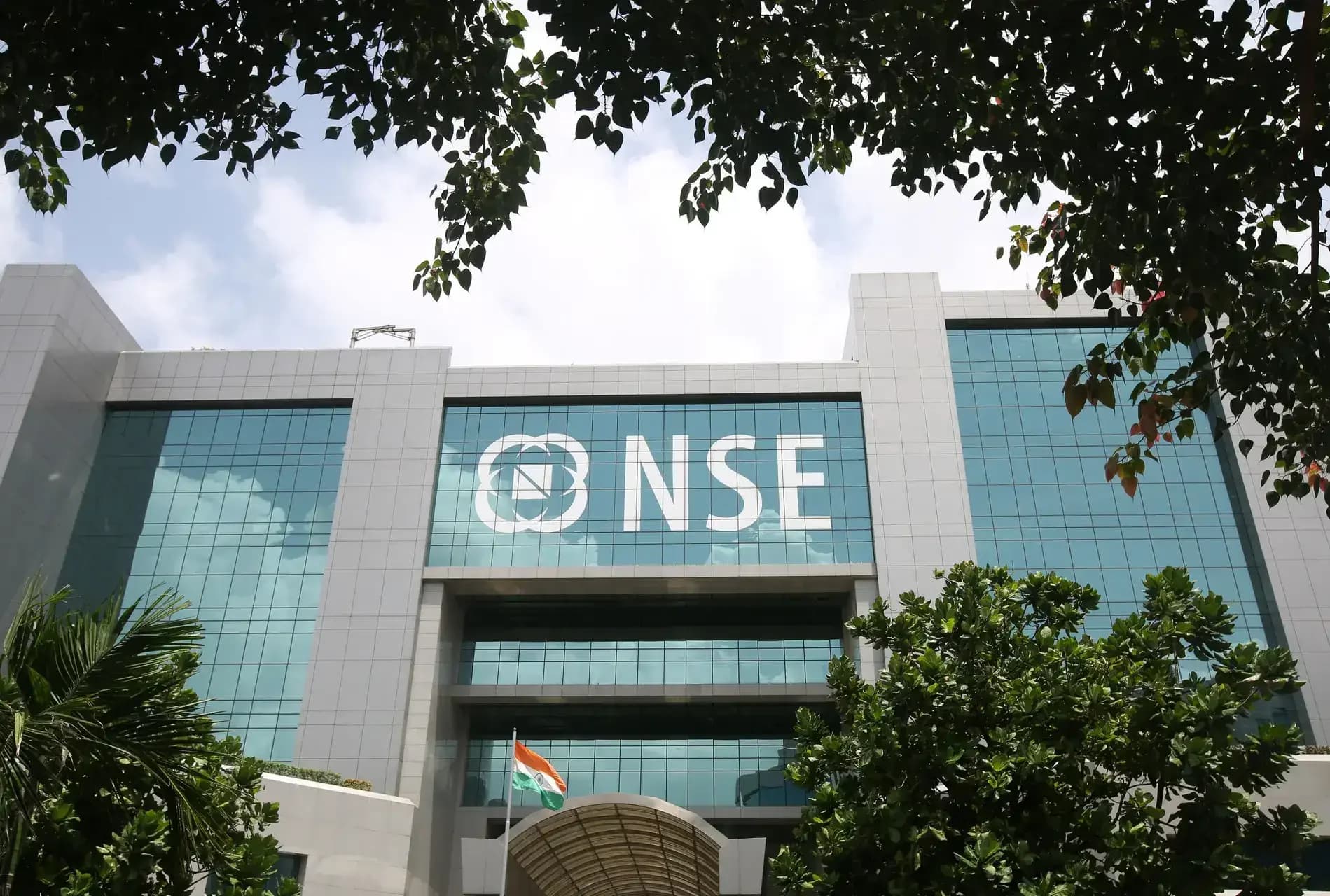
The National Stock Exchange of India Ltd announced on Friday (June 5) that unique trading accounts on the exchange crossed the 26-crore mark in June 2026, underlining the rapid democratisation of India's capital markets. According to reports from CNBC TV18, The Hindu BusinessLine, The Economic Times, The Times of India, and Business Standard, the exchange stated that the latest one crore accounts were added in less than four months, while more than 4.3 crore investor accounts, or nearly 17% of the total, were added in the last year alone. As of May 31, 2026, NSE had over 13.1 crore unique registered investors, having crossed the 13-crore mark in April. The exchange clarified that the number of trading accounts is higher than the number of unique investors because one investor can hold multiple trading accounts with different brokers. Shri Sriram Krishnan, Chief Business Development Officer at NSE, stated that crossing the 26-crore investor accounts mark reflects the continued deepening of investor participation in Indian capital markets and underlines sustained investor confidence despite prevailing geopolitical uncertainty and market volatility.
As reported by CNBC TV18, The Hindu BusinessLine, The Economic Times, The Times of India, and Business Standard, Maharashtra continued to account for the highest number of investor accounts, with 4.4 crore UCCs representing nearly 17% of the total investor accounts. Uttar Pradesh followed with around 3 crore accounts and an 11% share, while Gujarat accounted for 2.2 crore accounts, representing 8.6% of the total. West Bengal and Rajasthan had 1.5 crore accounts each, accounting for 5.9% and 5.8% share, respectively. Together, the top five states contributed nearly 49% of all investor accounts on the exchange. The growth is no longer confined to traditional financial centres, with participation expanding into Tier 2, 3 and 4 cities. However, according to The Economic Times, penetration is rising fastest in the Northeast, with Mizoram recording 32.3% of its investor account additions during 2021-25 in 2025 itself, while Sikkim and Meghalaya recorded 30% and 29.2% respectively over the same period.
According to CNBC TV18, The Hindu BusinessLine, The Economic Times, The Times of India, and Business Standard, several northeastern states recorded significant portions of investor account additions during 2025. Mizoram recorded 32.3% of its investor account additions during 2021-25 in 2025 itself, while Sikkim and Meghalaya recorded 30% and 29.2% respectively over the same period. The exchange noted that the growth in trading accounts was driven by rapid digitisation and increased adoption of mobile trading platforms, which now contribute more than one-fifth of cash market turnover. Additionally, a simplified KYC framework has contributed to the surge in account additions, with this signifying a deepening of financial inclusion for many Indians. Shri Sriram Krishnan, Chief Business Development Officer at NSE, noted that this growth has been supported by greater adoption of mobile-based trading, a simplified KYC framework and sustained efforts to promote disciplined investing through stakeholder-led investor awareness initiatives.
As reported by CNBC TV18, The Hindu BusinessLine, The Economic Times, The Times of India, and Business Standard, the benchmark Nifty 50 index delivered annualised returns of 7.1% during the five-year period ended June 4, 2026, while the Nifty 500 index delivered annualised returns of 9.8% during the same period. The market capitalisation of NSE-listed companies increased at a five-year compound annual growth rate of 12.6% to ₹462.2 lakh crore as of June 4, 2026. According to NSE, individual investors, directly and indirectly through mutual funds, held 18.7% ownership in NSE-listed companies as of March 31, 2026. Investors are engaging across equities, ETFs, REITs, InvITs, government and corporate bonds, with the recent Electronic Gold Receipts further broadening access. The market performance has supported confidence and contributed to household wealth growth. The exchange noted that investor education is critical with Investor Awareness Programs growing five-fold from 3,504 in FY20 to 17,902 in FY26, covering 9.4 lakh participants last year. The Investor Protection Fund stood at ₹2,890 crore as of April 30, 2026.

According to CNBC TV18, The Hindu BusinessLine, The Economic Times, The Times of India, and Business Standard, participation through the indirect investment route also grew during FY26, with around 7.2 crore new SIP accounts opened between April 2025 and March 2026. The average monthly SIP inflows increased from ₹3,660 crore in FY17 to ₹29,132 crore in FY26, representing an eight-fold increase over a decade. Sriram Krishnan, Chief Business Development Officer at NSE, stated that this growth has been supported by greater adoption of mobile-based trading, a simplified KYC framework and sustained efforts to promote disciplined investing through stakeholder-led investor awareness initiatives. The exchange emphasized that the sustained democratisation of India's capital markets in recent years has expanded access to a wider and younger investor base, which underscores the need to strengthen financial capability and risk awareness, making focused investor education increasingly critical to ensuring informed and responsible participation.