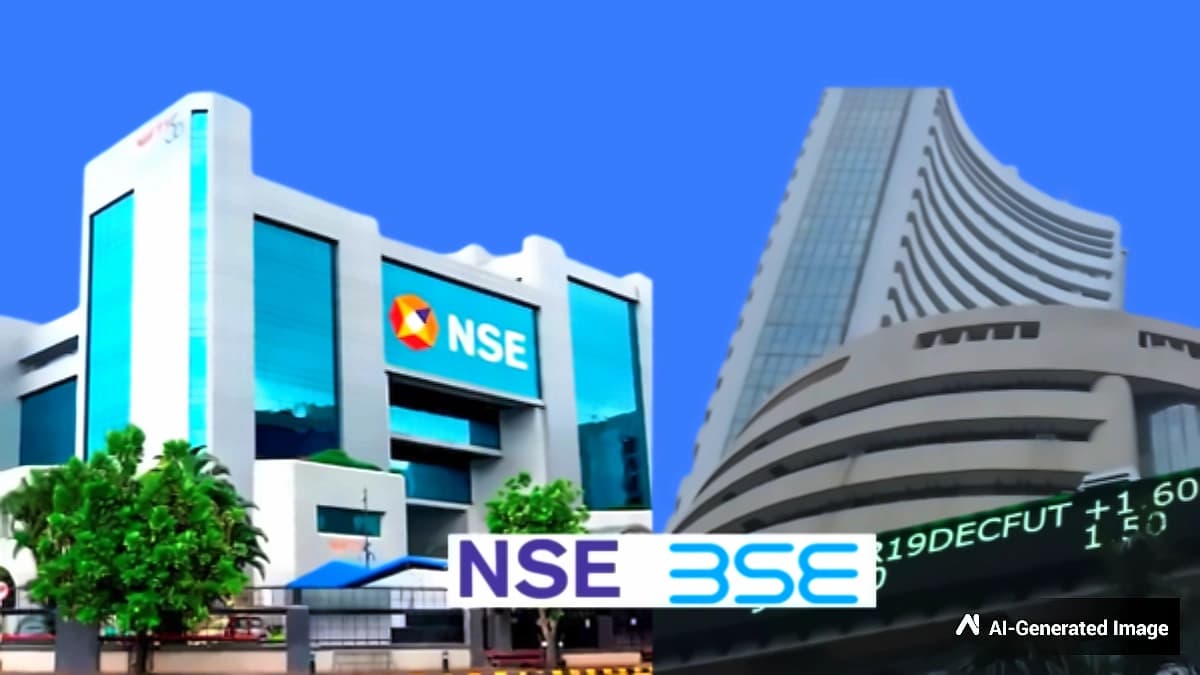
Indian equity benchmarks ended a topsy-turvy trading session with minor gains as NIFTY 50 closed 0.05% higher at 23,416.55, up 10.95 points, while Sensex closed 0.02% higher at 74,360.01, up 13.84 points. The benchmark indices showed resilience after opening lower, with GIFT Nifty hinting at a gap up opening, trading 0.53% higher at 23,604.50 levels after crude oil prices eased significantly. According to NDTV Profit, broader markets outperformed the benchmark, with Nifty Midcap 150 rising nearly 0.5% led by Nippon Life India and IPCA Labs, both up over 4.5%, while Nifty Smallcap 250 gained nearly 0.6% and closed higher for the third straight day.
Crude oil prices experienced a significant recovery, with global benchmark Brent crude down 3.22% at $94.66 per barrel and West Texas Intermediate trading 3.85% lower at $92.32. This marked a substantial decline from earlier levels when crude oil had continued to hold near $95–96 per barrel, with prices remaining elevated after gaining roughly 2% on Wednesday amid fresh hostilities involving Iran and U.S. forces near the Strait of Hormuz. According to NDTV Profit, earlier in the evening, US President Donald Trump had said that America was in the final stages of negotiations with Iran to end the war, which contributed to the cooling of oil prices and improved market sentiment. The recovery in oil prices provides relief for India's import bill and inflation concerns.
NIFTY faces immediate resistance at the 23,500 level, with a breakout beyond this level opening further upside to 23,600 and later to 23,680, according to Kotak Securities. As per SBI Securities, the immediate resistance for the index is placed at the 23,500 level, with a decisive move above 23,600 potentially pushing the index towards 23,680. On the flipside, key support for Nifty lies between 23,300 and 23,250 levels, with a slip below 23,250 potentially retesting the 23,150-23,100 levels. Nifty Bank outperformed the benchmarks but continued to trade below its key moving averages, with the zone of 54,700-54,800 acting as immediate resistance for the index. A decisive move above 54,800 could trigger an extension of the pullback rally, potentially pushing the index towards 55,400, while key support zones for the index lie between 53,900 and 53,800 levels.

Foreign institutional investors have continued selling in recent sessions, with aggressive short positions in derivatives markets indicating further potential downside unless there is an unexpected resolution to the West Asia crisis. According to The Hindu BusinessLine, Foreign Institutional Investors have remained sellers on June 3, offloading equities worth ₹5,616 crore, while domestic institutional investors purchased shares worth ₹5,740 crore, largely offsetting the foreign outflows. This divergence in investment flows highlights the cautious sentiment among foreign investors while domestic participants maintain their buying interest. India VIX, the market's fear gauge, rose 6.01% to 16.28 in the previous session, reflecting elevated investor discomfort. The FIIs have sold shares worth ₹12,274.60 crore so far in June (till June 3), following their cash sales of ₹55,963.33 crore in May, ₹70,135.46 crore in April and ₹122,540.41 crore in March.
The RBI's Monetary Policy Committee is currently in session, with its rate decision due on Thursday. While rates are widely expected to remain unchanged, analysts say the central bank's commentary will be more consequential. Notably, this marked the third consecutive session where Nifty found support near its prior swing low and rebounded thereafter, according to SBI Securities, though a sustained follow-up move on the upside is still required to confirm a potential reversal. Dr. VK Vijayakumar from Geojit Investments noted that trading in this volatile market amid huge uncertainty would be extremely risky, but pointed to beaten-down banks, pharmaceuticals and auto stocks as sectors worth watching for long-term investors. The cooling of oil prices and progress in US-Iran negotiations provide some relief for market sentiment, though global uncertainties continue to influence trading patterns.