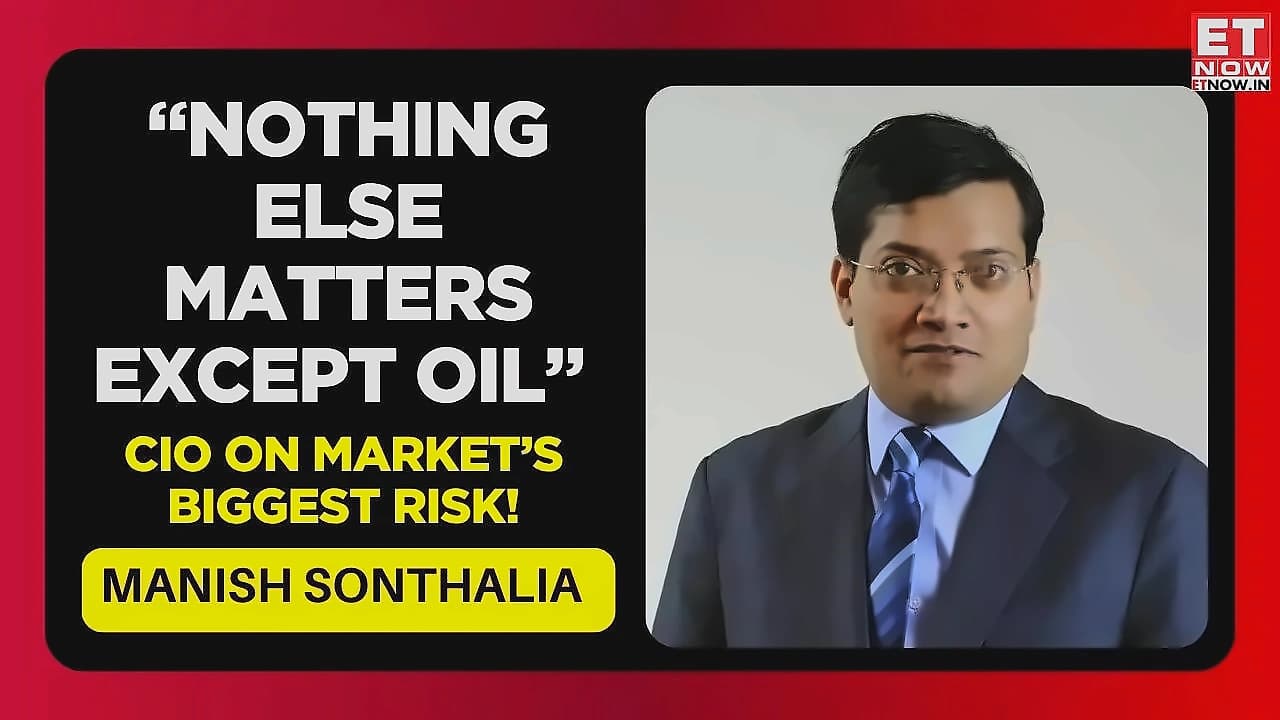
Indian equity markets are expected to remain range-bound in the near term, with crude oil emerging as the single most critical trigger, according to Emkay Investment Managers Chief Investment Officer Manish Sonthalia. Speaking to ET NOW, Sonthalia said that volatile crude prices and geopolitical uncertainty in West Asia could dictate market direction, even as investors weigh earnings risks and valuation concerns. "The biggest variable currently is oil," Sonthalia noted, pointing out that despite hopes of a ceasefire, "the diplomatic settlement has not yet fully played out." He noted that crude has already seen elevated levels, with current levels hovering around $116, while markets have largely priced in negatives at these levels. Latest market developments show Sensex settling 251 points lower with Nifty near 24,000, reflecting ongoing volatility amid these key triggers.
Sonthalia highlighted significant supply disruption risks if current embargoes persist in West Asia. "If these embargoes still remain in West Asia, inventories are going to reach stress levels in the month of June," he said, adding that a spike in oil prices could follow. "That's the moving part currently. Nothing else matters… markets could swing either way based on whether we see a diplomatic settlement or a military escalation," he emphasized. The current $116 crude price level represents a critical juncture, with markets having largely priced in negatives but the risk of further escalation remaining significant. Recent market movements show UltraTech Cement surging 1.83% and Mahindra & Mahindra advancing 1.49%, while Coal India retreated 1.59%, reflecting mixed sectoral performance amid oil price concerns.
On the earnings front, Sonthalia flagged rising risks to FY27 projections due to inflationary pressures and supply chain disruptions. "If this embargo doesn't end very soon, then FY27 numbers are going to be cut," he said, while current estimates suggest earnings growth of 12–13 per cent. However, he noted that "we still believe 11–12 per cent is doable" for now, but this could "change very rapidly on the negative side" if crude prices rise further. On valuations, Sonthalia noted that Indian markets are not particularly cheap, currently trading at around 19.5 times FY27 earnings, which he considers "not very cheap for a 10–12 per cent growth environment."
Foreign investor flows are unlikely to provide support in the near term, according to Sonthalia's analysis. "I will not really build in any expectation of FII flows… dollar returns are not very great for India," he said, citing concerns around currency depreciation, fiscal pressures, and current account deficits. Instead, he expects domestic flows to play a stabilizing role, noting that "we'll have to lean on SIP flows and mutual funds to support the downside." On the market range, Sonthalia expects limited upside in the near term, with markets likely to remain range-bound between 22,000 and 25,000, making it "difficult for the markets to cross 25,000."
Despite macro uncertainty, Sonthalia remains constructive on select sectors. "The financial system is in fine shape," he said, highlighting strong credit growth of around 16.5 per cent and no visible stress across banks or NBFCs. "BFSI continues to look attractive," he added, alongside insurance, particularly health insurance. He also sees opportunities in sectors linked to energy security and global supply chain shifts, including power, energy, critical minerals, select specialty chemical companies, capital markets, and electronics manufacturing services (EMS). The capital market space looks particularly attractive, with the quarter not being impacted, while semiconductor manufacturing and mobile electronics manufacturing services could stand out.