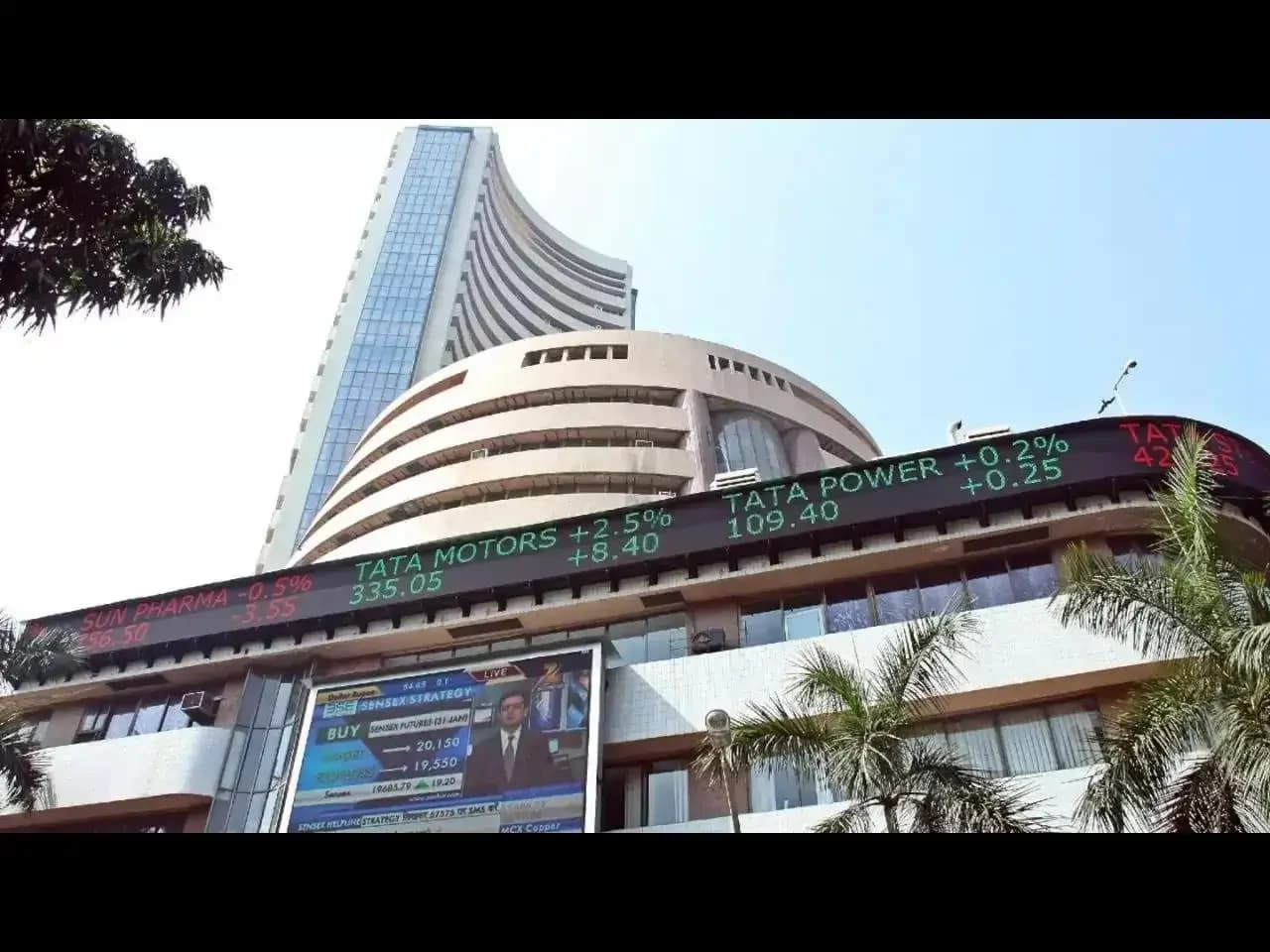
The Indian stock market recorded sharp gains on Friday, with Sensex surging over 964 points to close at 78,151 and Nifty 50 gaining around 262 points to end at 24,334. According to reports from The Economic Times, the rally occurred despite weakness in the broader market, with the Nifty Midcap 100 and Nifty Smallcap 100 indices declining up to 0.4%. The strong performance came as Q1 earnings from IT majors and select private banks boosted investor sentiment despite global market volatility. As per Cliq Latest, the rally was largely driven by optimism surrounding the ongoing first-quarter earnings season, encouraging business updates from major companies and sustained buying in heavyweight large-cap stocks.
According to Cliq Latest, Nifty IT Index gained 1.75% during the session while Nifty Private Bank Index emerged as the best-performing sectoral index, rising 2.12%. The automobile sector continued to benefit from expectations of sustained domestic demand, improving rural consumption and stable production levels, with Nifty Auto Index climbing 1.24%. Real estate companies attracted buying interest amid expectations of continued housing demand, with Nifty Realty Index advancing 1.34%. However, healthcare-related stocks failed to participate in the rally, with Nifty Pharma and Nifty Healthcare indices ending as the weakest-performing sectoral indices, reflecting profit booking and cautious investor sentiment. The divergence suggests that investors are currently favouring established large-cap companies over mid-sized and smaller firms, with buying activity remaining selective rather than broad-based.
As reported by SBI Securities' Sudeep Shah to ETMarkets, Nifty has remained confined to the 24,530-23,785 zone for the past five weeks, forming a series of small-bodied, indecisive candles on the weekly chart. The index traded within a narrow range of just 367 points last week, marking its smallest weekly trading range since December 2025. A Bollinger Band Squeeze on the daily chart and falling ADX to 10.56 suggest a significant directional move ahead, with 24,550 the key level to watch as earnings from major banks roll in over the weekend. According to Cliq Latest, 24,400 level now represents the immediate resistance zone because it coincides with the 200-day Exponential Moving Average (EMA), making it a significant technical hurdle for the benchmark index. A sustained move above this level could strengthen bullish momentum further and potentially push the index towards the 24,500-24,600 range in the coming sessions.

According to SBI Securities' analysis, Nifty IT has rebounded nearly 13.5% from its 1 July low of 25,699, gaining around 5% this week. The index has reclaimed its key short-term moving averages, with the RSI recovering from below 30 to near the 60 mark and MACD crossing above the zero line. Cliq Latest reports that market experts believe improving demand outlook, stable client spending and optimism regarding digital transformation projects have encouraged investors to increase exposure to large IT companies. The sector has also benefited from expectations that easing inflation in developed economies could improve technology spending by global clients over the coming quarters. Nifty IT has moved into the Leading quadrant on the Relative Rotation Graph (RRG), indicating improving relative strength and momentum, with the 29,600–29,650 zone as key resistance and 28,550–28,500 as immediate support.
According to SBI Securities' analysis, FIIs continue to maintain a net short bias in index futures but recent positioning shows gradual short covering with the FII long-short ratio improving from 8.37% to 11.01%. India VIX continues to trade below key moving averages, indicating well-contained volatility after surging nearly 26% on July 8. The DII long-short ratio remains steady at around 87%, providing continued support to the broader market. As per Cliq Latest, analysts believe earnings growth will play a decisive role in determining the direction of Indian equities over the coming weeks, with positive quarterly results from large-cap companies potentially encouraging additional institutional inflows and strengthening market sentiment further. Market experts believe this trend could continue if earnings meet expectations and global market conditions remain relatively stable, though domestic equities have demonstrated remarkable resilience supported by strong institutional participation and stable macroeconomic indicators.