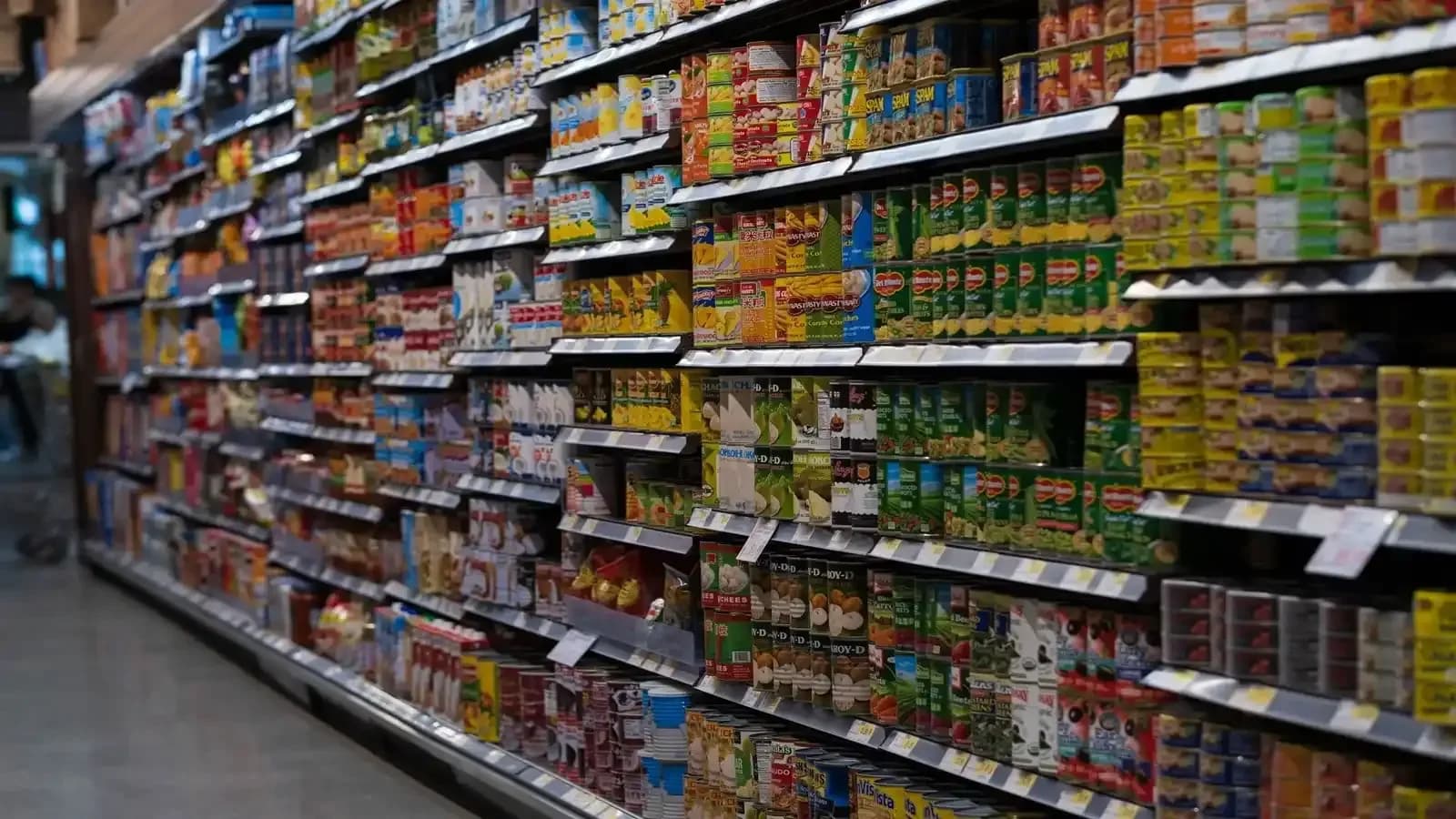
The NIFTY FMCG index fell as much as 0.7% to hit a fresh 52-week low of 44,202 on Thursday, October 1, as reported by market reports. Major FMCG stocks including ITC, Hindustan Unilever, Godrej Consumer Products, Dabur and Tata Consumer Products are trading close to their respective 52-week lows, reflecting widespread selling pressure across the sector. The broader market also faced pressure with NIFTY 50 falling 95 points to close at 22,620, marking its third straight daily decline and down over 8.5% from its recent peak of 24,774. According to latest reports, the Nifty FMCG index has declined 6% over the past six months, covering the first half of FY27, underperforming the Nifty 50, which fell over 1% during the same period. The sector has faced pressure from weak price momentum, rising input costs and concerns over margins, even as underlying demand and volume growth have started to improve.
India's weak monsoon season ended with rainfall 12.6% below the Long-Period Average (LPA), with deficits particularly pronounced across several major agricultural regions. The impact is already visible in the entry-level motorcycle market, with the 100-110cc motorcycle segment contracting 3.2% in August, while the 125cc segment declined nearly 1%, according to data shared by the Society of Indian Automobile Manufacturers (SIAM). Entry-level and commuter motorcycles in the 100cc-125cc range account for about 75% of rural motorcycle registrations, making the segment particularly sensitive to changes in agricultural incomes. As per a senior executive at one of India's four largest two-wheeler manufacturers, "The 100cc segment is the most exposed to monsoon conditions because its customer base is closely tied to agricultural incomes." Domestic motorcycle sales grew only 2.4% year-on-year in August 2026, continuing to underperform internal combustion engine scooters, with the segment continuing to underperform due to lower traction in the entry-level segment.
According to Worldpanel's Kharcha report, 84% of Indian households are under budget pressure, a significant increase from 72% a year ago. Only 16% of consumers now say they are living comfortably, down from 28% last year. While overall household expenditure continues to grow, the pace has nearly halved to around 7% from 13-14% a year ago. As per Manoj Menon, Director – Commercial at Worldpanel, consumers are becoming increasingly cautious as inflation, higher fuel costs and rising debt reshape consumption patterns, with the headline story that Indian consumers are not retreating but extremely cautious about the wallet. Latest data from Worldpanel by Numerator shows that overall grocery spending declined by 1% in the March quarter, with the drop being sharper in rural homes at 5%. Urban quarterly expenditure declined 4% year-on-year, compared with 14% growth in the previous year.
FMCG volume growth has shown a clear downward trajectory, with Worldpanel data revealing FMCG volume growth slowed from 5.2% during the April-June period to 4.8% and further to 4.1% in the latest June-August period. According to Mayank Shah, chief marketing officer at Parle Products, "Wallet share for discretionary spend may reduce, especially in the rural areas as farm incomes come under pressure due to monsoon deficit. We expect to see a high single digit growth during the ongoing festival season." NielsenIQ's recent June quarter snapshot showed that about 68% of FMCG categories have seen a decline in volumes, indicating that consumption has slowed down beyond core categories. The researcher pointed to higher freight and packaging costs, product price increases, lower distribution amid higher fuel costs and falling consumer confidence as factors affecting FMCG volumes, particularly in rural markets. An executive at an FMCG company noted that sales around Onam and Rakhi grew in the low double digits against the high double-digit growth expected, with the company now increasing advertising expenditure to support sales during the remainder of the festive season.
According to HDFC Securities research, FMCG sector valuations continue to derate amid weak earnings visibility and a waning moat, with the brokerage maintaining its underweight stance. The firm forecasts ~12% YoY revenue growth across its coverage, with most companies likely to post double-digit topline expansion, but persistent raw material inflation is set to weigh on margins. ITC, Bikaji, and Gopal Snacks are likely to report YoY earnings declines, while HUL, Dabur, and Emami may deliver single-digit earnings growth. HDFC Securities believes that Q2 topline is likely to be stronger on a low base and incremental price hikes, but margin delivery should remain muted, given inflationary pressures. With sustained cost headwinds, the brokerage may see growth moderation ahead, which alongside margin strain could stress FY27 earnings. The firm remains selective, with preference for stronger execution-led names such as Godrej Consumer Products, Britannia, Emami Honasa, and Bikaji, while noting that Nestle's valuation now appears more reasonable and upgrading the stock to Buy.