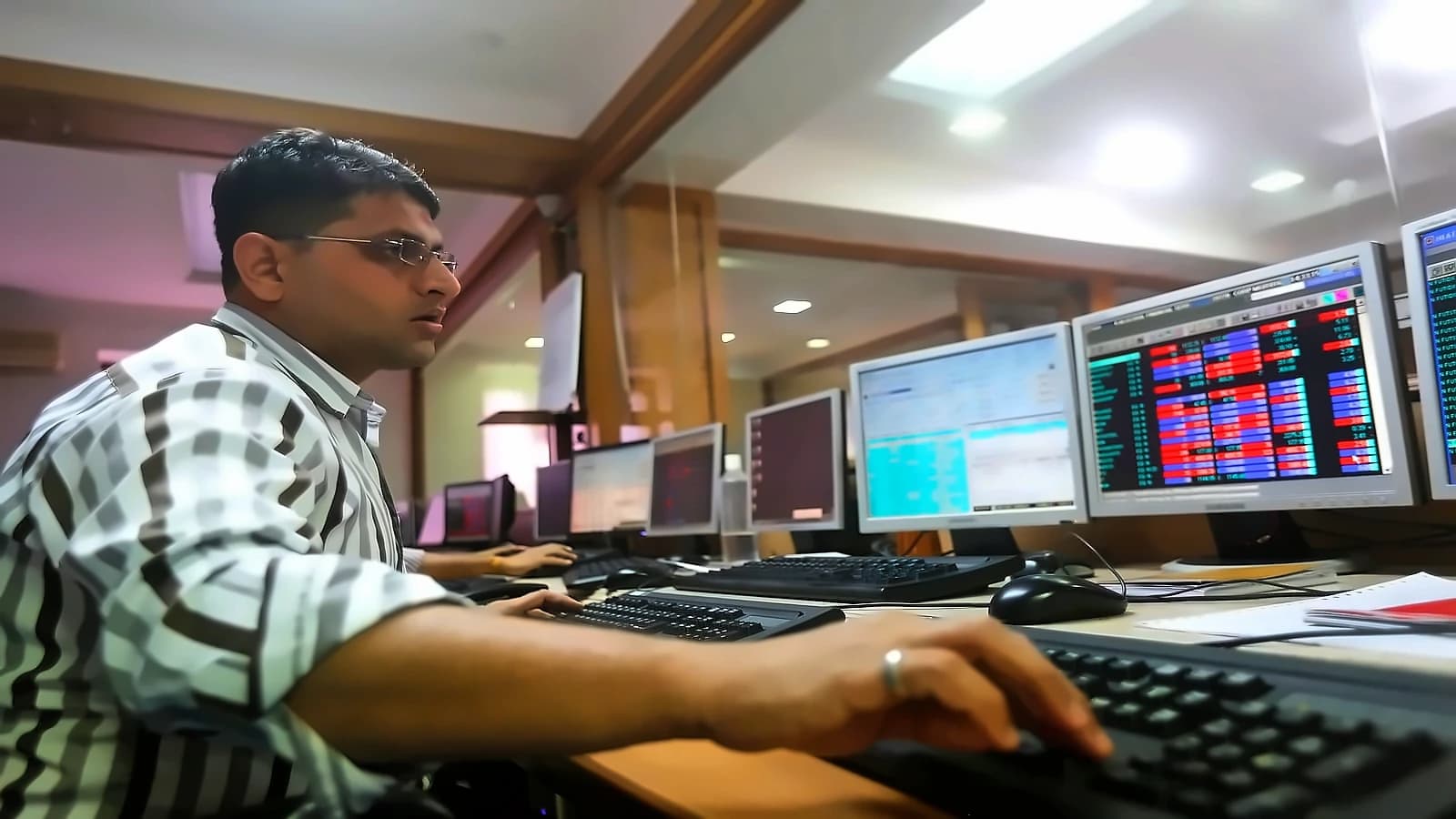
Indian benchmark indices opened lower on Thursday with the S&P BSE Sensex declining 79.78 points, or 0.11%, to 73,886.63 at 10:30 IST, while the Nifty 50 index fell 15.20 points, or 0.08%, to 23,185.40. According to Business Standard, the market decline was driven by continued foreign institutional investor (FII) selling, weak global cues and renewed geopolitical tensions in West Asia. The Nifty has now slipped below the 23,200 mark after surrendering most of its gains from the previous session's intraday high of 23,425.35. Commenting on Nifty technical outlook, experts said that the 23,250–23,300 zone continues to act as the immediate resistance area, followed by 23,450, where the previous breakdown was initiated. "On the downside, 23,100 remains the immediate support level. A decisive break below this zone may lead to further weakness towards 23,000, followed by the 22,850–22,900 region, which coincides with the lower band of the current falling channel," an analyst stated.

The Nifty IT index declined 1.3% to 27,901 levels at around 11:44 am, making it the worst-performing sectoral index despite a recovery in broader market indices. As reported by Moneycontrol, Infosys fell 2.3% while HCL Technologies declined 2.1%, making them the top two losers on the Nifty. Other IT majors also traded in the red, with Tata Consultancy Services (TCS) down 0.8%, Wipro falling 0.6% and Tech Mahindra slipping 0.2%. This continued weakness in the IT sector has been a significant factor in the broader market decline, with investors showing sustained caution toward technology stocks despite some selective buying in select IT stocks. On a year-to-date basis, the Nifty IT index has fallen nearly 27%, while over the past one year it has declined by 28.24%, showing the sustained nature of the sector's underperformance.
The latest selloff was amplified by fresh developments in the artificial intelligence space, with Anthropic unveiling Claude Fable 5, a new "Mythos-class" artificial intelligence model that delivers a significant jump in software engineering and knowledge-work capabilities. According to Moneycontrol, the model is being broadly rolled out to enterprise customers after Anthropic introduced additional safeguards to address concerns about misuse. The launch has renewed debate around the potential impact of increasingly capable AI models on traditional IT services and software development work. Investors have been closely tracking whether advances in generative AI could automate a growing share of coding, maintenance and consulting tasks that form a significant part of the global IT services industry's revenue base. Brokerage HSBC recently warned that AI-led deflation could continue to pressure growth across the IT services industry for another six to eight quarters, while suggesting sector valuations could eventually bottom out at 13-14 times earnings.
The selloff followed another weak session for global technology stocks, with the Nasdaq Composite falling nearly 2% overnight, while semiconductor shares remained under pressure amid concerns over valuations and questions about the sustainability of the artificial intelligence-driven rally. As per Moneycontrol, the weakness extended across the broader technology space, with midcap IT stocks such as Persistent Systems and Coforge among the biggest losers in the broader market, reflecting widespread selling across the sector. Despite the pressure on technology stocks, the broader market staged a recovery from morning lows, with the Sensex up 122 points and the Nifty trading above the 23,200 mark at 11:44 am. The recovery came even as benchmark indices had recovered from early losses to trade moderately higher during the session.
Analysts attributed the sustained weakness in the Nifty IT index to broad-based pressure in global technology stocks, cautious sentiment over slower US tech spending, and rising geopolitical tensions. According to Business Standard, they also cited concerns over the impact of artificial intelligence on traditional IT services, along with reduced expectations of aggressive interest rate cuts by the US Federal Reserve following stronger inflation data. "Sentiment remained cautious due to concerns around slower tech spending in the US, rising geopolitical tensions and continued selling by foreign investors. Investors are also becoming slightly cautious about the impact of AI on traditional IT services, especially as companies globally are reassessing budgets and delaying decision-making on new projects," said Ravi Singh, chief research officer at Master Capital Services. VK Vijayakumar, Chief Investment Strategist at Geojit Investments, noted that weakness in US technology stocks could intensify in the near term, though he believes this is unlikely to turn foreign institutional investors into buyers in India as there is very low interest by FIIs in India now.