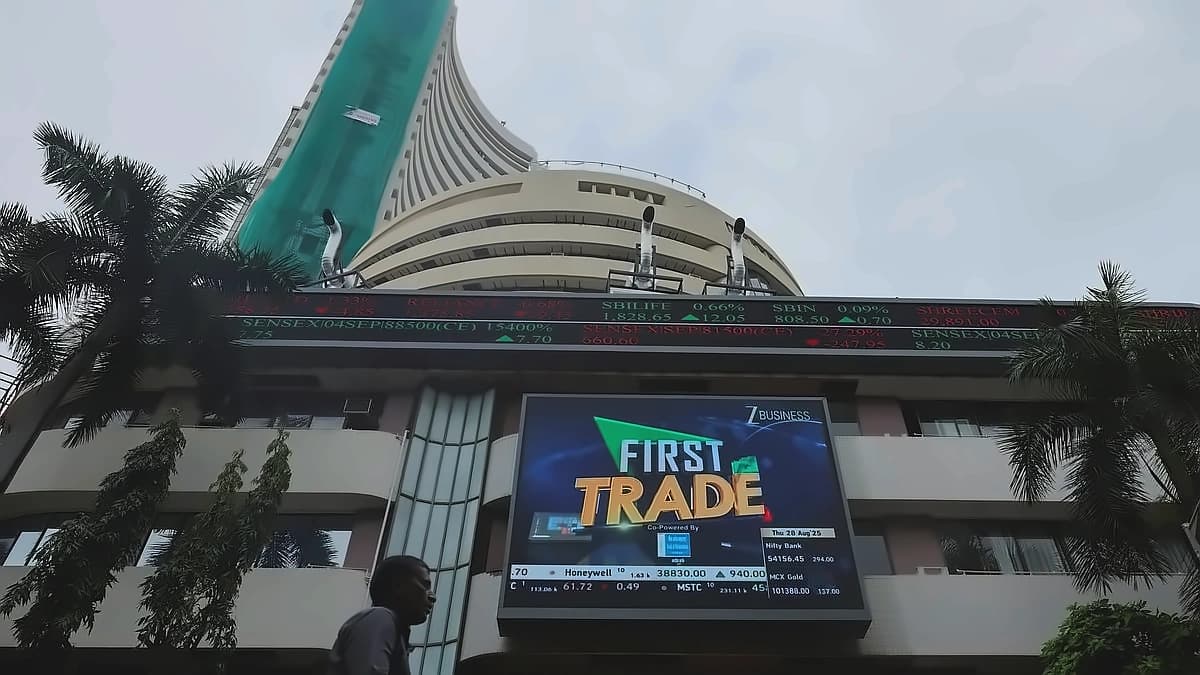
Indian equity markets ended largely flat on Friday, with the Nifty 50 closing 0.08% higher at 24,252 and the BSE Sensex finishing flat at 77,540.83, up just 3.11 points. According to The Hindu BusinessLine, both benchmarks recorded weekly losses of 0.47% and 0.6% respectively, with the Nifty ending its second consecutive weekly decline despite a two-day recovery from recent lows. The session's tone was set early with the Nifty opening 53 points higher but spending most of the day locked in a narrow 60-point band, reflecting a lack of directional conviction among investors. During the day, the Sensex hit a high of 77,725.67 and a low of 77,445.86, gyrating 279.81 points.
Metal stocks outperformed with Nifty Metal gaining 1%, supported by a rise in LME zinc and broader metal prices, while FMCG and IT sectors lagged significantly. As reported by The Hindu BusinessLine, for the week, FMCG and IT indices lost over 2%, with IT stocks falling 2.6% as concerns over US inflation weighed on the sector. Power Grid, Bharat Electronics, Kotak Mahindra Bank, NTPC, Bajaj Finserv and Asian Paints were the biggest winners among Sensex firms, while Trent, Maruti, InterGlobe Aviation and HCL Tech were among the laggards. Among sectoral indices, Insurance climbed 0.94%, Utilities 0.69%, MidSmall Private Banks Quality Tilt 0.68%, MidSmall Private Banks 0.65%, Power 0.64%, Financial Services 0.33% and Telecommunication 0.21%. Auto dropped 0.68%, Housing Finance 0.61%, Hospitals 0.50%, Focused IT 0.47%, IT 0.42% and Healthcare 0.33%.

Brent crude climbed 0.06% to $93.84 per barrel, as the US-Iran standoff intensified, with the UAE raising stakes by suspending all financial and economic transactions with Tehran after accusing Iran of launching ballistic missiles at its territory. WTI crude traded around $85 per barrel, while domestic crude futures remained above ₹8,200. According to reports from The Hindu BusinessLine, higher oil prices, driven by the escalating Middle East conflict, intensified inflation concerns, while rising yields increased borrowing costs and potentially reduced foreign investor appetite for emerging-market equities. The escalating conflict pushed crude prices higher, reinforcing inflation concerns among investors. Brent crude prices surged nearly 7% during the week to settle at $93.93 per barrel after a deal to end the Middle East war appeared increasingly elusive. US President Donald Trump on Wednesday, August 19, announced what he called the "most crushing economic operation ever taken against any country," threatening sweeping economic penalties against countries and businesses that provide financial or other support to Iran.
The broader market fared better with BSE SmallCap Select index climbing 0.81% and MidCap Select index up 0.39%. As reported by The Hindu BusinessLine, the Smallcap index broke out of a consolidation range it had held since August 6, closing above the 19,937 upper boundary. However, market breadth remained weak with 272 of the Nifty 500 stocks ending in the red and the advance-decline ratio at 1.08. Foreign Institutional Investors (FIIs) offloaded equities worth ₹583.36 crore on Thursday, according to exchange data. The Indian rupee held largely steady at 95.71 against the US dollar, with a softer dollar and easing US Treasury yields offering some support, but elevated crude prices limiting appreciation. During the week, broader markets outperformed the benchmark equity indices, with the NIFTY Midcap 100 losing 0.1% while the NIFTY Smallcap 100 outshone it, rising 1.2%.
Looking ahead, Nifty technically holds above its 50-day and 100-day EMAs near 24,200, but remains below the 20-day EMA at 24,300 and the 200-day EMA at 24,376. According to Kotak Securities, Amol Athawale sees 24,150 as the crucial support; a hold above this could push the index toward 24,400–24,700. For Bank Nifty, the 200-day SMA at 57,500 is the key level to watch. As noted by Geojit Investments, Vinod Nair flagged that the RBI's hawkish meeting minutes have pushed India's 10-year yield to a two-month high, with strong value buying in financial heavyweights helping the market trade flat despite challenges from crude prices and global bond market developments. The elevated global bond yields continue to cause worry in the market. The recent U.S. Treasury's move to ease the bond yields failed to provide lasting comfort, given surging crude prices and persistent inflation fears. India is also widening its crude oil sourcing to Latin America as disruptions linked to the Iran conflict and the Strait of Hormuz push the world's third-largest oil consumer to diversify supplies.