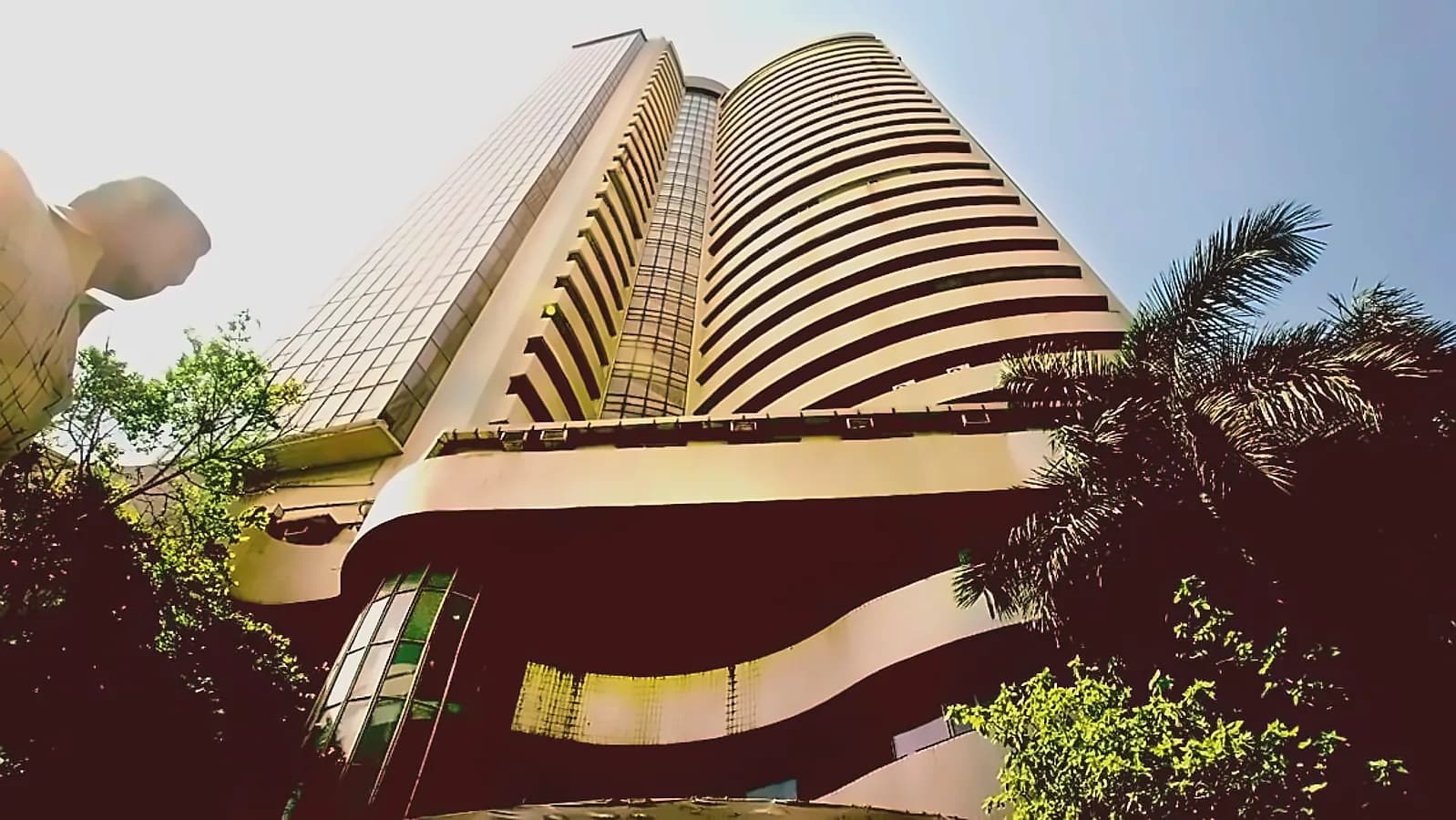
Indian equity markets ended lower on Thursday, June 11, with the NSE Nifty 50 declining 53 points to settle at 23,162 and the BSE Sensex falling 151 points to 73,833. According to CNBC TV18, the benchmark indices closed below key psychological levels after a volatile trading session, with market breadth remaining weak as declining stocks significantly outnumbered advancing ones with an NSE advance-decline ratio of 1:3. The Nifty Midcap index fell 485 points to 59,325, indicating widespread selling across mid-sized companies, while Infosys and HDFC Bank were among the major contributors to the Nifty's decline. The markets continued to face pressure from persistent Foreign Portfolio Investor (FPI) selling and escalating geopolitical tensions in the Middle East, with Infosys extending its losing streak to seven consecutive sessions. As per The Hindu BusinessLine, out of 4,389 stocks traded, 1,399 advanced, 2,785 declined, and 205 remained unchanged, with 77 stocks touching their 52-week highs and 119 hitting their 52-week lows.
The Nifty IT index extended its losing streak to seven straight sessions, with all constituent stocks ending in the red and making IT stocks one of the biggest drags on the benchmark indices. As reported by CNBC TV18, Infosys was among the major contributors to the Nifty's decline, with the company facing continued pressure from persistent FPI selling and broader market weakness. The IT sector's underperformance came despite gains in select heavyweight stocks, with the Nifty Bank index rising 76 points to 55,177, outperforming the broader market and ending the session in positive territory. However, the divergence between banking and IT stocks kept the overall market in negative territory, reflecting investor concerns about technology sector valuations amid ongoing market volatility. According to The Hindu BusinessLine, IT stocks faced heightened AI disruption risks as Claude Fable 5 model from Anthropic showed significant step up in software engineering tasks, increasing revenue deflation risks for IT services firms in the near to medium term, particularly for firms with large exposure to application services.
Shares of India's state-run oil marketing companies (OMCs) faced significant selling pressure, with Hindustan Petroleum Corp Ltd (HPCL) trading 2.7% lower at ₹365.80, Indian Oil Corp Ltd (IOCL) declining 2% at ₹135.32, and Bharat Petroleum Corp Ltd (BPCL) dropping 1.7% at ₹283.70 on the NSE. As reported by Moneycontrol, the selling came after crude oil prices rebounded sharply following fresh US strikes on Iran and Tehran's announcement regarding the closure of the Strait of Hormuz, one of the world's most important oil transit routes. Brent crude climbed above $95 per barrel in Asian trade, extending gains from the previous session. The fresh escalation in US-Iran military engagements, including strikes on 18 US military bases, sent benchmark crude prices higher, with WTI July futures rising 2.94% to $92.68 per barrel and Brent August futures gaining 2.52% to $95.45 per barrel. Oil marketing companies bore the brunt of the selling as investors assessed the potential impact of higher crude prices on fuel marketing margins, with the pressure coming at a time when state-run fuel retailers have already raised petrol and diesel prices multiple times in recent weeks to partly offset the impact of elevated crude prices.
According to Goodreturns, Indian stock markets are expected to remain volatile and range-bound on Friday, June 12, 2026, as investors continue to monitor rising geopolitical tensions in West Asia and key technical levels on the benchmark indices. Siddhartha Khemka from Motilal Oswal Financial Services noted that "Indian equities are expected to remain volatile in the near term, with sentiment likely to be weighed down by escalating geopolitical tensions in West Asia. The United States has launched fresh strikes against multiple targets in Iran. Markets are closely watching for signs of resolution, which remains the key monitorable in the near term." Despite crude oil prices hovering near a three-month low around the $92 per barrel mark, which provided some support to sentiment, broader market weakness persisted. At the close, the Nifty 50 fell 53.35 points or 0.23% to settle at 23,161.60, while the Sensex declined 150.63 points or 0.20% to end at 73,832.55. According to Bajaj Broking Research, Nifty continued to consolidate within a broader trading range of 23,000-23,550, with the index forming an inverted hammer-like candle on the daily chart, indicating a pullback attempt after a gap-down opening.
Bank Nifty continued to witness stock-specific action and ended the session with a small bullish candle formation, reflecting consolidation rather than a reversal in trend. The index also recorded a higher high and a lower low during the day, suggesting indecisiveness among traders. Despite recent profit booking, the banking index remains comfortably above its 20-day EMA and the recent trendline breakout area, indicating that the broader market structure remains positive. As per Goodreturns, Bank Nifty has seen selling pressure over the past two sessions near the 55,500-55,600 zone, which represents the neckline of a double-bottom breakout pattern. "A decisive move above this level would confirm renewed buying momentum and open the path towards 56,500 levels in the coming weeks. Failure to do so will lead to some consolidation in the range of 53,800-55,600," observed Bajaj Broking Research. On the downside, immediate support is placed between 54,000 and 53,800, which marks the low of the current week and an important retracement level of the recent pullback. All major sectoral indices ended in negative territory, with Nifty Media, Nifty Realty, Nifty Metal, Nifty Oil & Gas, Nifty PSU Bank, and Nifty Consumer Durables falling between 1% and 2.36%, while Nifty FMCG and Nifty Private Bank managed to close in the green, gaining 1.05% and 0.72% respectively.