India's Margin Trading Facility (MTF) book crossed the ₹1.5 lakh crore mark at the end of September, registering 3.6% growth compared to August. According to data available on the NSE, the total MTF book size stood at ₹1.51 lakh crore as of September 30, up from ₹1.45 lakh crore on August 31. The concentration among top 10 stocks remained relatively stable at 12.1% of the total book size, compared to 11.9% in August.
Zerodha founder Nithin Kamath has highlighted significant concentration risks in India's MTF book, with small and microcap stocks accounting for substantial exposure. According to Kamath's analysis based on NSE margin trading disclosures, small-cap stocks account for around 50% of the funded amount, while large-cap stocks make up 32% and mid-cap stocks account for 18%. Small-cap stocks ranked 251–500 represent 20% of the book, micro-cap stocks 501–750 account for 14%, and stocks above 751 make up 15%. Kamath warned that liquidity tends to dry up first in these smaller companies when markets decline or move sideways, as they are currently experiencing. As per Kamath's latest comments on X, "Most of the growth in the industry's MTF book is in small and microcaps. These are the stocks where liquidity tends to dry up first when markets either fall or go sideways, like they are right now."
HDFC Bank continued to lead the MTF list with exposure of ₹3,282.40 crore, though the total exposure declined from the previous month. The latest Nifty 50 entrant, BSE, maintained its second position with exposure of ₹3,200.30 crore, remaining nearly unchanged from August. Reliance Industries, Jio Financial Services, and Infosys completed the top five positions at the end of September. As per latest reports, HDFC Bank experienced a ₹368 crore decline in MTF positions, while Reliance Industries saw an increase of ₹600 crore.
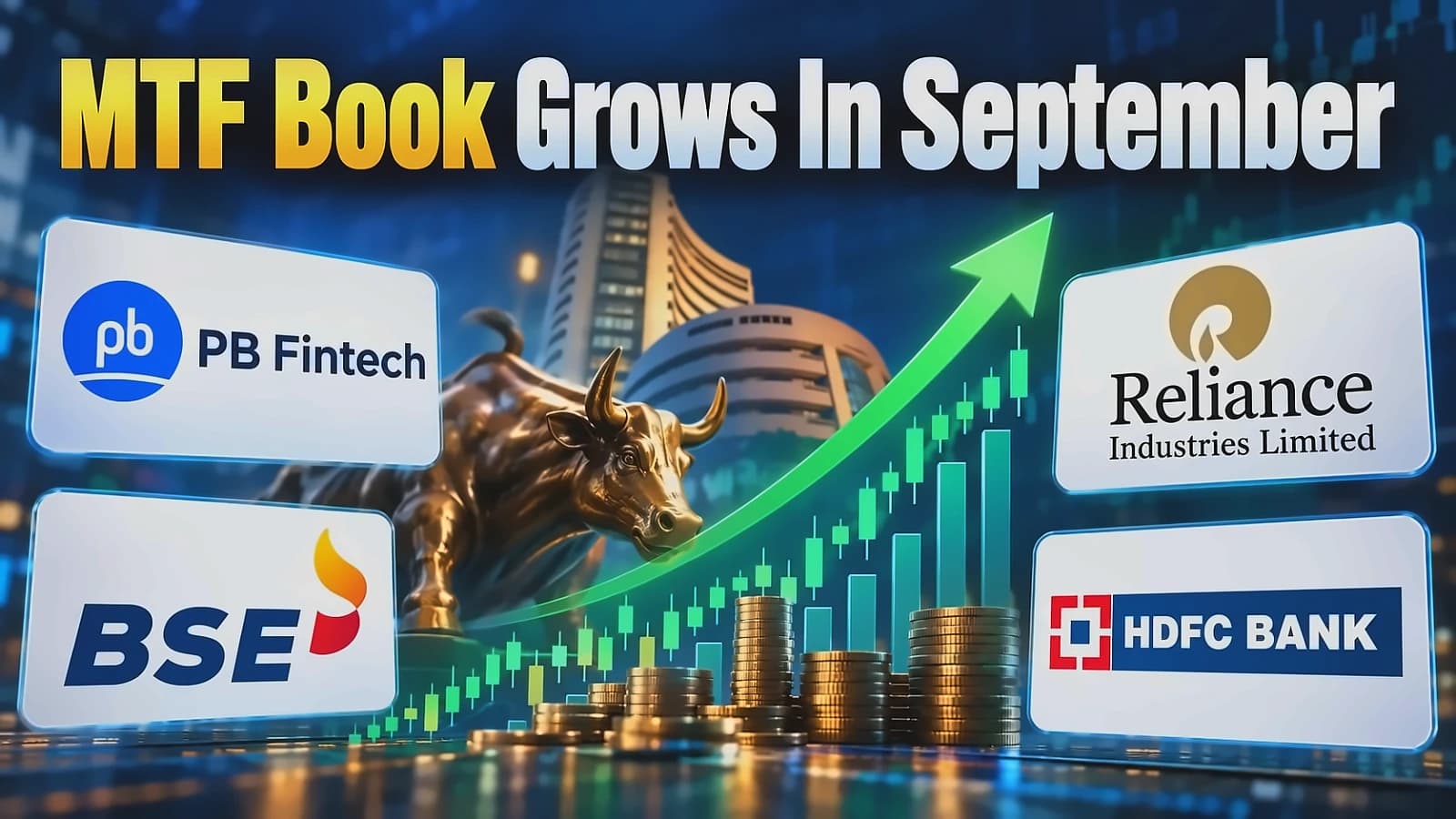
PB Fintech experienced the most dramatic increase in MTF positions, jumping from ₹38.7 crore at the end of August to ₹254.2 crore by September 30. This represents a massive increase of 556.3% in just four trading sessions. The stock's MTF exposure had previously stood at just ₹46 crore before the draft IRDAI guidelines were released, demonstrating the significant impact of regulatory changes on margin trading activity.
Granules India also saw significant growth with exposure increasing 400% from ₹123.6 crore to ₹618.1 crore. Clean Max, KEI Industries, and Quality Power all saw their total MTF exposure more than triple compared to August. KEI Industries experienced a 213% increase from ₹53 crore to ₹165 crore, while Quality Power saw a 212% jump from ₹28 crore to ₹87 crore.
HFCL recorded the largest decline in leveraged positions, with its ₹500 crore-plus exposure at the end of August dropping to nearly zero by September. Coal India's subsidiary CMPDI saw its exposure decrease by 50%, while parent Coal India experienced a 31% drop month-on-month. Other notable reductions included GE Shipping (-60%), Paisalo Digital (-44%), and Central Mine Planning (-50%).