
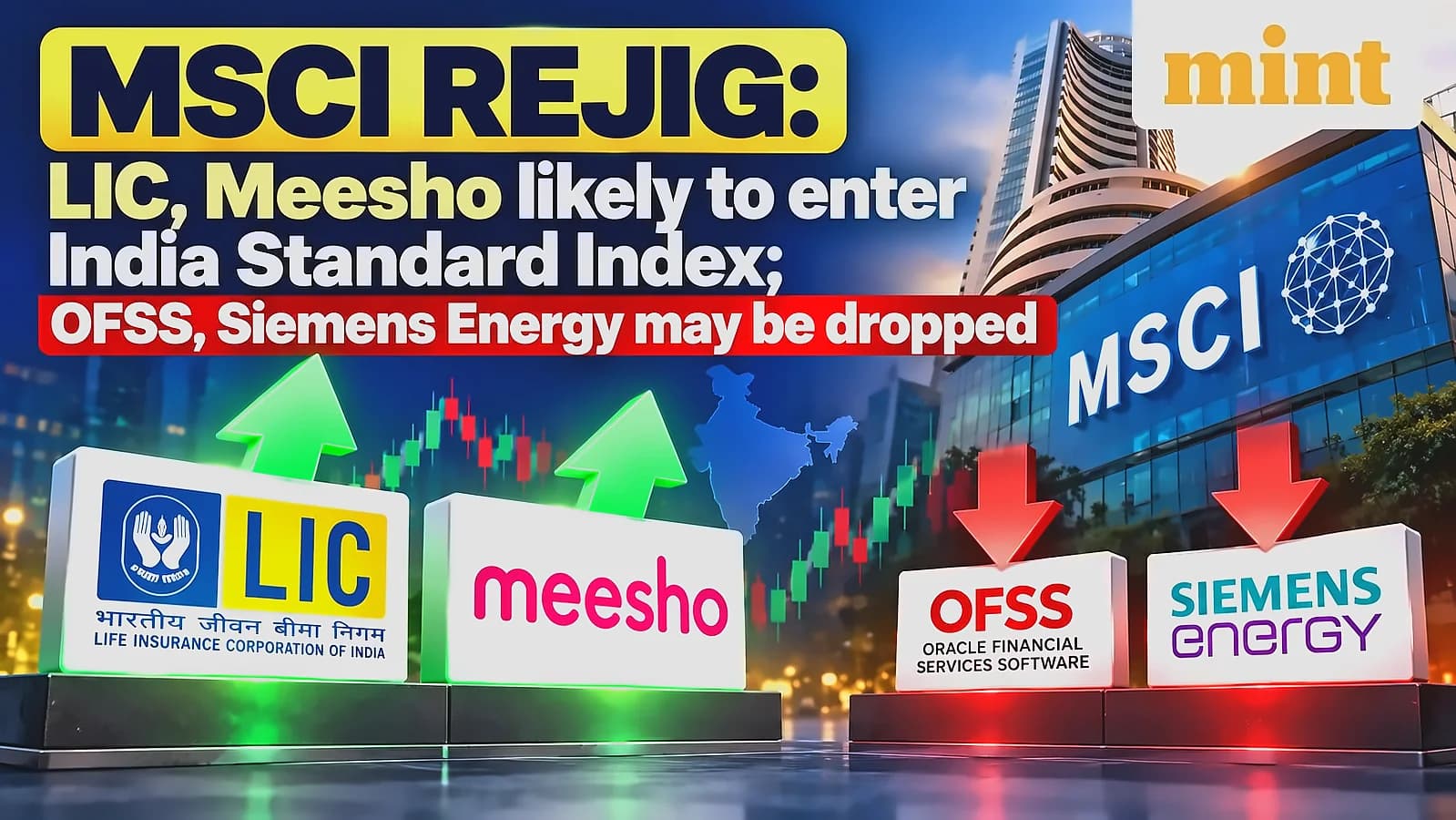


The MSCI Standard Index rebalancing, one of the most closely watched rebalancing events of the year globally, is scheduled for November 11, post-market hours. According to reports from Business Standard, the changes would take effect on December 1. This rebalancing represents a significant market event that could significantly impact India's passive fund flows and index composition.
JM Financial Institutional Securities identifies Life Insurance Corporation of India (LICI) and new-age stock Meesho as high-probability additions to the MSCI India Standard Index in this review cycle. As reported by Business Standard, both names are above the adequate free-float-adjusted market cap and MSCI's minimum size threshold. Additionally, the brokerage identifies Coforge as a 'high-probability candidate' to migrate to the MSCI India Standard Index from the Small Cap Index, based on recent surge in market cap and liquidity metrics. According to JM Financial analyst Abhishek Kumar, Coforge has been identified for a potential large-cap upgrade based on these strong fundamentals.
JM Financial expects Oracle Financial Services Solutions (OFSS) and Siemens Energy India to be excluded from the MSCI India Standard index amid persistent deterioration in free-float market cap owing to fundamental pressures and structurally low free-float. According to the brokerage's analysis, these factors would drag them below the minimum size or liquidity threshold stipulated for continued index membership.
Historical evidence suggests 8-15% cumulative excess returns in the 20 trading days preceding MSCI announcements for high-conviction inclusion candidates, while exclusion candidates may face accelerated selling pressure as the announcement date approaches. As reported by Business Standard, Coforge shares are up 55.34% in the last six months and 32% in three months despite the selloff in IT stocks. The brokerage noted that liquidity management is key for affected holders during this transition period, with the impact on inclusion names potentially playing out due to active institutional positioning.
On aggregate, the high-probability inclusions and exclusions could drive passive inflows into India of about $1.9 billion and outflows of approximately $497 million, resulting in a net positive passive inflow of roughly $1.4 billion. According to JM Financial's analysis, this represents a significant shift in passive fund flows that could impact market dynamics and stock performance in the affected companies.